Latest Posts

Portland, Maine: It's not just about lobsters.

Portland Head Light

Tell people that you’re headed to Maine and more than likely you’ll hear “Oh, you going up there for the lobster? ” Repeated trips to the easternmost state have taught me that there is more to Maine than cold water crustaceans. Spend a few days in Portland, the largest city in the state, and you’ll soon see what I mean.

With a population of 64,000 Portland’s size pales in comparison to most urban centers. What it lacks in numbers, it compensates in character, history, charm and cuisine.  Such is the case at Becky’s Diner.  Located at the end of Hobson’s Wharf, Becky’s has been sustaining local fishermen, townspeople and tourists for close to 20 years.  Its wholesome food and friendly service pack the red vinyl booths and counter stools “362 1/2 days.”  Don’t miss the perfectly cooked home fries, generous amounts of fresh fruit and scrumptious grilled muffins at breakfast, my favorite meal there.
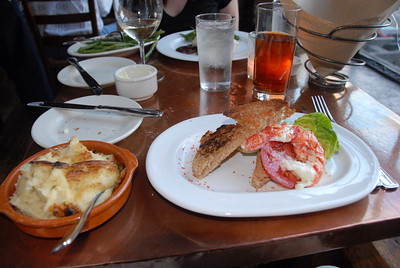
Lobster BLT and mashed potatoes at Fore Street

Nestled in a low brick building one block from the water in the Old Port District, Fore Street and its culinary feats have been recognized by the James Beard Foundation as well as Gourmet magazine.  No wonder.  Featuring fresh, local ingredients in such satisfying dishes as wood roasted red hake filet with wild mushrooms, butter poached lobster BLT, organic green beans in a sherry almond vinaigrette and blueberry cobbler topped with blueberry ice cream, Fore’s fare has dazzled the crowds since 1996.  And crowds there are.  Just try snagging a last-minute reservation on a weekend or, during the warmer months, weeknight.  Not a chance!

On the corner of Middle Street and Franklin Arterial, Hugo’s tells a slightly different tale.  Like Fore Street, Hugo’s has been praised for its innovative, seasonal food.  However, unlike at Fore Street, both the crowds, portions and pleasures were miniscule on the night that my husband and I dined there.
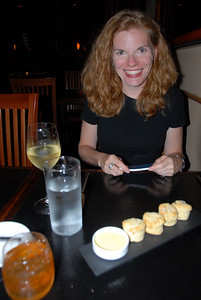
Buttermilk biscuits and butter at Hugo's 

As serving sizes were small, our menus and server suggested ordering three items. Nonetheless, I requested two dishes:  organic tomato salad with olive oil panna cotta and aged asiago cheese; pan-seared arctic char with organic new potatoes on a bed of seaweed slaw.  In turn I received 5, skinned, yellow cherry tomatoes tumbled onto a paper-thin layer of panna cotta with several centimeter-sized cubes of cheese, a small square of arctic char, one thumb-sized potato and two forkfuls of slaw.  Good thing that I hadn’t been famished. 

Also good that I brought along my debit card.  The portions may have been petite but the price wasn’t.  My lackluster meal — sans drinks — cost $30.  My husband’s, which consisted of the recommended three but also without drinks, ran $50. 
Lentil salad at the Portland Museum of ArtA far better value and meal came, surprisingly, at the Portland Museum of Art’s Museum Cafe.  There we split a flavorful lentil salad studded with slivers of red peppers, diced carrots, onion and feta, a bowl of creamy yet light corn chowder and crisp, homemade ginger snaps.  The cafe likewise offered several other salads, soups, sandwiches, dinner and vegetarian entrees as well as an assortment of baked goods, all served in a spacious, art-filled dining area.     

Three and a half days in Portland.  Loads of good food but only one lobster-based dish.

Maine Lobster Roll
Serves 4
Note: Either buy cooked lobster meat or steam two 1 1/2-pound lobsters and remove the meat.

2 cups cooked lobster meat, cut into small chunks
1 teaspoon lemon juice
2 scallions, minced
¼ cup celery, minced
½ – ¾ cup mayonnaise
salt and freshly ground black pepper, to taste
4 hot dog rolls
2 tablespoons unsalted butter, softened

Toss the lobster with the lemon juice in a bowl.  Add ½ cup of mayonnaise, scallions and celery and stir to combine, adding the remaining mayonnaise if necessary.  The salad should be moist but the flavor should not be overwhelmed by mayo.  Season with salt and pepper to taste.  Refrigerate until ready to use.

Heat a large frying pan over medium heat.  Spread the softened butter on the rolls and place the rolls, butter-side down, in the pan.  Cook, turning once, until the rolls are golden brown.  Remove from the pan, open the rolls and spoon in the lobster salad.  Serve immediately.
 

Further Food Forays in Pittsburgh

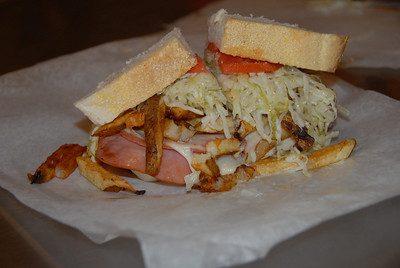
Cappicola and cheese at Primanti Bros.

Primanti Bros. and Pamela’s.  Multiple Pittsburgh locations.  Loads of good, uncomplicated food. 

Hot, hungry and thirsty, my childhood friends Nickie, Marilee, Jen, Ann and I wound up seated at the counter of the original Primanti Bros.  Located on 18th Street in the Strip District, Primanti’s has been serving its famous french fry and coleslaw-stuffed sandwiches here for 75 years.  This locale operates 24-7, perfect for the bar crowd or for anyone craving a kolbassi and cheese or sardine and cheese sandwich at 3 in the morning.

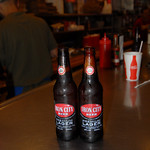
Iron City On a late Saturday afternoon our needs were a bit more mainstream.  Along with chilled bottles of Iron City Beer, the drink of derision for much of my 20s but not for my nostalgia-fueled 30s, we chowed down such “and cheese” sandwiches as jumbo fish, spicy capicola ham and ragin’ cajun chicken breast.  Not one of us could finish these huge sandwiches.  The beer, however, was a different tale.
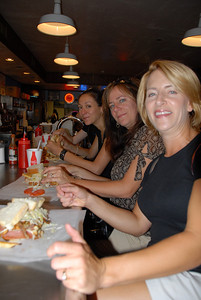
Seated at the counter of Primanti Bros. - Marilee, Jen, Nickie and Ann's arm 

Along with the good friends and food, the best part of eating at Primanti Bros. was the free show.  By sitting at the counter, we could watch the cook grill mounds of cheese-topped bologna, roast beef, ham, chicken, and fish and assemble our meals.  Meat, chicken or fish placed on a hunk of Italian bread followed by fries, coleslaw, tomatoes and another piece of bread.  Slice it in half and serve it on a sheet of waxed paper.  Perfection!

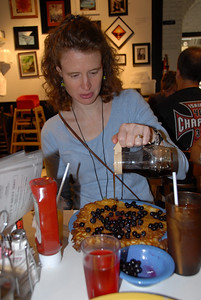
Pour it on, Ann!    

At Pamela’s on Walnut Street in Shadyside breakfast was on our menus.  Since the restaurant is famed for its pancakes, Ann and I both ordered short stacks.  Often I gripe about restaurant pancakes, complaining that what lands on my plate is too thick, floury, flaccid and/or flavorless.   Pamela’s, however, were light and airy and tasted delicious.     

In keeping with the duplicate orders trend, Nickie and Marilee got vegetarian omelets with savory home fries and toast.  Jen courageously ordered breakfast her way — two eggs with the requisite home fries and toast.  A wholesome and delectable beginning to our Saturday.                            

Home Turf Tourists – Pittsburgh

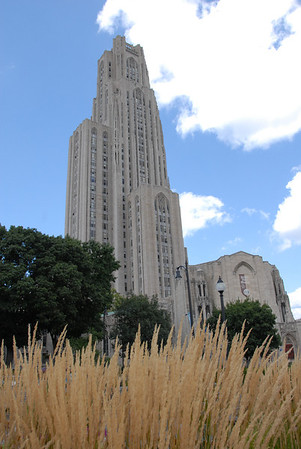
Moving to suburban Philly after college, I got a lot of flack about being from Western Pa.  “Pittsburgh?  That’s not a city!”  And then I moved to New York for graduate school.  You can just imagine what I heard.  Yet, when getting together with my childhood friends, I can think of no more fitting gathering spot than the city of our youth.  With a wealth of museums, parks, shopping districts, restaurants and bars Pittsburgh offers both the casual visitor and hardcore tourist countless things to do. 


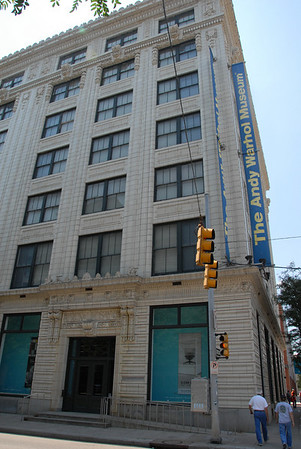
This summer my friends and I revisited the Andy Warhol Museum, the largest American museum devoted to a single artist.  Want to see Elvis, the Last Supper, Silver Clouds or Brillo Boxes writ large?  The Warhol’s got them as well as 4,000 other works of his art.  

Along with a love of New York, the Velvet Underground, eccentricity, art and cats, the late pop artist and I share a birthday.  I found it quite fitting to be there, admiring the best of Andy and his Wild Raspberries cookbook, less than two weeks before our special day.   

Pittsburgh as seen from Mount Washington

A short ride up the Duquesne Incline brought us to observation platform on Mount Washington.  From there we looked out onto the three rivers, ball parks, Carnegie Science Center, the Point and skyline.  A few feet away on Grandview Avenue we had a wealth of fine-dining-with-a-view options, including such standbys as the Tin Angel and the Le Mont.


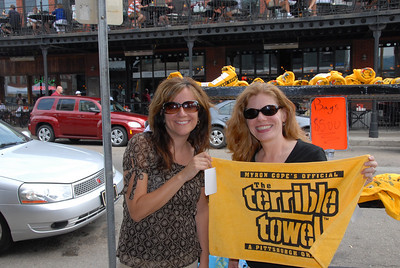
Back on river level we wandered around the Strip District.  Once home to factories, mills and produce and meat wholesalers, the Strip now houses bars and restaurants as well as cookware, coffee and antique shops. It also has outdoor vendors selling food, tchotchkes, stacks of Myron Cope’s gold-and-black “Terrible Towel” as well as Steelers, Pirates and Penguins paraphernalia.   

Ann and Nickie find treasures at Shadyside Variety Store  

In Shadyside, our home base for the weekend, we shopped and dined along Walnut Street.  The tree-lined street offered a mix of independent boutiques such as Tennis Village, The Picket Fence and Shadyside Variety Store and upscale chains including Apple and Williams-Sonoma.  We walked away with lighter wallets and larger credit card bills but also with some great finds. The best part of visiting Pittsburgh? The opportunity to spend time with dear friends whom I could never see often enough.

Jeet jet? — Culinary Adventures in Pittsburgh

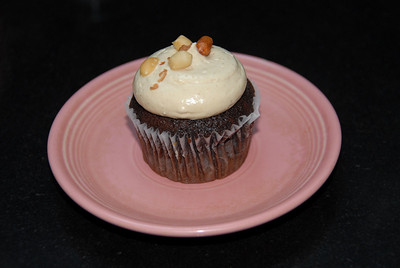
Chocolate peanut butter cupcake at the Warhol Cafe 

If you have ever lived anywhere near Pittsburgh, you will undoubtedly recognize these magical words:  Jeet jet?  No, j’ou? 

I did eat, and quite well, at this year’s annual gathering of childhood friends in Pittsburgh.  From ice cream at Dave and Andy’s in Oakland to french fry-stuffed sandwiches at Primanti Bros. in the Strip District, Ann, Jen, Marilee, Nickie and I gorged ourselves on some of the Steel City’s finest classic foods.      

Our culinary tour de force began at Girasole in Shadyside.  Located in a basement level, former coffee house on Copeland Street, this cozy bistro featured Northern Italian cuisine dished out in an intimate, exposed stone-walled dining room.     

Enjoying a late dinner at Girasole

On this particular Friday evening Girasole was a blur of activity.  A packed house didn’t prevent us from receiving attentive service and delightful meals, though.  Each entree came with a house salad, two words that invariably make me cringe.  At most restaurants “complimentary house salad” translates into limp iceberg lettuce topped with slivers of pink tomatoes and a scattering of carrot confetti.  At Girasole it meant plates brimming with mixed greens, whole cherry tomatoes, chickpeas, crumbles of gorganzola cheese and sunflower vinaigrette.  Such a treat!

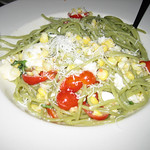
Spinach spaghetti at GirasolePasta lovers, we ordered such entrees as penne marinara with chicken, spinach and ricotta ravioli in a tomato cream sauce, gnocchi and spinach spaghetti with nubs of fresh corn, sliced cherry tomatoes, and mozzarella.  Talk about a night of pleasant surprises.  My meal, the room temperature spinach spaghetti, provided an intriguing mix of textures — melt-in-your-mouth cheese, crunchy corn, al dente pasta  — and flavors.  Yet another hit. 
Chocolate cheesecake at GirasoleFor dessert we indulged Ann’s love of cheesecake and split a slice of chocolate cheesecake five ways.  From the dark chocolate crust to the cocoa whipped cream and the chocolate-infused cake, fresh blueberries and strawberries in between, this was a to-stop-your-diet-for dream.
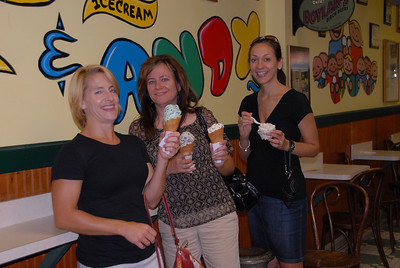
Marilee, Jen and Nickie all scream for ice cream!

The sweet delicacies didn’t end here.  At Dave and Andy’s Ice Cream Shop on Atwood Street it was love at first lick.  Homemade mint chocolate chip, cookies and cream or cookie dough spooned into crisp waffle cones or a generous bowl of birthday cake ice cream pleased our overheated palates on this sultry summer night.  Likewise, the delicate peanut butter-iced chocolate cupcake from the Warhol Cafe provided the perfect afternoon pick-me-up.  Served on rose Fiestaware, it looked as pretty as a Wayne Thiebaud painting and was just as tasty as it appeared.           


Dining with Philly Friends at Aldar and Paloma

Salad at Paloma

Along with the unparalleled pleasures of good company and conversation, dining out with friends allows me to try places that I might otherwise overlook. Such is the case with Al Dar in Bala Cynwyd, Pa.  Had it not been for my friend Scott, who adores this bustling, Lebanese-influenced bistro, I never would have experienced a taste of the Middle East on Philadelphia’s Main Line. 

Scott with one of his favorites, chicken kebab at Al Dar

Seated in the main dining room amidst dimly lit, wrought-iron chandeliers, marble-topped tables, rich, gold drapes and padded, leather banquettes, I feel as though I have slipped away to Morocco.  The din of the happy diners furthers this feeling of hanging out in the heart of Marrakech instead of on the edge of Philly.   

At Al Dar we invariably start the night with a traditional mezze of hummus and pita and, in my case, a regional beer such as Flying Fish or Brooklyn Lager.  The main course soon follows.  For Scott, it will be one of two favorite entrees — a falafel salad or chicken kebab.  A regular, he sticks with what he loves. 

Fish entree at Al DarAs a relative newcomer to Al Dar, I feel compelled to sample as many dishes as possible.  One week I might opt for moussaka or a falafel sandwich with a side of tzatziki or dolmathes and ful medames, a mixture of mashed fava beans, onion, garlic, lemon juice and olive oil.  Another time I may splash out on pan-seared striped bass with artichokes, olives, capers and tomatoes.  No matter what I choose, I can expect well-prepared, traditional Middle Eastern/Mediterrenean food.   
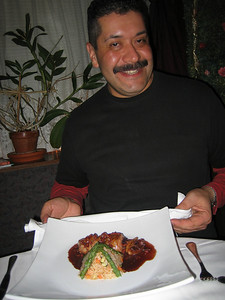
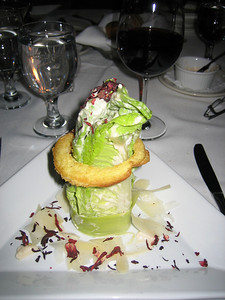
Representing another region of the city and of world cuisine, the haute French-Mexican restaurant Paloma in Northeast Philadelphia is loved by my friends Elliot, Jim and Juan and now by my husband and me.  Tucked into a corner of Castor Avenue, Paloma doesn’t bowl me over with its locale.  Nor am I knocked out by a decor reminiscent of my late grandmother’s living room, complete with peeling wallpaper and potted plants.  One bite of the first course, though, and I am hooked.         

Juan with perfect plating and potted plant at Paloma 

At Paloma there are no culinary misses.  Every dish possesses the perfect pairing of flavors, balancing fresh Mexican herbs and spices with classical French cooking, and precise yet artful presentation.  From the delicate wild mushroom flan appetizer to such entrees as the airy shrimp-vol-au-vent and crusty escolar al pipian, I am floored by the creations of Chef Adan Saavedra.  Who knew that food this original — and good — existed?  Elliot, Jim, Juan, and the voters at Zagat’s, that’s who!

Tres sorbetsThe evening ends with a trio of vibrant, all natural sorbets.  Made by the chef’s attorney-by-day/pastry-chef-by-night wife, they come in such exotic flavors as blackbery brandy, cactus pear, mango-habanero and the fuchsia-colored hibiscus flower.  Definitely a festive end to an extraordinary meal, one that I never would have experienced had it not been for my food-savvy, Philly friends.
Yes, I Can!

Well, no, actually I don’t.  I did, however, take a hands-on preserving class last week that taught me a bit about canning.  Foremost, I discovered that I won’t be spending my summer afternoons hovering a steaming pressure canner in my equally steamy kitchen.  Why not?  In a word, equipment.  I don’t own a pressure canner, a key tool in canning.  I suspect that I won’t develop a passion for preserving that is worthy of the $70 to $325 investment in one, either.

Equally important and, truthfully, the primary reason, I learned just how exacting food preservation must be.  Dole out one under-heated jar of green beans or expired bottle of garlic-infused oil and I’ve served my guests a lovely bowl of botulism.  Thanks to my tainted meal, they can look forward to dry mouth, slurred speech, difficulty breathing, diarrhea and vomiting followed by respiratory failure, paralysis and death.  A to-die-for dinner indeed.

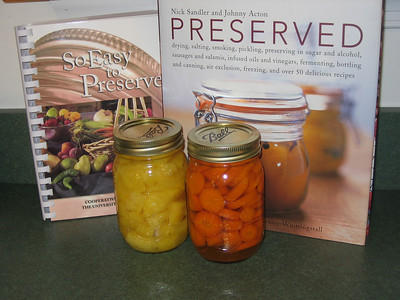
Canning cookbooks and canned goods

In reality the likelihood of me poisoning my friends is quite slim.  As long as I faithfully follow the recipes, which I am rarely wont to do, and keep my pressure canner gauge at 11 pounds, I can safely can.  WooHoo!

If I were to delve further into this form of food preservation, I would choose water bath over pressure canning.  Inexpensive water bath canners preserve highly acidic foods such as fruits and tomatoes.  Want to make jellies, jams, marmalade or preserves?  Buy a $25 canner, some jars, lids and fruit and you’re ready to go.

My predilection for sweets and tendency to be a cheapskate are not the only reasons that I prefer the water bath.  Time is another.  With a pressure canner you’re tied to the kitchen — and canner — for several hours.  Steam has to build up then vent in a steady stream for 10 minutes before the actual pressure canning process can begin.  That then takes anywhere from 25 to  90 minutes.  With a water bath, you can process 7 or 8 jars of fruit in as little as 5 minutes.   As patience is absolutely not one of my virtues . . ..

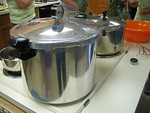
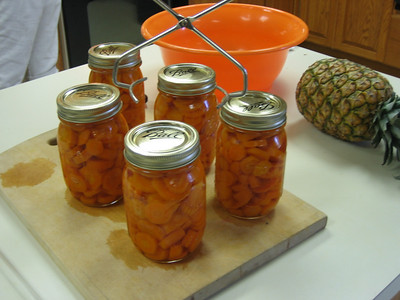
Pressure cannerIn class we worked with high and low acid foods so used both types of equipment.  Low acid foods such as vegetables and meats tend to carry botulism so must be preserved at a temperature of 240 degrees Fahrenheit.  Hence why we employed a pressure canner for our jars of sliced carrots.  With the lid locked in place, the canner cooked away for roughly 35 minutes.  Once the cooker had cooled and the lid removed, we wound up with jars of beautiful, copper-colored carrot coins.
Carrots!

Packed in juice, our acidic pineapple chunks boiled away in a 212 degrees Fahrenheit water bath.  In 5 minutes or so the jars of sunny fruit were plucked from the bubbling water.  Fifteen minutes later we strolled out of class with two jars of canned produce in our hands.  Time definitely is on the side of water baths.   

Sitting on my kitchen counter, the jars serve as a reminder of my brief foray into canning.  Perhaps they’ll inspire me to preserve some tomatoes or can pickles.  Then again, they probably will prompt more trips to the farmers’ markets where I can buy already canned goods!     

Swedish Cuisine: More Than Just Meatballs

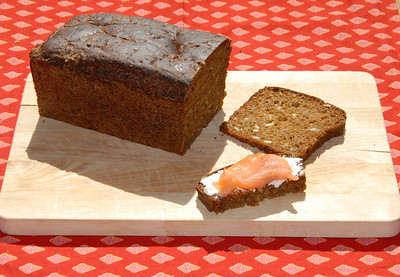
Danish bread with smoked salmon and cream cheese

Before visiting Sweden last year, I didn’t devote much time to the country’s cuisine. Sure, I had thumbed through chef Marcus Samuelsson’s “Aquavit” cookbook and watched his and Andreas Viestad’s food shows on PBS. Yet, I still only had vague notions about Swedish cooking. At best I envisioned smoked salmon, pickled herring, and brilliant red lingonberries. At worst I thought of small meatballs drowned in thick, brown gravy.

While Swedes do consume these classics, I learned that they also dine on a plethora of enticing and unique dishes. Featuring ingredients from the forest and the sea, their fare showcases some of the best culinary aspects of the country.

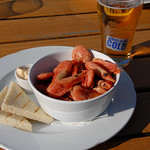
Smoked shrimpThanks to rugged coastlines and a wealth of seafood, folks here know how to prepare crustaceans and fish. One of the most beloved, crayfish, even has its own seasonal feast. In August outdoor crayfish parties — with colorful paper lanterns, tablecloths, plates, bibs and hats — are all the rage.
While crayfish has been a national delicacy since the 16th century, these celebrations didn’t begin until the 1800s. Over the years, though, the preparations have remained much the same. Boiled in mixture of salt, beer, and crown dill and then chilled, the crayfish are served alongside crisp bread, a strong cheese such as Vasterbotten and alcohol such as beer, schnapps or aquavit.

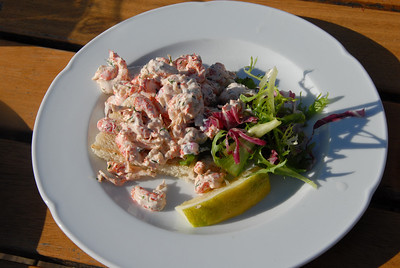
Toast skagen on the island of Grinda, Sweden

Whether boiling crayfish, smoking the ubiquitous salmon, or poaching perch and char, Swedish cooks have conjured up a slew of creative seafood recipes. Take, for instance, toast skagen. Invented after World War II by a Swedish restaurateur, it reminds me of a creamy, open-faced lobster roll, sans lobster or roll. An open-face sandwich, toast skagen features heaps of steamed shrimp piled onto crustless toast. It works perfectly as an appetizer or a light main course.

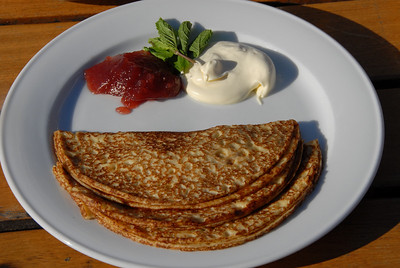
Swedish pancakes with preserves and clotted cream but no pea soup

Along with creative recipes, the country has some unusual culinary customs. Thursday in Sweden is “pea soup and pancake day.” Followed by a dessert of thin pancakes and preserves, pea soup is consumed in homes and served to military conscripts and office workers across the land. Skip this practice from the Middle Ages and you’ll miss out on the highlight of the 21st century work week.

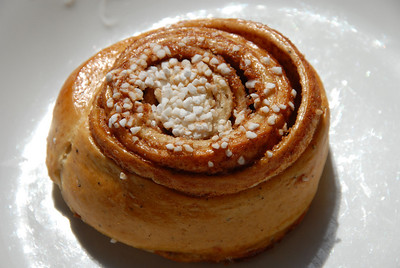
A holiday that I wholly embrace is”Kanelbullens Dag” or Cinnamon Roll Day. Held on October 4, Cinnamon Roll Day toasts the soft, slightly sweet, cardomom-scented cinnamon bun. In Sweden pretty much every day is Kanelbullens Dag for me. Have them for breakfast, lunch, or as a light snack, or with strong, black coffee, a glass of red wine . . .. I stocked up on pearl sugar and kanelbullar recipes so that back at home each day can continue to be cinnamon roll day.

Kanelbullar, my favorite Swedish treat

Kanelbullar – from Carl Jan Granqvist’s and Lena Katarina Swanberg’s “Swedish Culinary Classics: Recipes with History and Originality” (Swedish Institute, 2005)

Makes 25 buns

For the dough:
1 ¼ ounces yeast
3 ½ ounces sugar
1 ½ cups milk
1 egg
4 ounces butter
1 teaspoon salt
1 tablespoon ground cardamom
26 ounces wheat flour

For the filling:
4 ounces butter, at room temperature
2 ounces sugar
2 tablespoons cinnamon

For the glaze:
1 egg
2 tablespoons water
pearl sugar

Crumble the yeast into a large bowl and stir in a few tablespoons of milk. Melt the butter and pour it over the yeast-milk mixture. Add the rest of the ingredients for the dough and, using an electric mixer, mix with a dough hook for 10 to 15 minutes. Cover and let the dough rise at room temperature for 30 minutes.

Roll out the dough so that it is about 1/8-inch thick and 12 inches wide. Spread the room temperature butter on top of the dough. Mix together the cinnamon and sugar and sprinkle it over the buttered dough.

Fold the dough over, roll it out lengthwise and cut into about 25 slices or circles. Place the slices with the cut edge facing upwards on a baking sheet. Cover with a towel and allow them to rise for about an hour or until the buns have doubled in size.

Pre-heat the oven to 425 degrees Fahrenheit.

Beat together the egg and water. Brush the mixture on the top of the buns and sprinkle pearl sugar on top of each. Bake in the oven for 5 to 6 minutes. Allow the buns to cool on a rack and serve with coffee, tea, milk or even wine.

American Cook, Swedish Kitchen

Lunch at the Moderna Museet

For someone who loves to travel and cook, the prospect of helping my friend Christina, fellow alum of Columbia University’s graduate journalism school and resident of Stockholm, prepare for her 40th birthday party could not have been more tantalizing.  So, while my husband Sean bounced around Europe, attending business meetings, I recently hung out in Stockholm for 9 days, shopping, cooking, and sampling the fruits of our kitchen labors.

Because I am accustomed to cheap American food prices, I found grocery shopping in Stockholm shocking.  A quart of milk ran about $4.  A pint of raspberries went for anywhere from $7 to $15.  A single bottle of 3.5% ABV beer, the only kind sold at markets, cost at least $3.  Wine?  I paid twice the amount that I do in NY for a bottle of Penfolds Koonunga Hill Shiraz-Cabernet.  No wonder everyone asks out-of-country guests to pack a healthy stash of alcohol in their suitcases.  Forget that extra sweater. Bring more rum!

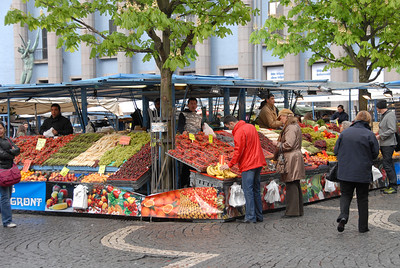
Outdoor fruit market at Hotorgshallen  

Vibrant outdoor markets, such as the one held behind the Hotorgshallen food hall, did offer bargains.  There I stocked up on bundles of fragrant fresh mint for Friday night’s mojitos.  At less than $1 apiece they were a deal that couldn’t be beat.  Hmmm….  Maybe I should have eaten mint for the duration of the trip. 

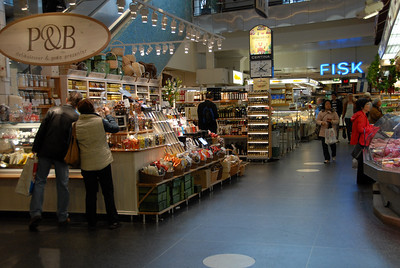
Inside Hotorgshallen 

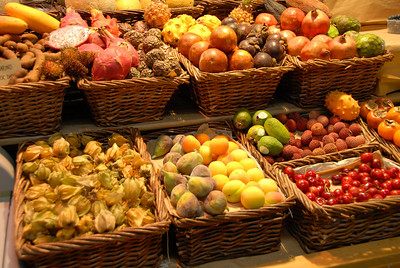
Inside Hotorgshallen, as well as at the upscale Saluhall on Ostermalmstorg, I browsed through more exotic fare.  Hankering reindeer hearts, fermented Baltic herring, lingonberries or imported mangosteens?  I could snap them up at either food hall. 

Exotic fruits at Hotorgshallen 

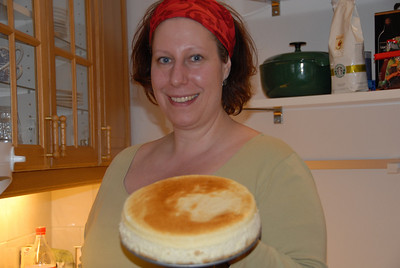
Back in the kitchen Christina and I prepared dishes that reflected both Swedish heritage and modern cuisine.  No, no reindeer or herring.  Instead smoked salmon served on baguettes and brown Danish bread, salads of orzo, spinach and pine nuts, lentils and red onions and tomatoes and cucumbers starred in the main course.  For dessert cheesecakes came au naturel or dressed in blueberries. 

Christina and the naked cheesecake

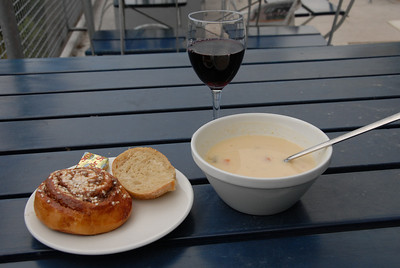
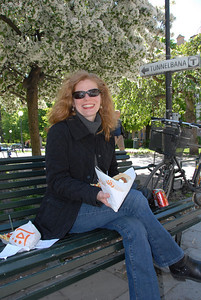
As usual, all this searching for and preparing food left me ravenous.  Most days I just ate a cheese sandwich that I had slapped together at Christina’s and then consumed on the go.  A few times, though, I splashed out for lunch.  At the Moderna Museet on Skeppsholmen I sprung for a bowl of spring vegetable soup, a kanelbullar and glass of red wine.  The pleasure of good, traditional food, along with the gorgeous views of Lake Malaren and the Nordiska Museet and Vasamuseet, made the $27 pricetag worthwhile.

Falafel sandwich in Mariatorget Square

Some of the least expensive meals came from a food kiosk in Mariatorget Square on Sodermalm or at – gasp! – McDonald’s.  The grand total of a shared lunch of a McChicken sandwich, McFish sandwich, medium French fry and small Coke was $20.  All things considered, a great deal. 

Sailing to the Islands of Sweden

Typical scene on the ferry ride to Grinda

After several days spent in a foreign city I am always itching to sneak out and explore the countryside. There, I believe, is where the “real” heart of a land exists. Don’t get me wrong. I love urban life but with McDonald’s everywhere from Marrakech to Bucharest and streets teeming with tourists who look and sound a lot like me, I feel as though most cities have become too globalized to provide a true glimpse at a country.

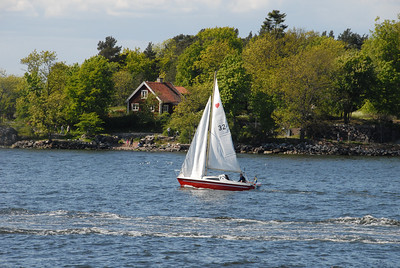
With 24,000 islands in the Stockholm archipelago I don’t have to go far for a different taste of Sweden.  I just hop a ferry and in less than an hour or two I could be on “the beach,” in the forest or wandering through the wooded, pedestrian-only island of Grinda.

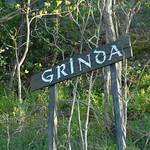
Welcome to GrindaRimmed by sandy beaches as well as rocky shorelines, Grinda provides a range of pursuits.  Hike the rolling hills, kayak on the sea, camp out or just sit at the sole waterfront cafe and drink beer, read a book, or catch up with old friends. A sucker for animals, I get a kick out of watching the local wildlife  — fat, free-range, red-feathered chickens bobbing and pecking at the ground, sheep dozing in the grassy fields, drunk daytrippers urinating off the docks.
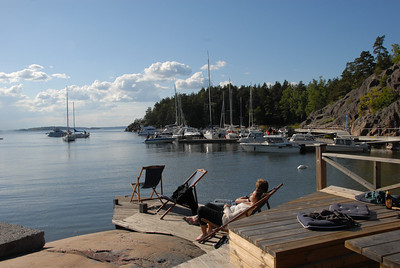
 View from the cafe on Grinda

A note to anyone contemplating a trip to Grinda:  The island has two unmarked docks in the south and north.  The ferry from Stockholm arrives at the north location.  The ferry to the capital departs from the south.  We didn’t realize this until missing the last ferry back.  Frantically, we tried our hands at semaphore.  Then we called for a water taxi.  As that would have cost between $500 and $600 . . ..

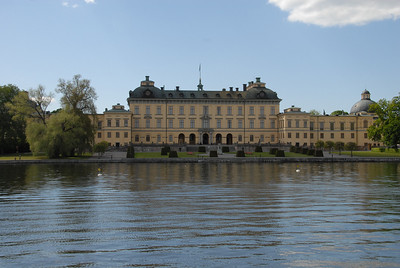
The Royal Palace, Drottningholm

Closer to Stockholm is the island of Lovon, home to the royal family and their 17th century, UNESCO World Heritage palace, Drottningholm.  Wandering through the well-manicured gardens, lounging on the lawns, and touring the 18th century Court Theatre and Chinese Pavilion all have their pleasures.  However, I prefer to take the speedy, 3-hour ferry from Nynashamn to the Swedish municipality of Gotland.

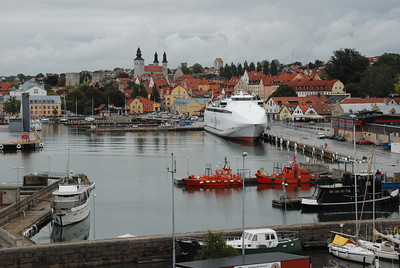
Entering the harbor of Visby, Gotland   

Located 56 miles off the mainland, this ancient Viking settlement, with its few forest-lined roads, small fishing villages, and close to 100 medieval churches, charms me to no end.  Its capital, Visby, was once a Stone Age sacrificial site.  Today the fortified town is a UNESCO World Heritage site and, with 22,000 residents, the most populated area in Gotland.      

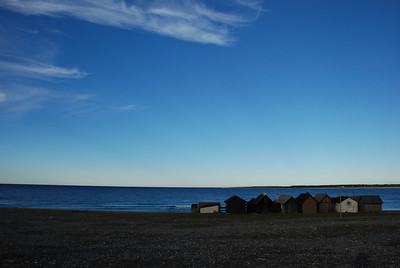
Fishing village on Faro  

Off the coast of northern Gotland lies the flat, limestone island of Faro.  With a population of less than 600, Faro lacks medical and postal services, law enforcement and banks.  What it does possess are limestone stacks, fishing shacks and the resting place of Ingmar Bergman.  The writer-director lived, filmed several of his movies, and died here.  He is buried in a simple grave behind the island’s church. 

Sundry Sites of Stockholm

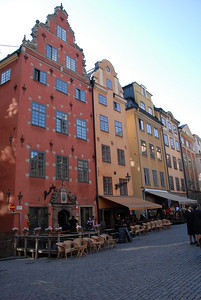
18th century buildings of Gamla Stan, Stockholm 

With so many extraordinary places in the world to explore, I try not to visit any spot more than once.  There are the exceptions.  A passionate Anglophile, I’ll never say “no” to a trip to the UK or Ireland, no matter how many times I’ve tromped the streets of London, Dublin and the like.  France, too, has a certain repeat appeal.  All that wine, history, culture and food! 

The Scandinavian country of Sweden joins the list of rare places to which I will happily travel again and again.  Below are a few highlights of May in Stockholm, when the sun rises at 4 a.m. and sets after 10 p.m. and life is both more relaxing and invigorating.

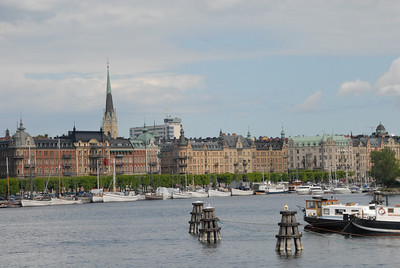
   View from Skeppsholmen

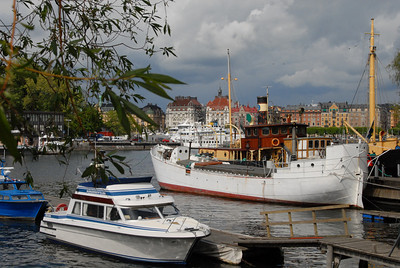
Comprised of 14 islands on Lake Malaren and the Baltic Sea, Stockholm has a multitude of pretty waterfront scenes.      

The view from the ‘skinny bridge’ to Skeppsholmen.  This small island contains several museums, including my favorite, the Moderna Museet.

The Vasa 

One of the most popular attractions in Stockholm, the Vasamuseet houses the massive, 1628 Swedish warship, the Vasa.  The ornate ship sank on its maiden voyage and was salvaged, intact and whole, from the Swedish harbor in 1961.

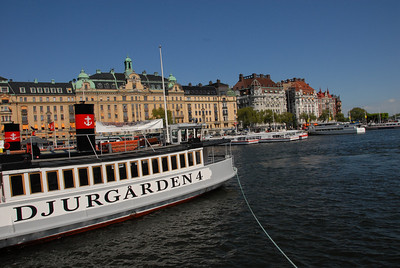
 Djurgarden

Because of a ferry strike, a boat sits empty and idle near Ostermalmstorg. 

Catch of the day

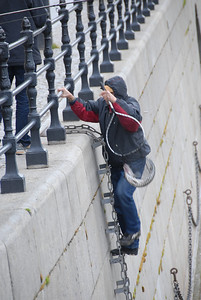
Cross any bridge in Stockholm and you’re bound to see groups of men, rods cast over the railing, fishing for whatever they can catch in Lake Malaren.

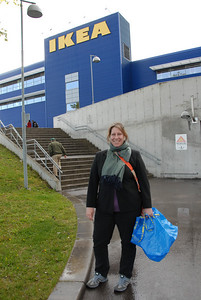
 Christina at Ikea, near Stockholm

With two massive stores on the outskirts of Stockholm everyone truly does go to Ikea.

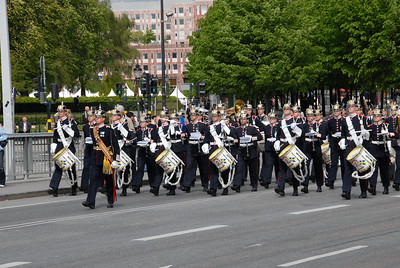
Changing of the guard 

Find yourself near the Royal Palace in Gamla Stan around noon and you invariably will witness the changing of the guard.  Traffic does not come to a halt for this daily occurrence but instead follows the parade at a not-so-safe distance. 

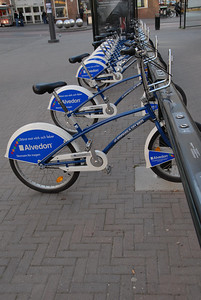
Rental bikes in the neighborhood of Sodermalm, Stockholm  

Don’t own a car, don’t want to pay high fares on the efficient and clean public transportation system yet oh-so-tired of walking?  Rent a bike from one of the many stations in Stockholm.  Like shopping at Ikea, everybody does it.

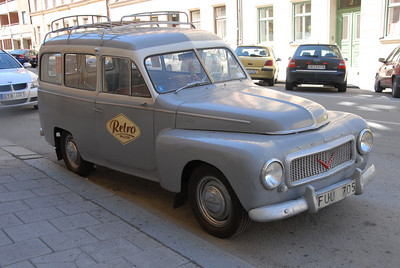
One of two old Volvos outside on Christina's street  

Not everyone drives a Volvo — or Saab, for that matter — in Sweden.  However, quite a few of these classics can be found on the streets.