Latest Posts

Tap into Maple Syrup

If you live in the Northeast, the arrival of spring means many things. Warmer temperatures. Less snow. More rain. The end of maple tapping season. Starting in mid-February and lasting for roughly six weeks, maple trees across this region get tapped for their sap. Once warmer weather hits, tapping season ends and my quest for the tastiest maple syrup begins.

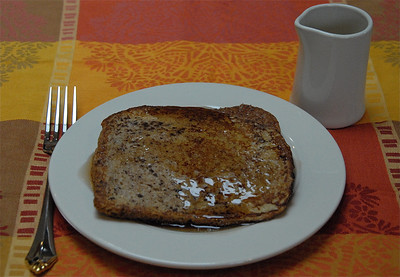
Every time I pour rich, Grade A syrup over my French toast, waffles or pancakes, I should thank the Native Americans for this lovely sweetener. As they did with so many other useful foodstuffs, Native Americans taught the early settlers how to tap maple trees and create maple syrup and sugar.

The process is fairly simple. Put in spout in a sugar or black maple tree. Attach a bucket to the spout. Collect the tree’s sap in this bucket and then boil it down so that the most of the water evaporates and the sap becomes thick and dark. Want maple sugar? Just keep boiling the sap until it becomes granulated like sugar.

Until the late 19th century maple sugar, not syrup, was the preferred product. Today, though, it’s the syrup that we all crave. Whether I’m pouring it over my pancakes, glazing vegetables with it or adding it to baked goods, it’s a delightful way to enliven a variety of foods.

As I’m a bit of a maple syrup snob, I tend to splurge on darker, bolder ones. When searching for true palate pleasers, I look at the grade, color and ingredients. “Maple-flavored” gets set aside immediately for this indicates a high percentage of corn syrup with a splash of maple added for color and taste. What I want is pure maple syrup.

Once I’ve established that it’s pure syrup, I consider the grade. Rated according to flavor and color, American-produced maple syrup comes in Grades AA (also known as “Fancy”), A, B and C. Grade AA possesses a very mild taste and light amber hue. Grade A is slightly stronger in color and flavor while Grade B boasts a hearty taste and dark amber shade. Grade C, which isn’t table-grade, most closely resembles molasses.

For the following recipe I use Grade A maple syrup. Since pure maple syrup must be refrigerated after opening, I allow it come to room temperature before measuring and adding it to the muffin butter.

VERMONT MAPLE SYRUP MUFFINS
from The Joy of Muffings by Genevieve Farrow and Diane Dreher (Golden West, 2002)
Makes 12 muffins

2 cups all-purpose flour
4 teaspoons baking powder
1/2 teaspoon salt
1 large egg, room temperature
1/2 cup milk
1/2 cup maple syrup
1/2 cup unsalted butter, melted

Preheat the oven to 400 degrees Fahrenheit. Grease 12 muffin cups.

Sift the flour, baking powder and salt together in a bowl. Form a well in the center of the ingredients and set the bowl aside.

In a separate bowl whisk together the egg, milk, syrup and butter. Gradually pour the egg mixture into the well at the center of the dry ingredients and stir together. The batter should be lumpy. Do not overbeat or the muffins will be tough. Spoon the batter into greased muffin cups and bake until brown, about 15 minutes.

Bowled over by Bisteeya

Lunch this week at the Moroccan restaurant Cafe Mogador reminded me of just how much I love this lively North African cuisine. Heady spices merge with fluffy grains, piquant fruits, and tender pulses, poultry and fish to create some of the most distinctive, delectable foods that I’ve ever eaten. Of the wonderful Moroccan offerings, the most unique has to be bisteeya. Considered by many to be Morocco’s most complex and elegant dish, this flaky, poultry-filled pastry remains beyond compare.

Bisteeya has its roots in the Middle East. As early as the 7th century, Arab invaders introduced the concept of encasing spiced meats and nuts in dough. They also encouraged the use of paper-thin leaves of pastry, which Moroccans perfected and now refer to as warka. Warka is one of several ingredients that make bisteeya so memorable.

To make warka, you press a ball of well-kneaded dough onto a hot, flat pan. As soon as the edges begin to dry, peel off the leaf and place it on a clean, flat surface. Cover it with a towel so that it doesn’t dry out. Repeat this process until you have enough warka for a bisteeya. It seems to takes mere seconds to create a delicate warka leaf. Yet, in reality three hours could pass before you have the needed 40 or so leaves.

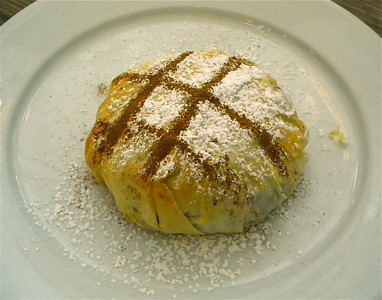
Not only the fragile casing but also the sweet and savory filling contribute to bisteeya’s uniqueness. Traditionally, the stuffing features poached and shredded squab (young pigeon) or chicken. Placed on sheets of warka, the poultry is covered with a mixture of eggs and a lemon-onion sauce before being blanketed with dough. A layer of sugar-dusted almonds follows before the final sheets of warka are tucked around and under the tartly sweet stuffing. Once it’s finished baking, the top of the pastry is decorated with cinnamon and confectioner’s sugar.

Cut into the golden pastry and you’ll encounter a warm, aromatic blend of saffron, tumeric, lemon, garlic and cinnamon. Take a bite and you’ll experience the perfect combination of moist and crisp, savory and sweet. It’s otherworldly.

Since I usually lack the time — and patience — to fuss with homemade warka, my bisteeya isn’t as authentic or ethereal as it could be. However, in a pinch, store-bought phyllo dough serves as a good substitute. Should you decide to make your own dough, consult Paula Wolfert’s Couscous and Other Good Food from Morocco (William Morrow, 1987). She devotes an entire chapter to this topic.

BISTEEYA
Adapted from Sarah Woodward’sTastes of North Africa (Kyle Cathie LImited, 1998)
Serves 6 to 8

1 pound chicken breasts
4 sprigs each fresh parsley and cilantro, tied together
1 stick cinnamon
1/2 teaspoon black pepper
1/4 teaspoon saffron
pinch of sea salt
1 white onion, peeled and grated
8 to 10 tablespoons unsalted butter
7 ounces whole blanched almonds
1 teaspoon ground cinnamon
1 1/2 tablespoons confectioner’s sugar
4 whole eggs
4 egg yolks
2 tablespoons lemon juice
1 pound phyllo dough
ground cinnamon, for garnish
confectioner’s sugar, for garnish

Place the chicken in a casserole or heavy pan. Add the herbs, cinnamon, black pepper, saffron, salt, onion and four tablespoons of butter. Pour in enough water to just cover the chicken. Bring the water to a boil, lower to a simmer, cover and allow to cook for 1 to 1 1/4 hours.

As the chicken cooks, heat 1 tablespoon of butter in a small frying pan. Add the almonds and toast until golden. Remove from heat and allow to cool. Once they’ve cooled, grind the almonds in a food processor or blender. Add the 1 teaspoon of cinnamon and 1 1/2 tablespoons of confectioner’s sugar to the ground almonds and mix to combine.

Remove the chicken from the poaching liquid and allow to cool before cutting or shredding into small pieces. Boil down the remaining liquid to half its volume and then set aside to cool.

Beat together the eggs and egg yolks until frothy. Add the lemon juice and beat again. Stir the egg mixture into the reduced liquid. Return the pan to the heat and simmer on low, stirring constantly until the sauce thickens. Check and adjust the seasonings as needed.

Preheat the oven to 350 degrees Fahrenheit. Lightly grease a shallow, non-stick pie pan. Melt the remaining butter over low heat and skim off any scum on top.

Lay a sheet of phyllo across the greased pie pan, allowing the edges to hang over, and brush lightly with the melted butter. Lay another sheet at an angle and brush it with butter, too. Repeat with another 4 sheets of phyllo so that the pie dish is completely covered and a circle has been formed.

Scatter the shredded chicken over the pastry. Top with the egg sauce. Fold 2 layers of phyllo in half and place in the preheated oven for 1 minute to crisp up. Place over the egg sauce and top with the almond-cinnamon-sugar mixture. Fold in the overlapping edges of phyllo, brushing the surface lightly with butter. Lay two sheets of phyllo over the surface and gently tuck them under the pie, cutting off any excess dough. Brush the surface with the melted butter.

Bake for 30 minutes and then carefully invert the pie onto a baking sheet. Bake it upside down for another 20 minutes before returning it to the top side. Bake for 10 more minutes, until the top is crisp and golden. Sprinkle with cinnamon and sugar and serve hot.

Plenty

London chef and restaurateur Yotam Ottolenghi’s second cookbook Plenty (Ebury Press, 2010) was released in the U.S. last week but, thanks to a friend in Europe, I’ve had the pleasure of cooking from his colorful book since last fall. “Pleasure” remains the key word for, thus far, every recipe that I’ve tried has been a delight to make and eat.

Inspired by the “New Vegetarian column” that Ottolenghi writes for London’s Guardian newspaper, Plenty focuses on vegetables and how to cook them in flavorful, creative ways. Many of the preparations are quite simple — roasting Jerusalem artichokes or poaching baby carrots doesn’t take a lot of time or effort. Yet, because of Ottolenghi’s thoughtful use of seasonings and inventive pairing of flavors, I end up with fabulous tasting vegetables.

Plenty brims with close-up, full-page, color photographs of each dish. These beautiful photos not only illustrate but also inspire different takes on the proffered vegetables. One glance at the vibrant “tomato party” or “Tamara’s ratatouille” and I start thinking of additions and pairings for these recipes. Chances are that you will, too.

Unlike the majority of cookbooks, Plenty is not organized according to course. Instead each chapter features a favorite, frequently Mediterranean ingredient of the Israeli-born Ottolenghi. “Funny Onions” showcases leeks, garlic and shallots while “Green Things” hones in on cucumbers, artichokes, asparagus and okra. Not limited to vegetables, the book also offers sections on cereals, pastas and pulses. In fact, “Fruit with Cheese” presents just that — figs, peaches, quinces, pears, dates and watermelon all partnered with different cheeses.

Since many of the recipes call for dairy products, I wouldn’t classify this as a vegetarian cookbook. Nonetheless, Plenty should win over “pragmatic vegetarians,” as the omnivore Ottolenghi refers to his readers, as well as those searching for a new vegetable appetizer, side or entree. Some recipes do work, though, for strict vegetarians and vegans. Multi-vegetable paella, Tamara’s ratatouille and soba noodles with aubergine and mango are three such dishes. Unfortunately, most of my favorites, such as caramelized garlic tart with its goat cheese-egg-creme fraiche-heavy cream filling, will not.

Fast Food the French Way

I was all set to chat about the imminent arrival of spring produce but then I stepped outside, saw the ice on the sidewalk, felt the chill in the air and decided that I needed something warmer and heartier today than leeks and asparagus. Looking down at my old, red, wool scarf that I had picked up years ago at the department store la Samaritaine, I started to think about France, which immediately made me think of crepes.

I fell in love with crepes on a cold, late December evening in Paris. Famished as well as jet-lagged, I roamed the 1st arrondissement in search of something warm, filling and quick to eat. On a sex shop-lined street near our rented apartment on Rue Saint Denise Impasse I spotted a stout, middle-aged man standing on a street corner, cooking paper thin pancakes on an oversized, portable hot plate. After flipping them once, he filled his crepes with fresh, sliced bananas, the chocolate-hazelnut spread Nutella, strawberry preserves or a combination of the three. He then rolled up the griddle cakes, sprinkled them with granulated sugar, wrapped them in sheets of waxed paper and handed them out to the hungry.

Mesmerized by the honeyed fragrance and simple artfulness of his creations, I slid into line and awaited my turn for a confiture d’fraise, or strawberry jam, crepe. In less than five minutes I had in my hand a warm, otherworldly meal. Tender to the tooth and with a delicate sweet touch, they were like nothing I had ever eaten.

The next morning I returned to the crepe stand for breakfast – basically, the same as my dinner but this time consumed at nine in the morning. I continued this pattern throughout my stay and on subsequent trips to the country. Quick and delicious, this treat became the epitome of French fast food for me.

French for “pancake,” a crepe is just that — a paper-thin pancake. Made with either sweetened or plain batter, crepes serve a multitude of roles. They can be eaten as breakfast, lunch, dinner, dessert or a snack. Sweet ones usually get filled with fresh fruit, jam, chocolate or a combination of the three and often appear as dessert or breakfast entrees. Savory crepes are stuffed with cheeses, vegetables, meats and/or eggs and provide a highly satisfying meal.

My infatuation with crepes led me to tinker around with some recipes and come up with my own version. While mine don’t surpass those luscious French originals, these crepes rank a close second. I use a minimal amount of batter swirled out evenly on a heated, lightly buttered crepe pan. After cooking both sides, I slather them Nutella or strawberry jam, fold them into triangles, and dig in.

Unfilled crepes can be made several hours in advance and refrigerated. Simply lay the first crepe on a plate then place a sheet of waxed paper over top of it. Lay the next crepe on top of the paper, cover it with a sheet of waxed paper and repeat. After the last crepe has been placed, cover the plate with plastic wrap and place in the refrigerator. The crepes can be reheated in the crepe pan – roughly 20 seconds on each side – or served cold.

SWEET CREPES
Makes 10 (8-inch) crepes

1 cup all purpose flour, sifted
1 tablespoon granulated sugar
pinch of salt
2 eggs, at room temperature
1 ½ cups skim milk, at room temperature
2 teaspoons vanilla
2 tablespoons unsalted butter, melted and cooled
butter for greasing crepe pan
granulated sugar, optional garnish
honey, optional garnish

Sift the flour, sugar and salt into a bowl. In a separate bowl whisk together the eggs, milk, vanilla and butter. Combine the liquids with the flour and whisk these ingredients together until most of the lumps have been removed. Refrigerate the batter for at least 1 hour. Strain out lumps, if necessary, before using.

Using an 8-inch crepe pan or low-sided frying pan, heat the pan then add a dab of butter. Coat the entire surface of the pan with the melted butter. Holding the pan off the flame, pour about 2 to 3 tablespoons of batter onto the pan. Swirl the batter so that the entire surface is evenly coated with batter. Cook for 2 to 3 minutes or until the bottom is light brown and the top has set. Using either a spatula or your fingers, flip the crepe over and allow the other side to cook for 1 minute.

Place the crepe on plate and spoon jam, Nutella or fresh fruit into the center. Fold the crepe in half then into a triangle. Sprinkle sugar or drizzle honey over the top and serve.

Clammin’ It Up with Clams

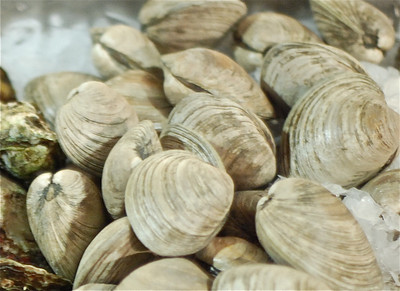
littleneck clams

FRESH CLAMS ON ICE

I spent much of this week on the West Coast, soaking up the sunshine and tasting the local specialties. For shellfish fans West Coast dining can be bliss. Home to petite Olympia oysters and gargantuan geoduck clams, it’s the perfect place for these delicacies.

Among the bivalves – scallops, mussels, oysters and clams – I’m partial to clams. Sentimentality influences this for they were the first bivalves that I’d ever tasted. Dipped in batter, fried until crisp and golden and paired ketchup, they were the most exotic thing that eight-year-old me had ever eaten.

Only two varieties of clams exist – hard-shell and soft-shell. Possessing a grayish shell less than two inches in diameter, the East Coast littleneck is the smallest hard-shell. Registering at two and a half-inches, the cherrystone comes next followed by the quahog or chowder clam. The quahog measures between three to six inches. Hard-shells such as Pacific littlenecks, Manilas, pismos and butter all hail from the West Coast.

Contrary to their name, soft-shells possess slender, brittle shells that don’t close completely. All soft-shells possess long siphons or “necks” that stick out of their shells. These necks prohibit closure. Soft-shells include such favorites as steamers and razors. They also have the monstrously large geoduck in their family.  Pronounced “gooey duck,” the geoduck’s neck can jut out several feet. If you watch the Discovery Channel’s “Dirty Jobs“, you may remember Mike Rowe’s day at a geoduck hatchery.

With clams size matters. The smaller the clam, the tenderer the texture. Large clams, such as quahogs, usually end up chopped or minced and added to chowders or fritters. Small ones tend to be steamed. All should be cooked gently so that they don’t become tough and chewy. For me there are few things less appealing than having to gnaw away on rubbery food.

On nights when I crave these bivalves but don’t have the luxury of eating out, I buy a few dozen live clams at my local grocery store. If I’m not cooking them immediately, I place them, uncovered, in an ice-filled bowl in my refrigerator. They’ll keep for up to two days.

When I don’t feel like fiddling around with shells, I opt for canned or shucked clams. These are best used in recipes calling for chopped, minced or ground clams such as in fritters and sauces. Dishes such as West Coast Manila clams steamed in an herb-garlic broth will require fresh, whole clams.

MANILA CLAMS IN HERB-GARLIC BROTH
Serves 4 as an appetizer

This appetizer couldn’t be simpler to make. Just scrub the shells, boil the wine, steam the clams, add butter and eat. As with all bivalves, if the shell doesn’t open after steaming, discard it.

2 tablespoons olive oil
5 cloves garlic, grated
1 1/2 cup dry white wine
¾ cup clam juice
¼ cup fresh flat leaf parsley, washed and minced
1 teaspoon dried oregano
3 ½ dozen Manila or other small hard-shelled clams, scrubbed
6 tablespoons unsalted butter, at room temperature
ground white pepper, to taste
baguette or crusty white bread, sliced

Heat the oil in a medium-sized stockpot. Add the garlic and sauté until softened but not browned. Add the white wine, parsley and oregano and bring to a boil. Tumble in the clams, cover the pot with a lid and allow the clams to steam until opened, about 5 to 10 minutes. Spoon in the butter and ground white pepper and allow to simmer for another 2 to 3 minutes. Serve with slices of crusty white bread or baguette for dunking into the sauce.

What’s Cooking in Cambodia?

Ask that question 30 years ago and the answer would be far different than it is today. Ravaged by the Vietnam War and the reign of the Khmer Rouge, folks there were focused on basic survival, not on crafting their country’s cuisine. Yet, in spite of years of deprivation and starvation, Cambodians have persevered to create some of the most flavorful and freshest foods around. Last Friday I learned this firsthand by spending the day with a Khmer chef from Siem Reap, Cambodia’s Tara Angkor Hotel.

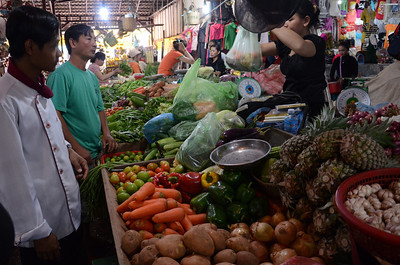
Since Cambodian cooking focuses on fresh, local ingredients, we took a tuk tuk to the market to pick up the provisions for our meal. Lemongrass, galangal root, kaffir lime leaves, turmeric, onions, string beans and sweet potatoes all made their way into our basket. Along with garlic the first four ingredients would appear in both the curry chicken and amok trey, or freshwater fish amok, that we’d make. Pounded together into a paste, this aromatic mixture is known as kroeung. A distinctly Cambodian or Khmer flavoring, it’s used in soups, stir fries, curries and the aforementioned fish amok.

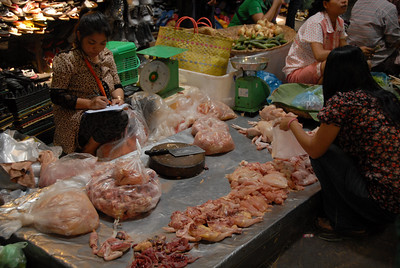
Vegetables acquired, we moved on to fish and poultry. In keeping with the emphasis on fresh and local the chickens and fish came to the market alive and were butchered to order. The subsequent dishes created from these truly free-range chickens and fish were far richer, tastier — and authentic — than anything that I’d ever cooked with the factory-farmed, plastic wrapped-products from my local grocery store. Startling to see? A bit. Better to eat? Definitely.

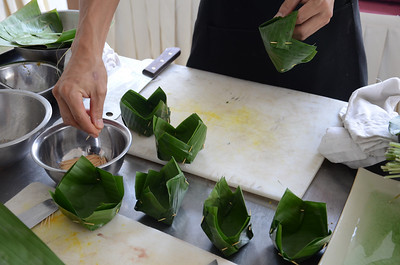
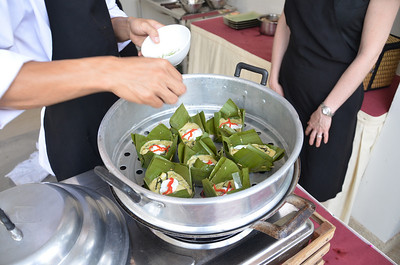
Shopping finished, we headed into the kitchen and started cooking. After pulverizing our kroeung ingredients with a mortar and pestle, we assembled and cooked the curry chicken. As that simmered, we pinned together the banana leaf baskets that would hold the fish amok in a steamer. The “amok” in fish amok refers to the steaming of fish, chicken, tofu, etc. in banana leaves. It’s a traditional Cambodian cooking technique that results in a highly succulent, flavorful dish. If, like me, you’re a disaster at basket making, you can always steam the fish in ramekins. It’s not the customary method but it’s also potentially not as messy. Doubt the messiness? Just note the sagging, about-to-spill-over basket in the photo below.

Once the fish had been steamed, it was dressed with slices of red pepper and a drizzle of coconut milk. From here we could have just eaten the fish amok from its individual baskets. Instead we spooned it into coconut shells and served it in that fanciful manner. Moist, flavorful, fresh and fun, fish amok provided the ideal introduction to Cambodian cuisine.

FISH AMOK
Adapted from Chef Im at the Tara Angkor Hotel in Siem Reap, Cambodia
Serves 2 to 4

for the kroeung:
2 cloves garlic, peeled and chopped
1 tablespoon lemongrass, chopped
1 tablespoon galangal root, peeled and chopped
1 teaspoon fresh turmeric, peeled and chopped
1 piece ginger, peeled and chopped
1 teaspoon salt

for the fish:
2 tablespoons kroeung
3/4 pound fillet of cod or other firm, white-fleshed fish, thinly sliced
3/4 cup coconut milk plus extra for garnish
1 morinda/noni leaf, chopped
2 tablespoons fish sauce
2 teaspoons sugar
2 eggs, whisked
1/2 teaspoon salt
1/3 teaspoon black pepper
1/4 cup thinly sliced red bell pepper
steamed rice or soba noodles, for serving

Using a blender or mortar and pestle, pulverize the ingredients for the kroeung. Spoon 2 tablespoons of the kroeung into a large bowl. Add the fish, 3/4 cup coconut milk, morinda leaf, fish sauce, sugar, eggs, salt and pepper to the bowl and mix the ingredients together until well combined. Spoon the mixture into small, heat-proof bowls or ramekins, filling each about two-thirds full. Place the bowls or ramekins into the basket of a steamer, put the lid on and allow the fish to steam for roughly 15 minutes. When finished, the fish will be firm and cooked through.

Carefully remove the hot ramekins from the steamer. Garnish the top of each with slices of red pepper and a drizzle of coconut milk. Serve immediately with a side of rice or soba noodles.

Note: You can find galangal root, fresh turmeric and morinda/noni leaves at Asian supermarkets.

Taste of Vietnam

For me Vietnam has never meant cuisine. Born at the end of the Vietnam – or, as they call it in Vietnam, “the American” – War, I’ve long been fascinated by that war and this Indochinese country. The food? It just didn’t captivate me the same way that the history and culture did. Yet, the more time I spend here, the more I grow to appreciate the background, flavors and techniques of Vietnamese cooking.

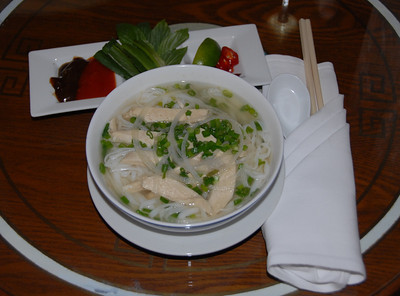
Eat in Vietnam and you eat with my nemesis, chopsticks. I have 1,000 years of Chinese occupation to thank for the popularity of these tricky utensils. Along with chopsticks the Chinese also introduced rice cultivation, stir-frying, beef and bean curd to the Vietnamese. Without their influence there would be no pho (rice noodle soup), congee (creamy rice soup), banh cuon (rice rolls) or stir fried meals of any kind. Guess I can forgive them for the chopsticks.

China wasn’t the only country to have an impact on Vietnamese cooking. Nearly a century of French rule resulted in affinities for beer, baguettes, cafe au lait, ice cream, soup stocks and wine. France also brought such crops as corn and tomatoes to the country. Through their efforts I can enjoy a grilled ear of corn, tomato-baguette sandwich, chocolate ice cream or cold beer on virtually any street corner in the country.

Although China, France and neighbors such as Thailand have left an imprint on the cuisine, the food here is still unique. Whether I’m dousing rice with the pungent fish sauce known as nuoc mam or nibbling on the prawn-on-sugar-cane-stick speciality chao tom, I know that I must be eating in Vietnam.

On this trip I’ve had the great fortune of dining in locals’ homes. There’s nothing quite like home cooking. A home cooked meal in another country is all the more special. I love that I’m eating just like the locals do, not like how tourist restaurants and hotels want me to believe that folks eat. Plus, I’m breaking bread with families, sharing in their daily rituals and celebrating their fresh, flavorful cuisine.

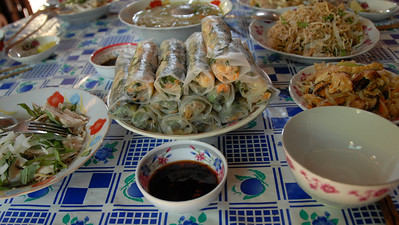
What have I been consuming? Relatives of my husband’s step-father have rolled out the red carpet, chilling and cracking open home-grown coconuts to drink and cooking elaborate meals for us to eat. Pork and/or vegetable stir fries, vegetarian spring rolls, chicken congee, banana salad and basil-chicken salad are among the many delicacies. These invariably are accompanied by steamed rice, soy sauce and a simple dressing made from salt, ground black pepper and lemon juice.

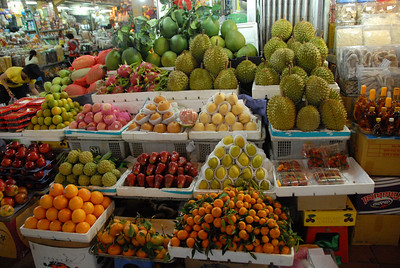
What I enjoy most, though, is all of the exotic fruit in Vietnam. Sometimes it’s a banana, mango or longan fruit plucked from a backyard tree. Other times it’s slices of cinnamon and ginger-laced jackfruit or a tartly sweet mangosteen bought at a market. Pineapples, papayas, pomelos and lychees likewise hit the spot on these hot, humid days.

Market Fresh in Vietnam

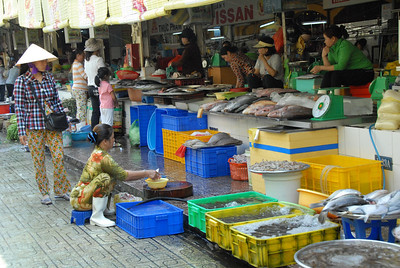
Although I’ve been in Vietnam less than a week, already I’m addicted to market shopping. Found in every city and town, the cho, or market, serves as a one-stop shopping spot for the locals and for me. Forget Western-style grocery stores, which you won’t find anyhow. If you need a new shirt, frying pan, necklace, pound of onions or fresh shrimp, just drop by the local market.

In Ho Chi Minh City I’ve spent hours at the Ben Thanh Market. Built by the French in 1914, this enclosed shopping mall was originally called Les Halles Central. If you’re familiar with Paris or French history, you might recognize the name for Paris also had a Les Halles or “central market halls.” With over 100 vendors in place Ben Thanh is unquestionably the main market hall for HCMC.

What have I found at Ben Thanh? Chopsticks. Chinese-style dresses. Quirky t-shirts. Men’s polos. Silk purses and cellphone holders. Coffee, tea and spices. And that’s just the some of the dried goods, textiles and general merchandise. If so inclined, I could pick up dragon or durian fruit, blue potatoes and even livestock. Highly unlikely that I’d crave a whole, live chicken but, if I developed some strange hankering for one, I could get it here.

Similar to Western shopping malls, markets offer cooked as well as fresh food. When hungry, I can grab a stool at one of the many makeshift cafes and enjoy a bowl of pho (noodle soup) or plate of stir-fried veggies. I can also just buy a bunch of bananas or dried fruit and snack as I browse.

I’d say that all Vietnamese markets are the same but that wouldn’t be true. Traveling south through the Mekong Delta, I experienced a vastly different marketplace in Can Tho. Situated on the Mekong and Can Tho Rivers, this large city is home to a series of floating markets. Vendors literally drop anchor in the Can Tho River and sell their wares from their boats. To see what each vendor has to offer, glance up at the pole on the front of the boat. Dangling from it will be squash, tomatoes, sugar cane and the like. Whatever their speciality is, it will be displayed prominently on this post.

To browse the floating markets, I hopped on a water taxi in Can Tho and puttered downstream to the Cai Rang market. Once there, the taxi cruised around the large boats, stopping whenever I or other passengers wanted to buy something. Smaller vessels paddled up to us and plied us with watermelons, pineapples, cold sodas and beer. Who knew that grocery shopping could be so fascinating?

For lodging in Ho Chi Mihn City, consider the upscale Legend Hotel or mid-range Bong Sen Hotel. Both are within walking distance to Ben Thanh Market.

To pick up a water taxi for the floating markets, head to the Ninh Kiều pier in Can Tho. This is where the majority of boats for the markets are located. The cost should be about $3/hour.

The Pleasures of a Potpie

During weeks when I’m juggling deadlines and a dozen other things I lack both the time and desire to make fussy, time consuming meals. Since I can’t, or shouldn’t, order take-out every night, I turn to the time-pressed cook’s friend, the potpie. With potpies I simply plunk fish, chicken or vegetables into a pie crust, place a starchy topping over them and slide the concoction into the oven. In less than an hour I end up with something wholesome and filling for dinner — a pie cooked in a pot, or so to speak.

Obviously, I’m not the first to cut corners with potpies. Indigenous to Northern Europe, this tasty dish has been popular since at least the 14th century. Although long reviled for their cuisine, the British have created a lengthy list of delicious, albeit sometimes quirky, potpies. Pies featuring goose, eel, game, steak and kidney, ham and egg, pork with anchovy paste, and cod, flounder or whiting fill the pages of countless British cookbooks.

Although the traditional potpie consists of both top and bottom crusts, my version frequently goes bottomless. Such is the case with chicken and mushroom “puffpie.” For this I toss cubed chicken together with carrots, onions, mushrooms and stock and spoon them into a baking dish. I then cover the ingredients with store-bought puff pastry and pop the pie into the oven. After 20 minutes I’ve got a succulent, piping hot potpie all ready to eat.

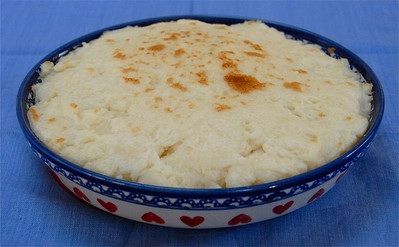
A far more famous bottomless pie is shepherd’s pie. Originating in northern England and Scotland where sheep and shepherds reigned supreme, this entree was born out of the need to use up leftover meat. As a result, it contains scant few ingredients — minced lamb or mutton, perhaps a little diced onion for flavor and mashed potatoes for the topping. When minced beef stands in for the lamb or mutton, you have another quintessential English dish, cottage pie. Most cooks today, though, refer to this beef-and-mashed-potatoes combo as “shepherd’s pie,” too.

Since, for me, potpies are all about saving time, I might replace the mashed potatoes in shepherd’s or cottage pie with simple drop biscuits or store-bought puff pastry. Similarly, I may opt to use two frozen, commercially-made pie crusts rather than homemade dough for any of the standard potpie recipes.

CHICKEN AND MUSHROOM “PUFFPIE”
Serves 6

1 ½ pounds boneless, skinless chicken breasts, poached
2 cups chicken stock
¾ cup low fat milk
¼ cup chicken stock
3 tablespoons flour
2 medium carrots, peeled and chopped
½ cup pearl onions, peeled and halved
8 ounces cremini mushrooms, cleaned and sliced
2 tablespoons butter
¼ teaspoon nutmeg
¾ teaspoon salt
½ teaspoon pepper
1 sheet puff pastry

Preheat the oven to 350 degrees Fahrenheit.

If using frozen puff pastry, unfold and defrost one sheet of pastry.

If you don’t have leftover cooked chicken on hand, you’ll need to poach 1 1/2 pounds of white meat chicken. To do this, place the chicken and 2 cups of stock in a large saucepan or Dutch oven and simmer until cooked. Strain the poaching liquid, add the milk, extra ¼ cup stock and flour. Whisk together and then set aside. Allow the chicken to cool before cutting it into small cubes or pieces.

In a large frying pan or Dutch oven, melt the butter over medium heat. Add the carrots, onions and mushrooms and cook until softened. Pour in the liquid and the cubed chicken and stir the ingredients together. Add the nutmeg, salt and pepper, stir and allow the filling to cook for 5 to 10 minutes.

Place the puff pastry on a cutting board. Using a pie pan as your guide, trim the pastry so that it fits over the pan. Once the pastry is trimmed, butter the bottom and sides of pan.

Spoon the heated chicken and mushroom filling into the pan. Lay the pastry over the top of the filling. Bake at 350 degrees for roughly 20 minutes or until the pastry has puffed up and turned a golden brown. Serve immediately.

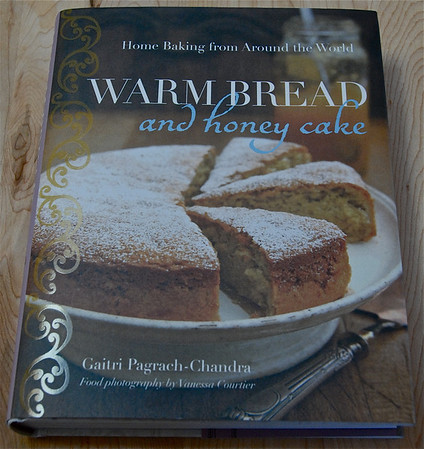
Warm Bread and Honey Cake

Whether in Rome, Italy or Rome, New York, there will come a day when you find a to-die-for bread, cake or pastry, one that will linger on your palate and in your memory. If you’re like me, you may pester the baker until he shares his recipe. If that doesn’t work, you may end up rifling through stacks of country/region-specific cookbooks, searching for the secrets to that magical treat. With Warm Bread and Honey Cake (Interlink Books, 2009) food historian Gaitri Pagrach-Chandra spares me from the harassment and the hours of research. Her book showcases the best baked goods from around the globe. Everything from savory Turkish simits and Colombian pan de quesos to sweet Chilean apple cake and Caribbean coconut bread appears within this comprehensive book.

As someone who owns a ridiculous number of cookbooks, I’ve had to stop buying titles indiscriminately. Yet I still picked up a copy of Warm Bread and Honey Cake. What ultimately sold me were the chapters on flatbreads and yeast bread, cakes and rolls. When in Turkey, I fell head over heels for cheese-filled boreks and veggie-topped pides or flatbread pizzas. Unfortunately, I never found one book that did justice to these savory delicacies. Likewise, I’ve not come across a Turkish-American restaurant that prepares these pastries as I remember them. Thanks to Pagrach-Chandra, I can say goodbye to soggy boreks and bland pides for I now have reliable recipes for creating them at home.

Make no mistake — you don’t have to have traversed the globe to enjoy this book. For those inclined to armchair travel Warm Bread and Honey Cake will prove a satisfying read. Likewise, those who prefer laid back baking will find this an effortless introduction to the baked goods of other countries. Along with detailed histories and easy-to-follow recipes, this book possesses countless color photographs, drawings and prints. Similar to many of the previously covered titles, it serves the dual purpose of recipe source and culinary history.

Warm Bread and Honey Cake begins with a section on ingredients and equipment. Wondering where to buy or how to make Indian ghee or North African samn, two similar cooking and baking fats? You’ll find out here. Likewise, you will learn how to replace the thick cream kaymak with creme fraiche and discover why almond paste isn’t a good substitute for marzipan.

In the subsequent five chapters Pagrach-Chandra provides anecdotes and recipes for such familiar favorites as Greek baklava, Mexican tres leches and Austrian sachertorte. She also explores less commonly known offerings such as Indian dal puri, Dutch brown sugar coils and Guyanese fat top. It’s a lovely mix of common as well as exotic dishes.