Latest Posts

Fab Fish Fridays

Like many people, my early experiences with seafood were pretty uninspiring—imagine meals of greasy fish sticks dipped in tartar sauce and gloppy tuna noodle casseroles. After my father suffered a massive heart attack at a high school football game, the choices became even bleaker. Gone were those fatty but flavorful standards, replaced by heart-healthy baked salmon, cod, flounder, tuna and haddock. Although delicious when prepared properly, these unfortunate fish met the same fate as my mother”s over-baked potatoes. Cooked on high heat and without butter, olive oil or even a squeeze of lemon juice, the fillets possessed as much succulence and savoriness as sandpaper.

My way of dealing with homemade fish dinners was simple. No sooner did the tough fillets hit the table than they found their way beneath it. Unfortunately, not even the easygoing family dog, who gobbled up my unwanted spuds, green beans and oatmeal, could tolerate this fish.
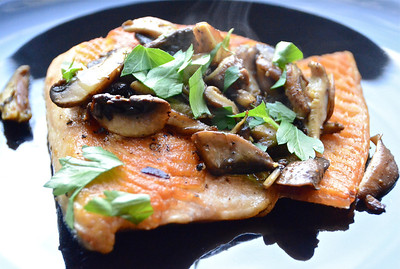
What spared me from a lifelong dread of seafood were Friday nights. On those evenings my parents and I went to their favorite Italian restaurant for more omega-3-rich fish. There the cook knew how to prepare frutti di mare. In his hands broiled fillets of cod, orange roughy and salmon turned out light, tender and, most importantly, edible.

While I found these Friday meals magical, I suspected that the kitchen staff wasn’t using any secret tricks. As my mother’s Better Homes and Garden cookbook had pointed out, seafood was fast and easy to cook. Just season it with salt and pepper and bake, broil, grill, sauté or pan-fry until flaky and fork tender. Depending on the size of the fillet or steak, this could take as little as 5 minutes. It should not take as long as 75 minutes, the amount of time that most fish languished in our 350˚F oven.

Since those early restaurant repasts, I’ve picked up more than a few techniques and recipes for fish. Still, my favorite dishes hark back to those straightforward Friday night dinners. Whether pan-fried in a tablespoon of olive oil or baked in a lightly greased dish, fish remains of one the easiest foods to cook. Dressed with a dab of seasoned butter or splash of lemon juice, vinegar or hot sauce, it’s also one of the most healthful and tasty to consume.

PAN-SEARED CATFISH
Serves 4

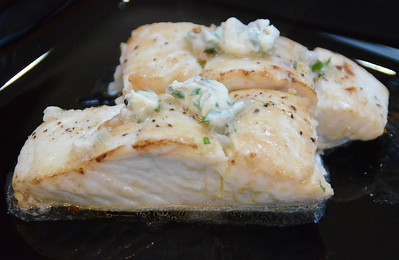
Successfully farmed with minimal environmental impact, channel catfish is one of the most sustainable, consumption-friendly fish around. Often used in place of cod and other less eco-sound white fish, its mild flavor goes with a myriad of ingredients. Although I top this pan-seared catfish with seasoned butter, you could withhold the butter and simply drizzle the cooked fillets with fresh lemon juice or dust the tops with sweet paprika.

2 tablespoons olive oil, divided
1 garlic clove, minced
1 tablespoon chopped fresh parsley
1/2 teaspoon sea salt, plus more for seasoning
1/2 teaspoon ground black pepper, plus more for seasoning
3 tablespoons unsalted butter, at room temperature
4 (4- to 6-ounce) catfish fillets

Heat 1 tablespoon olive oil in a large nonstick frying pan over medium heat. Once the oil begins to shimmer, add the garlic and saute until softened, about 2 minutes. Drain or scoop out the garlic and set aside. Return the pan to the heat and add the remaining 1 tablespoon oil.

As the oil is heating, mix together the garlic, parsley, 1/2 teaspoons salt and pepper and butter.

Season the catfish fillets with salt and pepper.

Lay the fillets in the pan and cook for 2 minutes or until the edges of the fish begin to turn opaque. Turn the fillets over and cook until they begin to turn golden in color and flake when probed with a fork, 2 to 3 minutes. If you’re uncomfortable with timing doneness by physical characteristics, check the internal temperature of your fillets with a meat thermometer. When finished cooking, it should read 137˚F; cooked anywhere beyond this and the fish will become dry and tough.

Place the fillets on a serving platter or 4 separate plates and spoon equal amounts of seasoned butter over each. Serve immediately.


Raise Your Forks! It’s St. Paddy’s Day!

Maybe it’s the water from the River Liffey or the way that Irish bartenders pour their stouts. Whatever the reason I have become one of those curmudgeons who grumbles that Guinness tastes best in Ireland.

When I’m in Ireland, I’ll down pint after pint of this smooth, dry brew. Hardly unusual—one out of every two pints consumed in Ireland reputedly is a Guinness. Yet, when I’m back at home, I’m more apt to empty it into a pot and cook with it than I am to drink this Irish beer. Drained from a bottle on American soil, it just doesn’t provide me with that wonderful richness and effervescence of the Irish original.

Because my friends are generous and unaware of my finickiness, I have received many, many 6-packs as well as the occasional case of Guinness. Remember 2009, when the 250-year anniversary stout was released? That was a banner year for beer-based dishes.

What do I make with all that booze? Well, after sampling a bottle and confirming that I’m still a major fusspot, I use it to create sauces, stews and fondues. I also steam mussels and clams in it. I might mix it with lemonade for a shandy. Replace the lemonade with champagne and I’ve got a decadent Black Velvet.

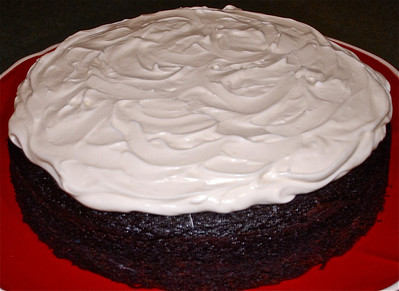
One of my favorite ways to use Guinness is in a cake from Nigella Lawson’s Feast cookbook. I make her chocolate Guinness cake for St. Paddy’s Day and any other time when I have an extra bottle of stout in the house.

CHOCOLATE GUINNESS CAKE
Adapted from Nigella Lawson’s “Feast” (Hyperion, 2004)
Serves 8 to 12

for the cake:
1 cup Guinness
1 stick plus 2 tablespoons unsalted butter
3/4 cup unsweetened cocoa
2 cups superfine sugar
3/4 cup light sour cream
2 large eggs
1 tablespoon pure vanilla extract
2 cups all-purpose flour, sifted
2 1/2 teaspoons baking soda

for the icing:
8 ounces cream cheese
1 1/2 cups confectioner’s sugar
1/4 cup heavy cream, plus more as needed

Preheat the oven to 350˚F. Butter and line a 9-inch springform pan.

Place the Guinness and butter in a large saucepan and heat on medium until the butter has melted. At this point whisk in the cocoa and sugar.

In a separate bowl whisk together the eggs, sour cream and vanilla. Add 1/3 cup of the beer mixture to the eggs. Stir together and then pour the eggy mix into the saucepan, stirring to combine. Add the flour and baking soda to the pan and whisk until blended.

Pour the batter into the greased pan. Bake for 45 to 60 minutes or until a toothpick inserted in the center comes out clean. Place the cake on a cooling rack and cool completely before removing from the pan.

Using an electric mixer, beat the cream cheese in a medium bowl until smooth. Sift in the confectioner’s sugar and beat again until combined. At this point the icing will be extremely thick and stiff. Add 1/4 cup of heavy cream to the icing and beat again. If the icing still seems too thick, add a little extra cream to make it spreadable.

Remove the cake from the pan and place on a large plate or cake stand. Spread the icing over the top of the cake so that it resembles the frothy head on a pint of Guinness. Serve with Irish coffee.

Perfect, Portable Fruit

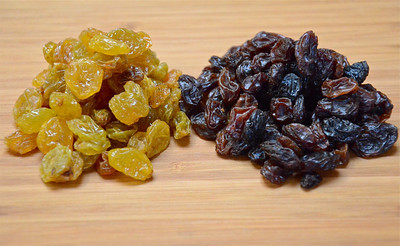
I can’t remember a time when I didn’t eat raisins. In elementary school they were the sugary treat that held me over until dinnertime. In high school they balanced out my otherwise unhealthful school lunch—Cheetos and ham salad sandwiches, anyone? Today they are what I toss into my camera bag when I head out on an assignment or throw into my suitcase when I go on vacation. Small, portable and virtually indestructible, they’re the perfect snack for anyone on the run.

Because of my unabashed love of dried grapes, it never occurred to me that some people might hate them. More importantly, it never occurred to me that I might someday cook for these folks. Yet, today I know a surprising number of raisin detractors. Finding the fruit too rich, sticky, hard or wizened, they fish them out of my salads, sides, desserts and sauces. To a raisin devotee, this seems like sacrilege; after all, they’re rejecting one of nature’s best iron-, potassium- and protein-packed sweets.

While I may never sway raisin haters over to my side, I have had some success in making the fruit more palatable to them. To lessen the chewiness of uncooked raisins, I tumble them into a bowl, cover them with boiling water and let them soak for an hour. To cut the rich taste, I replace the water with hot rum and let the raisins steep in alcohol for 30 to 45 minutes. Sadly, I have no tricks to smooth out the wrinkles. My advice? If you dislike the desiccated skin, eat a grape instead.

The following dish should please both raisin fans and foes.

FRUIT AND ALMOND COUSCOUS
Serves 4 to 6

1 cup plus 2 tablespoons water
1 cup couscous
1/3 cup golden raisins
1/4 cup dates, chopped
1/3 cup dried apricots, chopped
1/4 cup almonds, roughly chopped
1 tablespoon unsalted butter
1/4 cup maple syrup
Cinnamon, for dusting

In a medium saucepan boil the water. Add the couscous, raisins, dates, and apricots. Cover the saucepan and remove from heat. Let stand for 30 minutes.

In a small frying pan over medium heat, toast almonds until golden.

In a large bowl combine cooked couscous and butter. Rake your fingers through the couscous, loosening the grains and incorporating the butter with the fruit.

Pour in the maple syrup and gently stir. Add the toasted almonds and blend again. Dust the top with cinnamon and serve.

Bake It Twice to Make It Nice

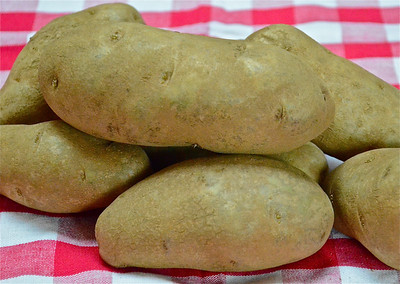
My early relationship with baked potatoes was a prickly one. Although a capable cook, my mother loathed cooking and took much of her culinary frustrations out on spuds. Russet potatoes were her weekly whipping boys. After vigorously scrubbing and stabbing them with a fork, she would lob the potatoes into the oven and bake them at 400˚F until parchment paper-dry. What could have saved these crumbly creatures—a generous dollop of sour cream or pat of creamy, salted butter—was never applied for ours was a cardiovascular health-conscious, low-fat household.

When I baked potatoes, they didn’t fare much better. Rebelling against my mother’s overcooked creations, I grossly under-baked these root vegetables. In the end they resembled door stops, ones that I fed to our overly plump dog.

While my mother and I waged our separate wars on potatoes, much of the world was enjoying them. As well they should have. Rich in Vitamins C and B-6, complex carbohydrates and potassium, these members of the nightshade family have sustained cultures and countries for centuries. If only they weren’t so dry and mealy, maybe they would sustain me, too.

Just when I was about to give up on tubers altogether, I had dinner at my friend Jenn’s house. On that fateful night her mom served twice-baked potatoes. The thought of a potato being baked not once but twice horrified me. Bring on the extra glasses of milk—this tater was going to be even dryer and deadlier than usual. Yet, it wasn’t. Housed in the crisp, outer skin was a fluffy, savory and succulent potato.

Although new to me, twice-baked potatoes had been around for ages. While their exact origins remain a mystery, how to make them does not. You begin by baking russet potatoes until just done. After slicing them open, you scoop out the flesh and mix it with milk, butter, cheese, bacon, herbs or smoked fish or meats. You then spoon the flavored potatoes back into their skins and bake them until warm and golden. The end result is both moist and delicious. The end result made me a fan of baked spuds.

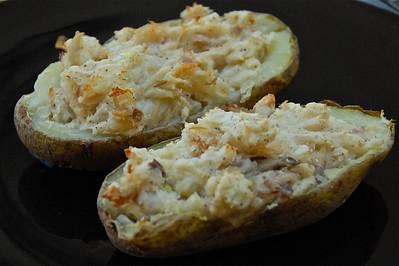
TWICE-BAKED POTATOES WITH SMOKED TROUT
These potatoes are filling enough to be a meal in themselves. However, If you’re not a fan of smoked fish, leave it out and serve the potatoes as a side dish.

Serves 4

4 large Russet potatoes
1/3 cup milk, warmed
1 tablespoon unsalted butter, softened
1/2 teaspoon kosher salt
1/2 teaspoon freshly ground black pepper
1/4 cup grated manchego or Parmesan cheese
handful of chives, diced
1 pound smoked trout fillets, flaked

Preheat the oven to 350˚F.

Using a fork, poke holes in the potatoes before microwaving them on high for 8 to 10 minutes or until hot and softened. Cut the potatoes in half and scoop out most of the flesh, leaving behind a small rim of potato in each skin.

Place the potatoes in a medium bowl and, using a spoon or fork, mash lightly. Add the milk, butter, salt, and pepper and mash again until the mixture is smooth and creamy. Add the cheese, chives and smoked trout and stir to combine.

Spoon equal amounts of the potato mixture back into the skins. Place the filled skins on a baking sheet and bake until warm and golden-brown on top, 10 to 12 minutes. Serve warm.

One Cake, Many Takes

Over the past 18 months I’ve been writing, cooking and thinking quite a bit about seafood. At this point our cats worship me, my husband and friends avoid me, and my fishmongers know me by first name. Because I’ve been so fish-focused, I’d like to take a break from all-things-protein-rich and savory and talk about carrot cake.

Carrot cake seems to be one of the most divisive desserts out there. If you love it, you love a specific type—soft and sweet or firm and spicy, laced with crushed pineapple or pineapple-free, walnut-studded or raisin-dotted, frosted with cream cheese or butter cream . . .. The list goes on. If you hate it, you loathe everything about it but you especially abhor the carrots. As a diehard c-cake hater once said, ‘No matter how sugary a root vegetable may be, it’s still a vegetable. It should not be in a cake.’

Fortunately, my husband is carrot cake fan and not a terribly finicky one at that. Over the years he’s happily endured my attempts to create the perfect blend of moistness, sweetness and spiciness, in other words the perfect carrot cake. I’m not alone in my quest for perfection. Ever since it debuted on the American culinary scene, bakers have been crafting their own versions of the ideal carrot cake.

Although rumored to have originated America, this dessert most likely got its start in medieval England. At that time honeyed root vegetables, such as carrots, parsnips and beets, both sweetened and added color to cakes and puddings. Once sugar became commonplace, vegetables-as-sweeteners were deemed passé. However, when sugar became scarce during WWII, these veggie-enhanced treats came back into fashion.

By the 1960’s American bakers had developed a taste for incorporating grated or pureed carrots into their sweets. After tinkering with existing recipes, they came up with what we now know generically as carrot cake. Beyond the presence of carrots, brown sugar, flour and eggs, these cakes shared in common a creamy, vanilla frosting, one that perseveres, in some form or other, to this day.

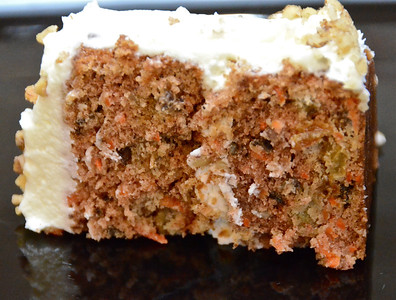
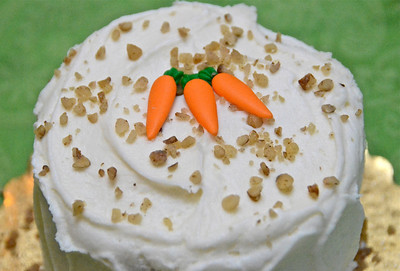
While my carrot cake preference varies from day to day, I’ll share one of my spiced takes. Dense and aromatic, this cake goes nicely with a sweetened cream cheese frosting. The recipe for the latter is taken from Rombauer et al’s The Joy of Cooking (Scribner, 1997).

SPICED CARROT CAKE
Serves 6 to 8

for the cake:
1 1/3 cups unbleached all-purpose flour
2 teaspoons baking powder
1/4 teaspoon salt
1 teaspoon ground cinnamon
1/2 teaspoon ground nutmeg
1/2 teaspoon ground cloves
1/2 cup firmly packed muscovado (dark brown) sugar
1/2 cup firmly packed light brown sugar
1/3 cup canola oil
1/3 cup applesauce
2 large eggs
2 1/2 cups grated carrots
2/3 cup finely chopped walnuts

for The Joy of Cooking cream cheese frosting:
1 (8-ounce) package of cream cheese, chilled
5 tablespoons unsalted butter, at room temperature
2 cups confectioner’s sugar, plus more if needed
2 teaspoons vanilla extract

Preheat the oven to 350 degrees Fahrenheit. Grease and line the bottom of a round, 8″, springform pan with parchment paper.

In large bowl sift together the flour, baking powder, salt, cinnamon, nutmeg and cloves. Set aside.

Using an electric mixer, beat together the sugars, canola oil, applesauce and eggs until well-combined. On low speed, fold in the grated carrots and walnuts. Once the ingredients are incorporated, fold in the flour.

Spoon the batter into the greased baking pan and smooth out the top. Bake for 40 minutes or until a toothpick inserted in the center comes out clean. Remove and allow to cool on a wire rack for 10 minutes before removing from the springform pan. Allow the cake to cool completely before icing.

To make the icing, place the cream cheese, butter, confectioner’s sugar and vanilla in the bowl of a food processor. Pulse until smooth and creamy. Spread the frosting over the top and sides of the cake.

Dining for the Year of the Dragon

Embarrassingly enough, I have long thought of Chinese New Year as the day when I head down to Chinatown, watch a dragon-festooned parade and then grab some Chinese food at whatever restaurant is the least crowded. That’s it. That’s as far as my cultural knowledge and experiences extend regarding China’s most important holiday. That is, until this year . . .

On Sunday evening I’ll be joining friends for an authentic Chinese New Year’s Eve feast. To prep myself for the night’s festivities and also rid myself of this horrible ignorance, I’ve been delving into what Chinese folks historically do to ring in a new year.

Traditionally people celebrated the end of the year with religious ceremonies and rituals. At temples they lit candles and incense and paid homage to their ancestors. At home they decorated their dining tables with red tablecloths and their windows and doors with red paper; red signifies happiness and good luck in Chinese culture. They also removed the past year’s kitchen god, offering honey and other sweets to him before burning his portrait, allowing him to ascend to heaven on wisps of smoke.

While these customs continue to this day, family and friends are now just as likely to gather together in restaurants as they are to meet in homes and temples. What they eat is still dictated by tradition, though. To start off the next year on a positive note, they favor sunny foods — foods that are round in shape and gold in color. These include oranges, tangerines, steamed buns and jien düy, fried, sesame-dusted dough balls filled with sweet bean paste.

Crescent-shaped dumplings known as chiaotse feature prominently on New Year’s menus. These small, steamed dumplings are filled with pork and cabbage, foods associated with good fortune in countless cultures. The steamed cake nien kao is also consumed at this time. Made from rice flour and brown sugar, it has a lucky word stamped in red on it.

Fish, which signify moving forward in the new year, clams, dried oysters and pig’s trotters are commonplace. As the Chinese word for fish, yu, also means “plenty,” fish is often served as the last course of the night, hinting that there will be plenty in the next year.

Pork and seafood aren’t the only meats on the menu. Chicken and duck also make appearances. For vegetarians there is Buddha’s Delight, which features mushrooms, bamboo shoots, bean curd and ginger.

Needless to say, people eat well during this period. Fortunately, I will, too. Plus, I’ll be somewhat informed as I celebrate the upcoming Year of the Dragon.

CHIAOTSE
From Elizabeth Luard’s Sacred Food (Chicago Review Press, 2001)
Makes 60 dumplings

for the filling:
2 pounds Chinese cabbage, slivered and chopped
11/2 pounds ground pork
1-3 scallions, finely chopped
2 teaspoons finely chopped fresh ginger
3 teaspoons salt
4 tablespoons soy sauce
1 teaspoon sugar

for the dough:
3 cups all-purpose flour
11/2 cups water

Blanch the cabbage in boiling water and then rinse under cold water.

Mix the cabbage with the rest of the filling ingredients, kneading thoroughly with your hands.

For the dough, sift the flour into a large bowl and pour the water into a well in the middle. Work thoroughly with your hands to make a smooth, elastic but still quite firm dough – 10 minutes kneading time.

Form the dough into a ball, cut into quarters and roll each quarter into a thick rope. Keep each rope covered with plastic wrap or a damp cloth as you work. Cut the first rope into 15 equal pieces and work each piece into a ball – flour your hands first – and drop onto a floured board.

Roll each out into a thin disk the diameter of your hand with a rolling pin. Drop in a teaspoon of filling. Pleat one side of the disk to make little gatherings and bring it over the top of the filling to meet the other side. You should have a plump crescent with a seam over the top and one side fatter than the other.

Transfer to a lightly floured baking sheet and continue until all the dumplings are made. Freeze and batches and place in bags.

Drop the dumplings in boiling water and cook for 20 minutes, until the filling is cooked through. Serve with a dipping sauce of vinegar and soy sauce.

The Simple Pleasures of Toast

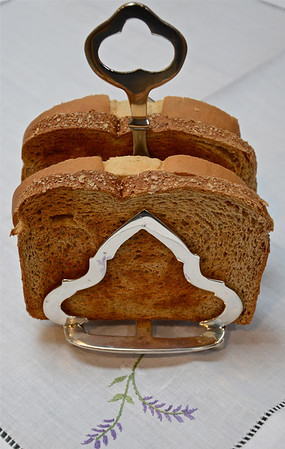
At dinner last night with friends someone asked what my favorite thing to cook was. The group roared when I answered, quite sincerely, “Toast.” For years I’ve started my day with a crisp piece of whole grain toast slathered with organic Yum peanut butter and mixed berry preserves. It may be mindlessly easy but it’s also wholesome, filling, tasty and my lifelong comfort food. Sophia Loren may have pasta to thank for her physique but, me, I owe it all to toast.

Toast has been around for centuries. Cooked over open fires, it was the perfect ancient antidote for stale bread. Want to mask the toughness and dryness of old bread? Just make it hot, golden and crunchy — make it toast.

In the Middle Ages it played an important mealtime role, sopping up meat drippings, gravies, stews and the like. Bread would disintegrate in these liquids but toast held its shape and absorbed the rich mixtures.

By the late Middle Ages cooks figured out that toast provided an edible surface on which foods could be served. Poached eggs, chopped meats, fish, cheese and baked beans all started appearing on top of toast. So, too, did honey as well as cinnamon sugar, which was moistened with sweet wine.

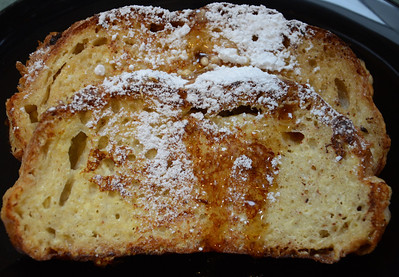
Around this time the wonderful toast dish pain perdu began appearing on French tables. The literal translation of this is “lost bread” but, since childhood, I’ve referred to egg-coated, pan-fried and sugar-dusted bread as French toast.

While the French received credit for this delicacy, other countries did have their own versions. In Spain folks ate torrijas, thick slices of toast drenched in honey, while in Portugal they consumed rabanadas. The 17th century English take on French toast was known as poor knights. Here the bread was fried alongside the egg coating and then decorated with butter, sugar and rose water.

Similar to my preference for toast with PB and preserves, my interpretation of French toast tends to be rather traditional. I dunk my bread in a mixture of milk, egg, vanilla, nutmeg, cinnamon and sugar and then pan-fry it. However, when I’m looking for an exceptional French toast dish, I haul out my copy of The Joy of Cooking (Simon and Schuster, 1997) and make this.

OVERNIGHT BAKED FRENCH TOAST
Adapted from The Joy of Cooking by Rombauer, Rombauer Becker and Becker
Serves 4

1 cup skim milk
6 large eggs
1/4 cup maple syrup plus extra for serving
2 tablespoons firmly packed light brown sugar
1 teaspoon vanilla
1 teaspoon ground cinnamon
1/4 teaspoon nutmeg
8 slices white or wheat bread, crusts removed
1/2 cup raspberries, for serving
1 to 2 tablespoons confectioner’s sugar, for serving

In an 8″ x 8″ baking dish whisk together the milk, eggs, 1/4 cup maple syrup, sugar, vanilla, cinnamon and nutmeg. Dip each slice of bread into the egg mixture, coating both sides, and then place the bread in the dish, making two compact layers.

Once all the bread has been packed into the dish, cover it with plastic wrap and refrigerate overnight.

When you’re ready to bake the French toast, preheat the oven to 400 degrees Fahrenheit. Butter a large, shallow baking pan.

Remove the slices from egg mixture and lay them in the greased baking pan. Bake, turning the bread over once, until puffy and golden in color, 12 to 15 minutes. Remove, dust the top of the French toast with raspberries and confectioner’s sugar and then pour maple syrup, to taste, over top. Serve immediately.
Hot off the Presses! Waffles!

At a recent holiday party I got pulled into a conversation about why Belgium is such a fantastic country to visit. According to the Belgium buffs, it possesses everything that anyone could ever desire — quaint cities, beautiful architecture, first rate art, few tourists and loads of excellent food including Trappist beer, fries, mussels and chocolates.

While I wouldn’t rank Belgium as my top vacation spot, I do enjoy much that this historic land and the headquarters of the European Union has to offer. Of course, I love the aforementioned art and architecture. I likewise adore the world class chocolates and beer. What sells me on Belgium, though, is its waffles.

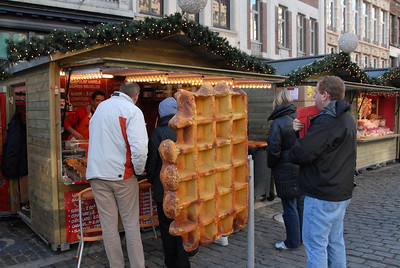
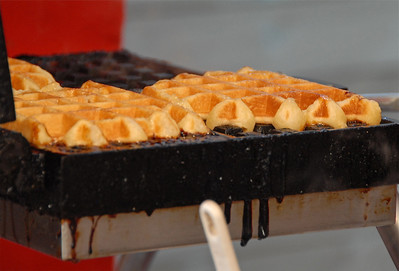
Sold throughout the country in cafes and on street corners, waffles are believed to be a spin-off of the medieval Flemish wafer. Like their small and crisp predecessor, these honeycombed cakes are cooked between two greased, patterned, metal plates.

Originally, folks pulled out their waffle irons only on special occasions. In fact, during the Middle Ages parents of a newborn girl would often receive an engraved one as a gift. It was expected that the daughter would take this press with her when she married and left home. Although still just as celebrated, today waffles irons are bestowed and waffles are consumed at any time or occasion.

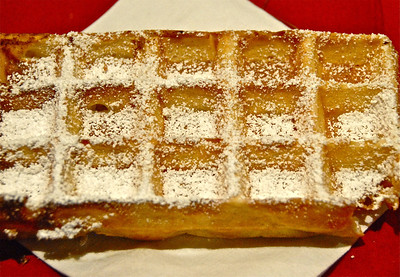
Belgium produces two distinct types of waffles — Brussels and Liege. Rectangular in shape and airy in texture, the Brussels version is what Americans refer to as a Belgian waffle. Unlike in America, where this waffle is drenched in maple syrup, in Belgium it gets dusted with a thin layer of confectioner’s sugar.

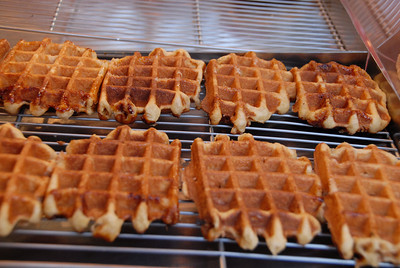
If given a choice, I make a beeline for Liege waffles. Hailing from the French-speaking city of Liege, these waffles are denser, sweeter and more filling than their Brussels counterpart. Chow down on one of these and you’ll feel as though you’ve consumed an entire meal. Truthfully, when I’m in Belgium, a warm and sugary Liege waffle often is my meal.

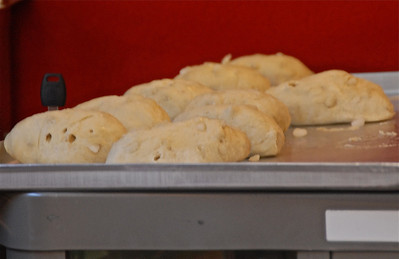
Liege waffles get their heartiness from their thick, brioche-like dough. The dough itself is studded with pearl sugar, which caramelizes as the waffle cooks. The result? One of the most divine sweets that I’ve ever eaten.

SUGAR WAFFLES FROM LIEGE
From Ruth Van Waerebeek’s Everybody Eats Well in Belgium Cookbook (Workman, 1996)
Makes 10 waffles.

Note: You’ll need to create two separate batters for these waffles.

For batter 1:
1 1/4 ounces fresh cake yeast or 2 1/2 packages active dry yeast
1/4 cup warm water
1 cup all-purpose flour
1 tablespoon granulated sugar
1 large egg, beaten
1/3 cup milk, warmed

For batter 2:
9 tablespoons unsalted butter, at room temperature
6 tablespoons all-purpose flour
1 teaspoon vanilla extract
1/4 teaspoon baking powder
1 teaspoon ground cinnamon, optional
Pinch of salt
1 tablespoon granulated sugar
1/2 cup pearl sugar or 3/4 cup crushed sugar cubes

To prepare batter 1, dissolve the yeast in a small bowl with warm water and 1 tablespoon flour and sugar. Let stand for 5 minutes until foamy.

Sift the remaining flour into a large mixing bowl. Make a well in the center and add the yeast mixture, egg and milk. Mix well with a wooden spoon to make a smooth batter. Cover with a kitchen towel and let rise in a warm place until the batter has doubled or tripled in volume.

Meanwhile, for batter 2, mix the butter, flour, salt, vanilla, baking powder, optional cinnamon, granulated sugar and pearl sugar into a paste.

Using your hands, work batter 2 into batter 1 until well mixed. Shape the dough into 10 balls approximately 2 1/2 to 3 ounces each. Flatten each ball into a disk and dust lightly with flour.

Bake the disks in a medium-hot waffle iron. Don’t let the iron become too hot or the sugar will burn. Bake until the waffles are golden brown but still slightly soft, 3 to 4 minutes. Serve lukewarm or cooled to room temperature on a rack.

A Few Good Cookbooks

With everyone rushing about, searching for holiday gifts, I’d like to suggest a few outstanding cookbooks for your shopping lists. This year I’ve slipped into full Anglophile mode, with four of my seven recommended titles coming from British authors. Yet, no matter from what side of the Atlantic these cooks come, their books will make delightful presents for the food lovers in your lives.

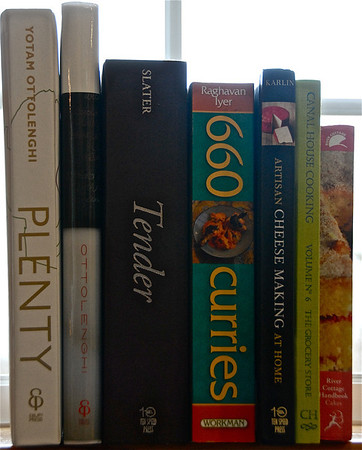
Canal House Cooking by Christopher Hirsheimer and Melissa Hamilton (Canal House)
Created by a founding editor of Saveur and the head of that magazine’s test kitchen, Canal House Cooking is a cookbook-cum-food magazine. It comes out three times per year, covering summer, fall and the holidays and winter and spring. Clothbound, ad-free and chocked full of wholesome recipes, it’s a culinary publication unlike any other. Filled with gorgeous photos and warm, funny anecdotes, it’s also a gift that your recipient will cherish throughout the year.

River Cottage Handbook No. 8 Cakes by Pam Corbin (Bloomsbury, 2011)
For bakers and sweets fans consider the latest offering from Hugh Fearnley-Whittingstall’s River Cottage Handbook series, Cakes. In this straightforward and delightful tome writer Pam Corbin explores the techniques for making great baked goods each and every time. Classic British confections such as fairy cakes and Grasmere gingerbread appear alongside such modern goodies as mocha cake and dog bone biscuits. Fascinating and fun, Cakes is a lovely addition to anyone’s cookbook collection.

660 Curries by Raghavan Iyer ( Workman, 2008)
Know someone who loves Indian food? Then 660 Curries is the cookbook to give. In it James Beard finalist and IACP award winner Raghavan Iyer provides readers with tips, techniques and recipes for making over 600 outstanding Indian curries. With this comprehensive yet user-friendly cookbook in the kitchen they’ll never order out for chicken tikka masala or naan again.

Artisan Cheese Making at Home by Mary Karlin (Ten Speed Press, 2011)
The perfect book for the cheese lover or ardent DIY cook, Artisan Cheese Making at Home takes readers through making their own dairy-based products. For more details on this fascinating book check out my review at Zester Daily.

Plenty by Yotam Ottolenghi (Chronicle Books, 2011) and Ottolenghi by Yotam Ottolenghi (Ebury Press, 2008)
I reviewed Yotam Ottolenghi’s wonderful second cookbook in late 2010 and then received his first book, Ottolenghi, earlier this year. Unlike the vegetable-focused Plenty, his eponymous book focuses on the array of Middle Eastern-inspired foods featured in his London restaurant. Like Plenty, Ottolenghi includes gorgeous photos and sumptuous, creative dishes. Unlike Plenty, the recipes must be converted from metric.

Tender by Nigel Slater (Ten Speed Press, 2011)
Another cookbook that I reviewed earlier this year, Tender shares the gardening and cooking experiences of British food writer Nigel Slater. The first of two volumes, Tender covers 29 vegetables. The subsequent volume, which is only available in Europe at present, looks at fruit. Each provides a beautiful, insightful exploration of growing and cooking your own foods.

Good Reads, Great Gifts

I confess — I’ve struggled with a lifelong addiction to books. You need only look at my overflowing bookshelves, desk, nightstand, coffee table . . . really any flat surface in my house and you will see the ridiculous number of books on which I’ve become hooked.

Culinary narratives are invariably part of my stash. Call it an occupational hazard or personal weakness but I just can’t escape the lure of food writing.

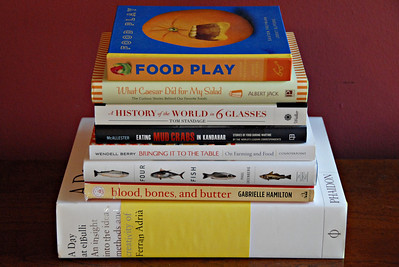
Below are the high points of my 2011 culinary reading list. Some are recent releases. A few are a bit older. All would make great gifts for the food lovers and ardent home cooks in your life. Look for these titles at your local independent bookstores or online from such independent sellers as Kitchen Arts and Letters, Powell’s and The Strand.

A Day at El Bulli by Ferran Adria (Phaidon Press, 2008)
Although Chef Ferran Adria has shuttered his world-renowned restaurant, you can still get a glimpse inside his temple to molecular gastronomy, El Bulli. A Day at El Bulli provides 600 beautifully illustrated pages covering a day in the life of the restaurant. By the time that you’ve reached the final page, you’ll feel as though you’ve not only dined many times but also worked behind the stove at this seminal restaurant.

Bringing It to the Table by Wendell Berry (Counterpoint, 2009)
Long before Michael Pollan got folks to question how and what they ate, there was Wendell Berry. Longtime writer, scholar and farmer, Berry has extolled the virtues of sustainable agriculture and eating for over five decades. This collection presents some of Berry’s best non-fiction writings on these topics. It’s essential reading for anyone concerned about mindful eating and living.

Food Play by Saxton Freyman and Joost Elffers (Chronicle Books, 2006)
My guilty pleasure and culinary photography recommendation for the past five years, Food Play provides the most fun that anyone will ever have looking at food. Featuring whimsical tableaus of fruits and veggies, this colorful book will delight readers of any age. I mean, really, who wouldn’t adore looking at strawberry dogs or a flock of cauliflower sheep?

Four Fish by Paul Greenberg (Penguin, 2011)
Anyone who eats fish should receive a copy of Paul Greenberg’s book. Intelligent, witty and always fascinating, Four Fish explores man’s long, troubled relationship with cod, salmon, sea bass and tuna, the four fish that dominate our menus. Greenberg, who is a lifelong fisherman as well as a seasoned writer, provides a balanced yet page turning account of the crises facing fish today.

Blood, Bones & Butter by Gabrielle Hamilton (Random House, 2011)
Whether you’re a fan of her writings in the New York Times or of her Lower East Side restaurant Prune or just looking for a good culinary memoir, check out Gabrielle Hamilton’s long-awaited first book. Entertaining and sharp, Hamilton shares her unique, often rocky path to becoming a chef. As with any good chef or writer, her memoir will leave you hungering for more.

What Caesar Did for My Salad by Albert Jack (Perigee Trade, 2011)
Ever wonder how pasta or picnics came to be? What gave rise to and constitutes a full English breakfast? Why we call small, cooked sausages hot dogs? If so, Albert Jack’s fascinating tome is the book for you. What Caesar Did for My Salad looks at the origins of and fabled tales about some of our favorite foods. It’s a fun book for trivia lovers as well as diehard foodies.

Eating Mud Crabs in Kandahar Edited by Matt McAllester (University of California Press, 2011)
Even if your gift recipients didn’t have that childhood dream of becoming a war correspondent as I did, they will enjoy McAllester’s compilation of food tales from reporters in conflict zones. His riveting book looks at what it means to eat and what folks resort to eating in times of extreme hardship and violence. Intimate and engaging, these stories will stick with readers for months to come.

A History of the World in 6 Glasses by Tom Standage (Walker Publishing, 2006)
If you have history buffs on your shopping list, consider giving them A History of the World in 6 Glasses. Here British journalist Tom Standage explores six drinks — wine, beer, spirits, coffee, tea and soda — that shaped world history. Once your friends and loved ones have read Standage’s compelling book, they’ll never look at, or drink, a can of Coke the same way.