Latest Posts

Misunderstood Macadamias


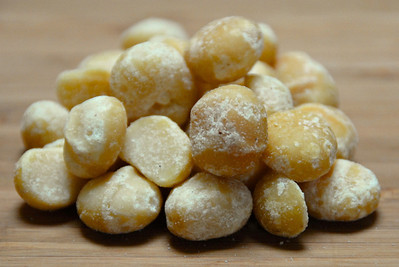
Compile a list of misunderstood foods and macadamia nuts would undoubtedly rank near the top. For years I’ve heard them called everything from macadamien and macadam to plain old mag nuts. Then there’s the issue of origin. Although macadamia trees hail from Northeast Australia, many folks insist that they’re native, if not exclusive, to Hawaii. Get past those misconceptions and you face the question of consumption. How do you cook with macadamia nuts? More than a handful will argue that you don’t cook these plump, buttery jewels; you eat them straight from the vacuum-packed can.

Uncultivated in Australia until the late 1800’s, these nuts initially were called Queenslands nuts. Botanists later changed their name to macadamia to honor the chemist, John McAdam, who had promoted their cultivation.

In the 1890’s macadamia nuts traveled to Hawaii. Because they prefer moist yet well-drained, fertile soils and moderate temperatures, the trees and nuts thrived there. In fact, today the state produces close to 90% of the world’s macadamia nuts.
What do you do with macadamia nuts? Most people eat the roasted, salted nuts directly from the jar or can. However, because of their rich, unique taste, I prefer to use them as flavor enhancers and cook and bake with them.

In terms of affinities these nuts go particularly well with apricots, bananas, dark and white chocolate, dates, figs, lime, mangos, peaches, raspberries and vanilla. They also pair nicely with cashews, chicken, cod, crab, goat cheese, halibut, mahi mahi, mint and scallops. Because they marry with both sweet and savory foods, I put them in desserts as well as in stuffings and crusts for seafood and in seasonal salads.

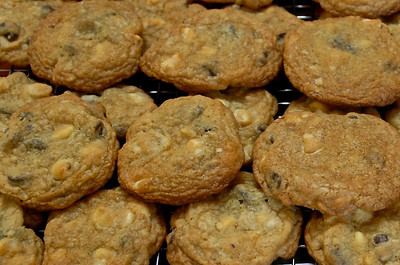
The following treat comes directly from the pages of Bruce Zipes’ Bruce’s Bakery Cookbook. It’s one of those rare recipes that’s so perfect, I haven’t changed a thing.

DOUBLE CHOCOLATE CHIP COOKIES W/ MACADAMIA NUTS
From Bruce Zipes’ Bruce’s Bakery Cookbook (Random House, 2000)
Makes about 36 cookies

1 cup all-purpose flour
1/2 teaspoon baking soda
1/2 teaspoon salt
1/2 cup unsalted butter, softened
1/2 cup firmly packed light brown sugar
1/4 cup granulated sugar
1 egg
1 teaspoon vanilla extract
3/4 cup coarsely chopped macadamia nuts
6 ounces bittersweet chocolate, coarsely hopped
6 ounces white chocolate, coarsely chopped

Preheat the oven to 375 degrees Fahrenheit.

In a medium-sized bowl sift together the flour, baking soda and salt. Stir to combine.

Using an electric beater and in a large bowl, beat the butter until creamy. Add the sugars and beat another 2 to 3 minutes, until the mixture is light in texture and color. Scrape down the sides of the bowl and add the vanilla and egg, beating well.

On low speed beat in the flour mixture in two additions, scraping down the sides of the bowl with each addition. Stir in the macadamia nuts and chocolates.

Shape the dough into balls and place them two inches apart on ungreased cookie sheets. Bake for 8 to 10 minutes or until the edges are lightly browned. Cool the cookies on the baking sheets for 2 minutes and then transfer to wire racks to cool completely.
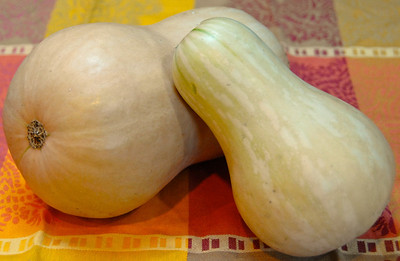
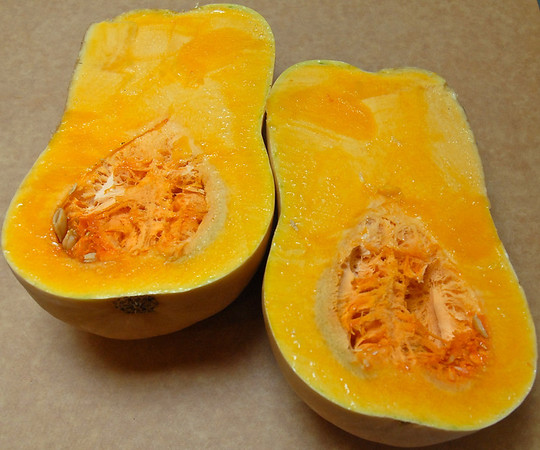
Squash!

Stop to admire a friend’s flourishing fall garden and you may walk away with an armload of autumn vegetables. This happened to me two weekends ago when I visited college friends in Lancaster County, Pa. Although I had gone to Amish country empty-handed, I returned home with bags of homegrown pumpkins and butternut squash. Unquestionably, I was grateful for the unexpected gifts but I was also at a loss for what to do with all this food.

Considered by many cooks to be the best winter squash, the bowling pin-shaped butternut possesses a tough, smooth, tan skin. Cut into the skin with a heavy, serrated knife and you’ll find creamy, orange, fragrant flesh. Some compare its sweet, rich flavor to sweet potatoes while others liken it to roasted chestnuts. To me it tastes like butternut squash.

A versatile vegetable, this squash goes nicely with savory foods such as bacon, anchovies, cheese, garlic and onions. It also compliments such sweets as brown sugar, coconut, maple syrup, vanilla and yams.

In spite of its versatility I tend to use butternut squash in a limited number of recipes. Because it bakes, braises and mashes well, I feature it in gratins, soups, mashes and purees. While these are all great dishes, I should broaden my use of this lovely, low-calorie, high fiber veggie. I should expand my squash repertoire.

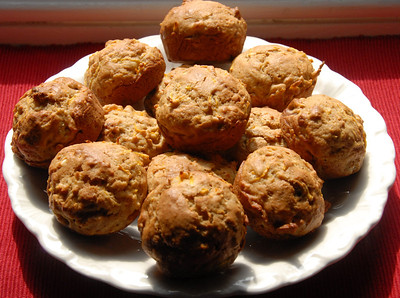
Cashing in on the vegetable’s sweetness, I turned some of my squash stash into muffins. As you might expect from a baked good dubbed “butter-nut-squash,” the following muffins include butter, nuts and squash.

BUTTER-NUT-SQUASH MUFFINS
Makes 2 dozen

3 cups all-purpose flour
1 teaspoon baking powder
1 teaspoon baking soda
1/2 teaspoon salt
1 teaspoon cinnamon
1/2 teaspoon nutmeg
1/4 teaspoon ground cloves
1 2/3 cups grated butternut squash (from 1/2 small squash)
1 cup roughly chopped walnuts
4 eggs, at room temperature
3/4 cup firmly packed light brown sugar
6 tablespoons unsalted butter, melted and cooled
1/3 cup milk, at room temperature
1 teaspoon vanilla

Preheat the oven to 400 degrees Fahrenheit. Grease 2 (12-cup) muffin pans and set aside.

In a large bowl sift together the flour, baking powder and soda, salt, cinnamon, nutmeg and cloves. Add the squash and nuts and toss to coat.

In a separate bowl whisk together the eggs, sugar, butter, milk and vanilla. Once the liquids are well-blended, add them to the flour mixture and stir until just combined. Don’t overmix the lumpy batter.

Spoon the batter into the greased muffin cups and bake for 20 to 22 minutes; when finished, the muffins will be golden brown on top. Remove the pans from the oven and allow the muffins to stand for 2 to 3 minutes. Remove the muffins from the pans and, placing them on a wire rack, allow them to cool before serving.

When in Singapore, Sling It!

To me, no trip to Singapore could ever be complete without trying a deliciously fruity, ever-so potent Singapore Sling. Face it. If you’ve been shoe horned into your economy class seat for 25-plus hours — or a paltry 19, if you can swing a non-stop flight — then you’ve earned a vibrant and strong chilled cocktail. You’ve earned a Singapore Sling.

Drop by Raffles Hotel and you’ll get not only the colorful drink but also its history. As the lore goes, it was here, in the hotel’s Long Bar, that bartender Ngiam Tong Boon whipped up the first Singapore Sling. Although the exact date remains unknown, it’s believed that he created his ‘cocktail for ladies’ sometime between 1907 and 1910.

The sling itself had been around since the turn of the 19th century. A fairly generic term, sling referred to a beverage containing brandy, gin, vodka or whisky, confectioner’s sugar and fruit juice.

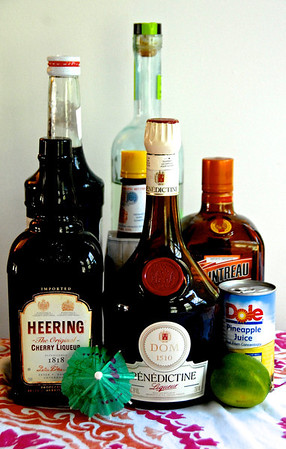
What Boon had invented contained far more than just three ingredients. While the original recipe was lost in the 1930’s, notes from the previous decade indicate that his concoction included gin and lemon juice as well as the herbal liqueur Benedictine, cherry brandy, Angostura bitters and orange juice. Poured into either an old fashioned, high ball or Collins glass, it was topped off with club soda and a spiral lime peel.

It’s been said that no two Singapore Sling recipes are alike. After hours spent searching through bartender’s books and websites for the authentic Raffles Hotel drink, I’d have to agree. Maybe it was the Long Bar’s plantation-style atmosphere — palm frond fans, leather stools, wicker chairs and mahogany everywhere — or that I’d made it to sultry Singapore or that I hadn’t slept in days but I never found a recipe to match the complex flavor of that pink, ambrosial treat. Having said that, the following comes close to what I fell for.

SINGAPORE SLING
Cobbled together from sundry recipes, this version serves one but I always make at least two. With something this strong it’s best not to drink alone.

Serves 1

2 ounces gin
1 ounce Cherry Heering liqueur
1/2 ounce (1 TBSP) grenadine
1/4 ounce (1/2 TBSP) Benedictine
1/4 ounce (1/2 TBSP) Cointreau
4 ounces pineapple juice
1 ounce lime juice
1/2 teaspoon confectioner’s sugar
dash of Angostura bitters
ice cubes, for shaking
1 to 2 maraschino cherries, for garnish
1 paper cocktail umbrella or bamboo pick, for garnish

Place everything but the garnishes in a cocktail shaker and shake together until frothy and chilled. Pour the Singapore Sling, sans cubes, into a tall glass. Skewer the maraschino cherries onto a cocktail umbrella or pick and place them on the edge of the glass. Serve immediately.

Sizzlin’ Satay

Over Labor Day weekend I invited few friends over for Singapore Slings and chicken satay. You know how it goes. I visit a foreign country, buy and lug home 20 pounds of cookbooks and then have to justify my aching back and sagging bookshelves with exotic drinks and noshings.

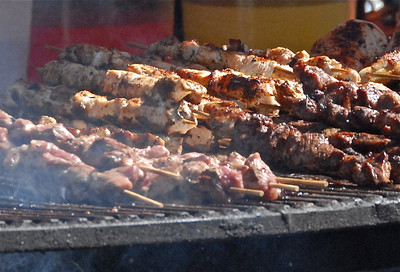
Depending on where you’re from, you may refer to what I grilled as a kebab, souvlaki, yakatori, espetada, shashlik or brochette. Then again, you might skip the fancy name and just say, “meat-on-a-stick.” However, if you’re eating Southeast Asian cuisine, you can only be talking about one thing — satay.

Some historians attribute satay to the Indonesian island of Java. There Muslim traders from India reputedly introduced the islanders to kebabs. Indonesian cooks transformed these grilled hunks of skewered meat into the marinated and grilled strips of chicken, fish or meat known as satay.

While Indonesia may lay claim to its creation, many Southeast Asian countries feature satay in their cuisines. It’s especially popular in Thailand, Malaysia and Singapore. Served with a dipping sauce made from boiled ground peanuts, satay makes a lovely appetizer, main dish and accompaniment to a chilled Singapore Sling. More on that beverage later. For now . . .

SINGAPOREAN CHICKEN SATAY
Adapted from Sharon Wee’s Growing up in a Nonya Kitchen (Marshall Cavendish, 2012)
Serves 4 to 6

1 1/2 tablespoons granulated sugar
1 tablespoon ground coriander
1 tablespoon minced galangal
1 teaspoon cumin
1 teaspoon ground turmeric
1/2 teaspoon salt
1/4 teaspoon fennel seeds
1/2 stalk lemongrass, roughly chopped
1 large shallot, roughly chopped
5 cloves garlic
1/4 cup coconut milk
1 1/2 pounds skinless chicken breasts, cut into 1-inch cubes
olive oil, for greasing
bamboo skewers, soaked in water for 30 minutes before using
peanut sauce, optional, for serving

In the bowl of a food processor or blender pulse together the sugar, coriander, galangal, cumin, turmeric, salt, fennel, lemongrass, shallot, garlic and coconut milk until a thick, fairly smooth marinade forms.

In a large bowl or dish toss the marinade and chicken cubes together until all the cubes are coated. Cover the container with plastic wrap and refrigerate for a minimum of 1 hour or maximum of 24 hours.

Preheat a grill on high. Evenly spread a layer of olive oil over a sheet of aluminum foil; the foil should be large enough to cover your grill grate.

Remove the chicken from the refrigerator and thread the cubes onto the presoaked skewers, leaving about an inch between each piece. Depending on the length of the bamboo, you should fit either 3 or 4 cubes onto a skewer.

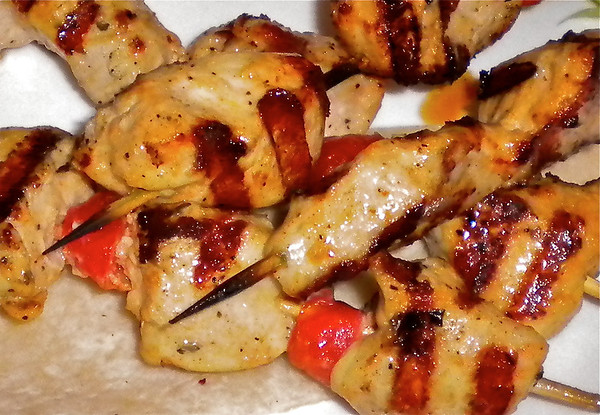
Lay the greased aluminum foil, oil-side up, on the preheated grill and place the skewers on it. Cover and cook, turning periodically, until the chicken is firm, golden and cooked through, about 8 to 10 minutes. Depending on the size of your grill, you made need to do this in batches.

Serve the chicken satay on the skewers and optionally alongside store-bought peanut sauce. Note that homemade peanut sauce will be covered in a future Kitchen Kat entry.

The Versatile Mr. Catfish!


After graduating from college and moving to suburban Philadelphia, what I wanted, more than anything, was to adopt a dog. What I got was a cat, Andy Peabody, who came with a homemade, nondescript toy called Mr. Catfish. The gentle, gray tabby became my doorway into pet ownership. His beloved, yellow-and-gray pipe cleaner toy became, in its own weird way, my introduction to catfish.

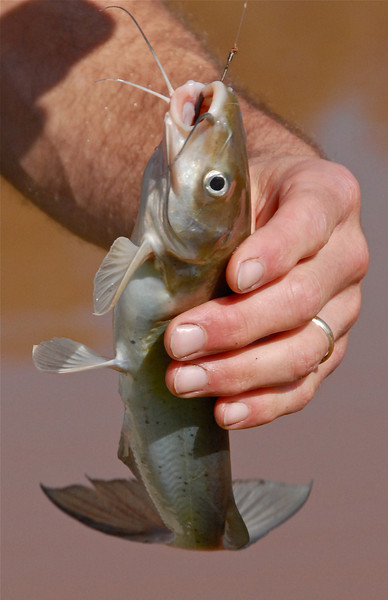
Over the weekend I was reminded of Andy and his quirky sidekick when I went fishing in Marietta, Ohio. There the catch of the day was the benign, whiskered channel catfish.

Of the 28 varieties of North American catfish, channel remain the most commercially important. Fast-growing and highly sustainable, they thrive in rivers, lakes, reservoirs and ponds. Although they can reach 50 pounds in the wild, the Ohio channel cats that we caught – and released – were closer to one and a half pounds.

Had we kept these fish, we could have expected a meal with an earthy tang to it. Because wild catfish happily potter about in murky waters, they develop a muddy flavor that farmed ones don’t possess. Yes, in this instance, farmed fish actually taste better than wild-caught. That’s great news for cooks and consumers for channel catfish are America’s most commonly farmed fish.

Often when I hear “farmed” in relation to seafood, I think environmental pollutants, disease and fish escapes——food that I don’t want to purchase or consume. This is not the case with U.S.-farmed catfish. Raised using environmentally sound aquaculture, these guys remain one of the eco-friendliest options in American markets.

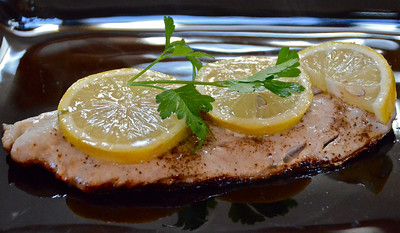
Along with sustainability, catfish also has in its favor versatility. I often use it in place of such over-fished favorites as cod, orange roughy and perch. It responds well to almost every cooking technique, including baking, broiling, frying, grilling, poaching, sautéing, stir-frying and steaming. Its delicately sweet meat marries well with bell peppers, chiles, garlic, lemon, onions, paprika, pecans, tomatoes, sesame, soy sauce and vinegar. Native to the South, catfish makes frequent appearances in this region’s cuisine and pairs nicely with Cajun and Creole seasonings.

SPICED CATFISH

Serves 4
4 (4 to 6-ounce) catfish fillets
Sea salt, to taste
Freshly ground black pepper, to taste
Freshly squeezed juice of 1 lemon
1 1/2 teaspoons paprika
1 teaspoon garlic powder
1/2 teaspoon cayenne pepper
2 tablespoons unsalted butter, cut into chunks

Preheat the oven to 450°F. Grease the bottom of a medium baking dish.
Season both sides of the fillets with salt and pepper and place them in the baking dish. Pour the lemon juice over the fillets.

In a small bowl stir together the paprika, garlic powder and cayenne pepper. Sprinkle the seasoning over the fillets and then dot the fillets with the butter. Bake, uncovered, until the fish becomes firm and can be flaked with a fork, 12 to 15 minutes. Serve immediately.

Feast from the Forest and Field

Last week I owned up to my dearth of gardening skills. What I lack in ability, I more than make up for in my enthusiasm for others’ horticultural handiness. So, when a friend invited me on a foraging walk last weekend, I jumped at the chance. I mean, really, who has a greener thumb than Mother Nature?

As you might expect from someone who blundered through gardening, I struggle with identifying wild edibles. Set set me loose in the forest to collect stinging nettles or chanterelles, I’m likely to pull out a clump of poison ivy or toxic jack o’ lantern mushrooms. Obviously, these are not the ingredients of a lovely soup or sauté. However, if you put me in charge of foraging, these are what you might receive. Yeah, I need to learn a bit about harmless versus deadly wild plants.

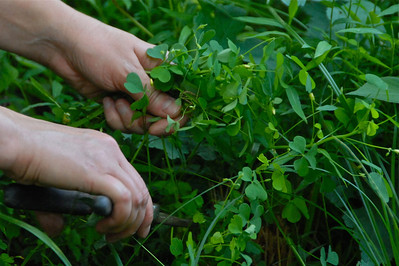
Led by naturalist Steve Brill, the ecology walk featured such wholesome plants as garlic mustard, wild ginger and purslane. Things that I had dubbed “worthless weeds” and yanked from my overgrown garden likewise made appearances. Had I known that delicate lemon wood sorel possessed such a pleasing citrus flavor, I would have added it to salads instead of to our overflowing compost bin.

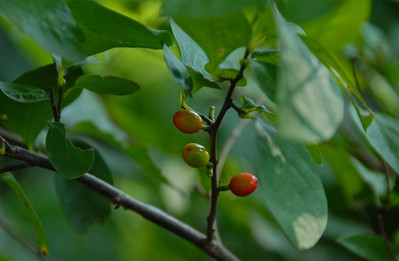
Greens weren’t the only foods found. The woods were dotted with crab apple, black cherry and persimmon trees. All that fruit, right at our fingertips. The squat, shrubby spicebush also popped up along our path and offered multiple culinary uses. I could pour hot water over the leaves for tea or chop up the hard, red berries to flavor quick breads and other baked goods.

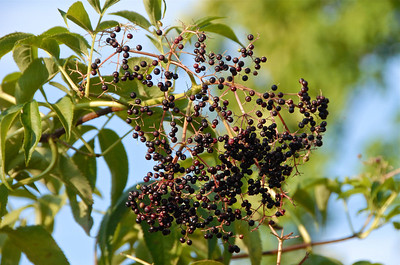
Although I enjoyed learning about these edibles, what I longed to see were elderberries. Found throughout North America, Europe and Western Asia, these tiny, black berries make tart and tasty jellies, sauces, syrups, chutneys, pies and soups. Because they contain a small amount of a toxic alkaloid, elderberries should be cooked before being consumed. Nonetheless, on the walk we all sampled a raw one or two. So far, so good.

While elderberries hung heavy from their slender branches, I still couldn’t collect enough to cook. However, the next time that I come across a half-pint of these berries at a farmer’s market, I’ll whip up the following pies.

INDIVIDUAL APPLE-ELDERBERRY PIES
Here the winey tang of elderberry pairs with the tart sweetness of apple for these delicious, open-faced pies.
Serves 6

5 medium-size Granny Smith apples, cored, peeled and diced
3/4 cup sugar
3/4 teaspoon cinnamon
1/4 teaspoon nutmeg
1/8 teaspoon salt
1/3 cup water
1 cup elderberries
2 sheets phyllo, defrosted
1/4 cup butter, melted
Confectioner’s sugar, for decorating
Vanilla ice cream, optional

Heat the oven to 350 degrees. Grease a 6-cup muffin pan.

Place the apples, sugar, cinnamon, nutmeg, salt and water in a medium-size saucepan and bring the contents to a boil. Cover and cook over low heat for 5 to 10 minutes, until apples are soft. Add the elderberries and stir to combine. Strain the mixture, reserving the liquid. Allow to cool.

Cut the phyllo into 24 squares, each measuring 4 inches by 4 inches. Cover the squares with a damp cloth. Take one square and brush the top with butter. Place another square at an angle on top of this square and brush the second square with butter. Repeat the steps with two more squares; you will have a stack of four overlapping squares. Place the buttered, overlapping squares into a greased muffin cup. Repeat these steps with the remaining phyllo squares.

Spoon the apple-elderberry filling into the pastries, filling each to the top. Bake the pies for 20 to 25 minutes or until golden brown.

Meanwhile, return the cooking liquid to the saucepan and cook until it thickens into a syrup. When the pies have finished baking, cool them for 5 to 10 minutes before gently removing them from the pan. Place each one on a plate, spoon the syrup over the top, dust with confectioner’s sugar and serve with a scoop of vanilla ice cream, if desired.

What to Do with All That . . ..

After years of kidding myself that one day I’d grow bushels of pert tomatoes and eggplants at our suburban Philadelphia farmhouse, I’m finally throwing in the towel on gardening. It’s never helped matters that I’m not there enough to consistently weed and water a garden or that every vegetable planted feeds not my family and friends but those of groundhogs and deer. There’s another reason, though, behind my bailing out on horticulture. Truthfully, I’m a lousy gardener who can’t even keep the lowest maintenance plants—garlic, onions, potatoes—alive.

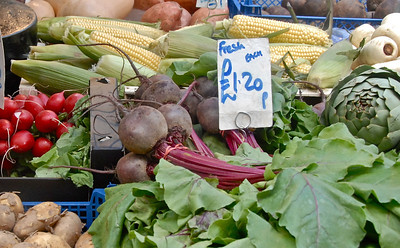
In spite of my black thumb each August I find myself wondering what to do with all the season’s produce. Gardeners can’t seem to give the stuff away. Well, actually, they can and do but, as the overwhelmed recipient, I often find myself wanting to give it back. Such is the case with corn.

The problem with corn is that I never receive just four or five ears. Whether I drop by my favorite farmer’s market or a friend’s backyard garden, I invariably leave with at least a dozen ears of freshly picked corn. This is a wonderful gift on nights when I’m cooking for six or more people but not so great when I’m making a meal for two.

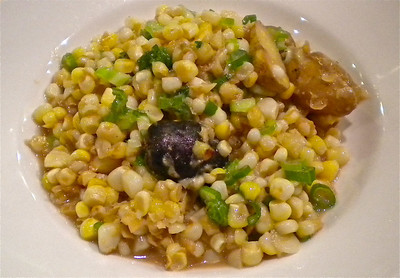
What to do with all this corn? Over the years I’ve dropped countless ears into pots of boiling water or onto hot grills. I’ve sliced off the kernels and made them into sautés, casseroles, stews and soups. Corn bread and muffins? Been there and done that so many times. The same can be said for corn relishes, salsas, puddings and flans. While I’ve not ground my own cornmeal for polenta, I have run the kernels through my food processor and made tasty corn purees. Yet, on nights when I’m out of ideas for that mound of shucked corn, I turn to the following standby.

WARM SUMMER CORN SALAD
Serves 6

2 tablespoons salted butter
1 large garlic clove, grated
4 cups fresh corn kernels
1 large red bell pepper, chopped
11/2 teaspoons minced fresh basil
Sea salt, to taste
Freshly ground black pepper, to taste

Heat the butter in a medium sauté pan. Add the garlic and sauté until softened but not browned, 2 minutes.

Add the corn and pepper, toss to combine, and cook for another 5 minutes. Add the basil and stir to combine. Taste and add salt and pepper. Serve immediately.

Pop on over!

popover

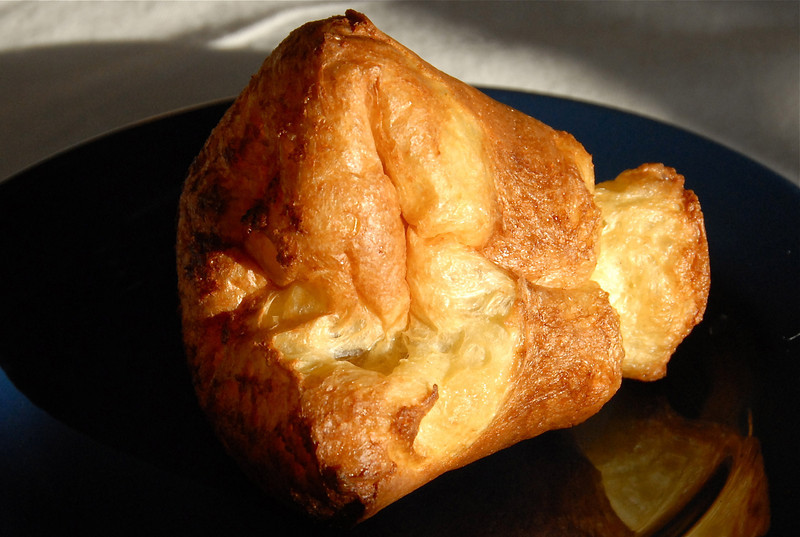
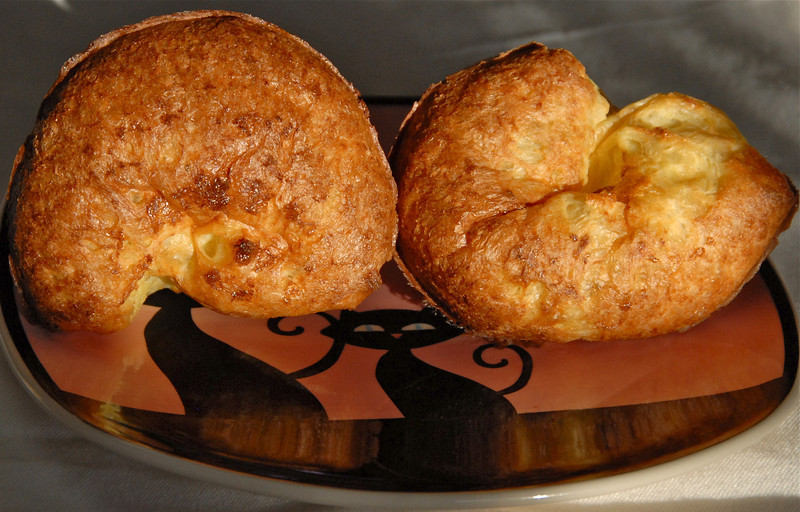
They’re airy! They’re crisp! They’re buttery! They’re one of the best foods adapted from English cooks. They’re popovers!

Derived from Yorkshire pudding, that puffy mainstay of the British Sunday roast, popovers date back to 19th century America. Unlike their English forbearer, which was baked in a rectangular pan with a layer of meat drippings, popovers were cooked without beef fat in individual cups. As a result, instead of a fluffy souffle-like dish, you ended up with golden, crusty yet velvety rolls.

popovers on a plate

Freshly baked popovers

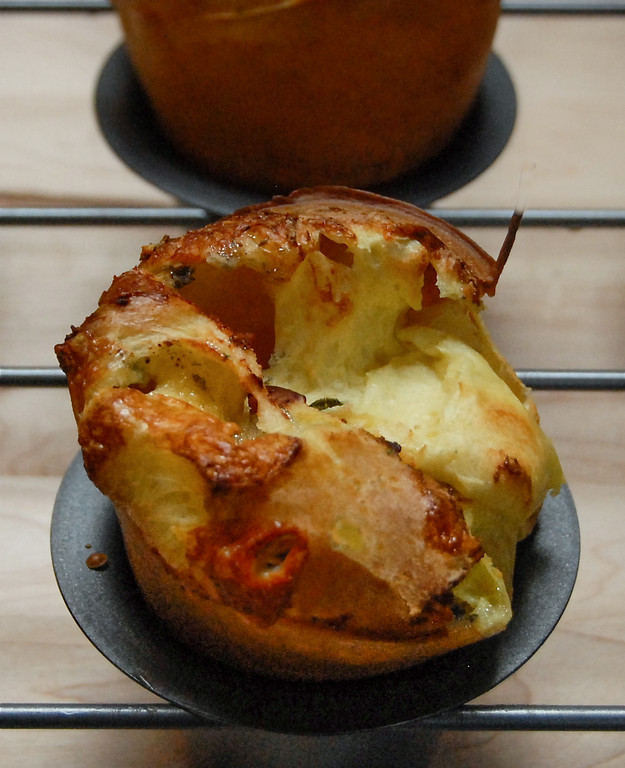
Similar to Yorkshire pudding, popovers come from a simple combination of eggs, milk, butter and flour. The ratio of liquid to dry ingredients gives the batter its levity or “popover-ness.” In the oven the liquids create steam, which causes the rolls to puff up. Tear into a popover and you’ll find a perfect hollow center, the lovely side effect of all that steam.

Steam also provides these baked goods with their name. As the steam increases, it pops the batter over the sides of each individual baking cup. Hence the moniker “popover.”

popovers

Rosemary Stilton popovers

Although some bakers claim that muffin tins make acceptable popovers, I prefer to use deep, cup-shaped, commercially produced popover pans. With muffin tins my rolls look like squashed mushroom caps. With popover pans they look as they should, like popovers.

Popovers can be flavored with herbs, spices or cheese. Because I love the subtle taste of these rolls, I usually leave them plain or flavor them after baking with preserves or sun-dried tomato, garlic or herb butter. The choice is yours.

ROSEMARY STILTON POPOVERS
If you prefer a plain popover, just leave out the chopped rosemary and cheese. Likewise, if you want to make mini popovers, use a mini muffin pan in place of the traditional popover pan. In this case it won’t matter if your baby popovers look like little mushrooms.

Makes 12 standard size or 36 mini popovers

1 1/2 tablespoons melted unsalted butter, plus more butter for greasing pans
3 extra-large eggs, at room temperature
1 1/2 cups skim milk, at room temperature
1 1/2 cups all-purpose flour, sifted
1/2 teaspoon kosher salt
1/4 teaspoon ground white pepper
1 tablespoon minced fresh rosemary
scant 1/4 cup crumbled English Stilton or other rich blue cheese

Preheat the oven to 425 degrees Fahrenheit.

Grease the popover pans with butter. Place in the oven for 2 to 3 minutes to preheat.

Whisk together the butter, eggs, milk, flour, salt, pepper, rosemary and cheese until smooth. Pour the batter into the preheat pans, filling each cup to less than half full. Bake for 30 minutes, until golden brown and puffy. Serve hot.

Soba at Home

Last week I owned up to my obsession with and quest for great soba in Japan. Prior to this trip, I’d been satisfied with dried soba from the Asian section of Fairway Market. Now, however, I’m like those Italian food snobs who shun anything but handmade pastas. I want my noodles fresh and unprocessed. I want my noodles made by hand.

With a copy of Takashi Yagihashi’s Takashi’s Noodles spread out on my kitchen counter I set out to create soba. Yagihashi’s clear directions and illustrative, color photographs made it seem easy. After all, the recipe only required three ingredients and a bit of kneading. How hard could it be?

I quickly realized that, as with pasta, soba making is an art that I wouldn’t master on the first or second try. Ingredients were one obstacle. Buckwheat flour is not as elastic as other flours; it doesn’t contain gluten, a necessary component for stretchiness. To compensate for this absence, cooks often use a ratio of 20% gluten-rich whole wheat flour and 80% buckwheat flour in their soba.

Following Yagihashi’s recipe, I added 1/3 cup, less than 20%, all-purpose flour; this flour has a slightly lower gluten content than whole wheat. The resulting dough was more crumbly than stretchy. I later switched to whole wheat flour and bumped up the amount to 7 generous tablespoons, making the dough a tad more pliant than the original.

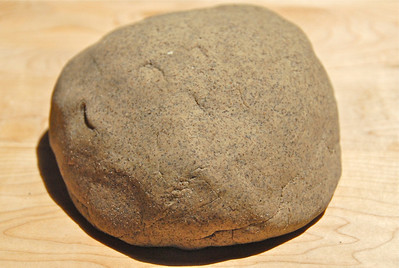
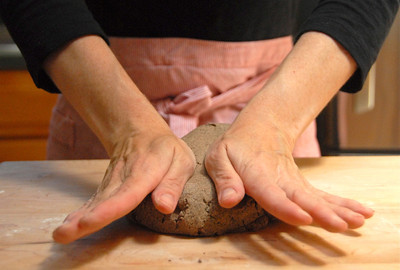
Knowing how long to knead was another hurdle. Initially I didn’t do it long or vigorously enough. As a result, when I rolled out the dough, it tore. Accepting that I’m not the strongest of kneaders, I substituted my stand mixer’s sturdy dough hook for my wimpy arms. I then ended up with springy dough that slid back into shape with each roll of the pin. Frustrated, I returned to hand kneading and just worked beyond the suggested 5 to 6 minutes. If you, too, suffer from scrawniness, knead your dough for 8 to 10 minutes. It will be smooth, shiny and fairly elastic when done.

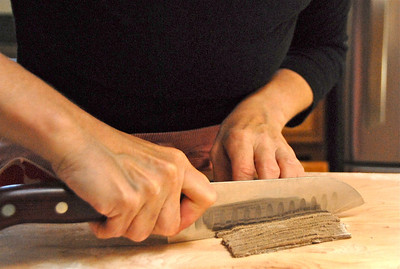
In Japan soba is cut with a flat, 12″ long and 6″ wide knife known as a soba kiri. In my kitchen it’s sliced with a Santoku knife. If you own a sharp, Japanese knife, you might as well use it on this Japanese specialty. Otherwise, any long, flat-bladed knife should work. I suspect that even a bench scraper would do the trick.

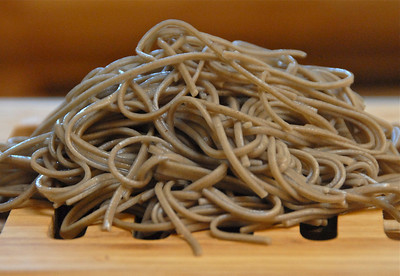
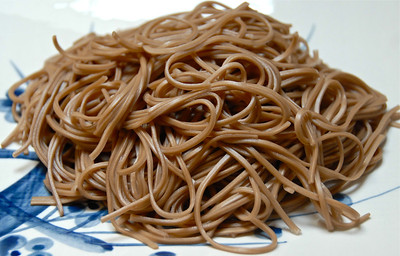
Fragrant noodles cut and impediments overcome, the last step was to boil the soba for 30 to 60 seconds in unsalted water. Once they’d finished cooking, I plunged them into ice water to cool. After that I drained, dried and ate the soft, nutty noodles with a smidgen of soy sauce and sesame oil. Easy to make? Not yet. More delectable than dried? Absolutely!

BASIC SOBA
Adapted from Takashi Yagihashi’s Takashi’s Noodles (Ten Speed Press, 2009)

2 1/4 cups buckwheat flour (available online from shops such as Kalustyan’s)
7 tablespoons whole wheat flour
1 cup water, at room temperature, plus more as needed

Sift the flours together in a large bowl. Add the water and mix the ingredients together by hand. If the dough seems too dry, add more water in small increments. You want the mixture to be firm and smooth, like pasta dough, but not crumbly.

Form the dough into a mound and place it on a lightly floured work surface. Knead by folding the dough over once and pressing downward and forward with your hands. Turn the dough one-quarter clockwise and continue kneading and turning for 5 to 10 minutes, until the dough becomes smooth, shiny and stretches when pulled. Cover the dough with cling wrap and allow it to rest for 20 minutes at room temperature.

After 20 minutes unwrap the dough and divide it in half. Cover one piece and place the other on a lightly floured work surface. Using a flour-dusted rolling pin, roll out the dough until it becomes a rectangle 18 inches long and 1/16-inch thick.

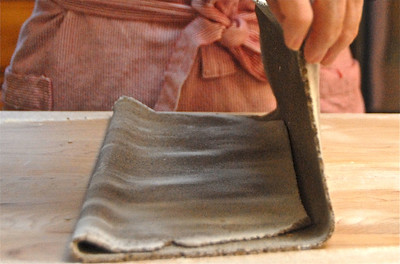
Fold the dough into thirds. Using a flat, sharp knife and a lightweight box or board as your guide, slice the folded dough into 1/8-inch thick noodles. Shake out the cut noodles and set them aside until ready to cook. Roll out and cut the second piece of dough.

At this point you’re ready to cook your noodles. For recipes see the entries Searching for Soba and Southeast Asian Soiree.

Searching for Soba

When I told friends that I’d be traveling to Japan last month, the first or, depending on the person’s love of manga, Godzilla movies or Hello Kitty, second thing mentioned was sushi. Eyes lit up with thoughts of velvety, coral-colored toro blanketing perfectly made beds of vinegared white rice. Although I love sushi, I had a different culinary mission for Japan. As soon as the plane touched down in Tokyo, I went on a hunt for soba.

The name for the thin, grayish-tan noodles as well as the buckwheat flour from which they’re made, soba has long been a favorite food. It has a warm, earthy flavor, nutty aroma and firm texture that I adore. I likewise appreciate that it can be eaten hot or cold, with or without stocks or sauces and on its own or with meats, herbs and/or vegetables atop it. Plus, it’s loaded with nutrients and a decent source of vitamins B, C and E and protein. What’s not to love?

Once in Japan, I didn’t have to look long or hard for my quarry. Consumed since ancient times, soba is especially popular in the country’s northeast region, which includes Tokyo. It’s a food consumed not only in every day life but also on special occasions such as New Year’s Eve and when meeting new neighbors. The long noodles are said to represent long, happy lives and relationships.

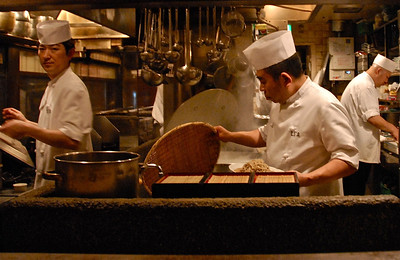
I had my first taste of Japanese soba at Meigetsuan Tanakaya in the Ginza district of Tokyo. There I ordered mori soba; these are plain, cold noodles accompanied by a dipping sauce. Truthfully, I wasn’t sure what I’d requested for the servers didn’t speak English and my grasp of Japanese didn’t extend beyond “Konnichiwa. Soba. Domo arigato” or “Good afternoon. Soba. Thank you very much.” Nonetheless, I was thrilled by my simple, healthful and tasty lunch. I was likewise delighted by my view. Seated at a wooden counter, overlooking the kitchen, I watched the chefs cut, cook and plate the delicate noodles as I stuffed myself with them.

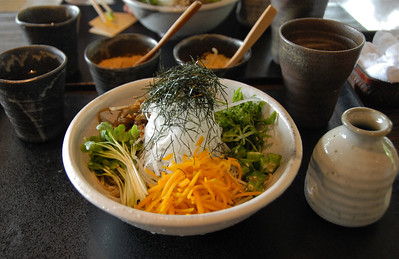
My soba quest didn’t end at Meigetsuan Tanakaya or in Tokyo. In Kyoto I wolfed down kake soba. This hot dish features scallions, chilies, cubed tofu and nutty noodles floating in warm dashi stock. I also tried tempura shrimp, carrots and zucchini blossoms served over cold soba. At Arashiyama Yoshimura near the base of Mount Arashiyama I had a spectacular cold vegetable soba. Featuring enokitake mushrooms, shredded nori and carrots, sliced scallions and okra, and sprouts, this repast tasted as sumptuous as it looked.

Because I am so infatuated with these noodles, I’ll continue the discussion next week with steps on how to make soba from scratch. Until then . . .

COLD SOBA W/ PETITE PEAS
If you don’t love peas, serve the noodles on their own with the scallions and sauce.
Serves 4 to 6

1 pound dried soba noodles
10 ounces frozen baby/petite peas
2 scallions, whites and 1-inch of greens thinly sliced
1 tablespoon minced fresh ginger
3 tablespoons light soy sauce
2 tablespoons rice wine vinegar
1 tablespoon honey
1 1/2 teaspoons sesame oil

Cook the soba according to the package’s instructions. Drain and plunge the noodles into a bowl of ice water to stop from further cooking.

As the soba is cooking, boil the peas until just tender, 3 to 5 minutes.

In a small bowl mix together the scallions, ginger, vinegar, soy sauce, honey and oil.

Drain the noodles. Place the noodles and peas in a serving bowl, pour the sauce over the top and toss to combine.