Latest Posts

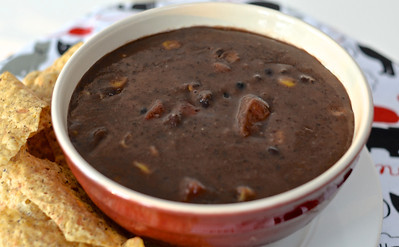
Warming up Again with Black Bean Soup

After weeks of slipping and sliding across icy sidewalks, trudging through knee-high snowbanks and shivering in spite of four layers of clothes the only positive thing that I can say about winter is that it gives me an excuse to make soup. Why soup? It’s one of the easiest, most versatile dishes around. Put water or stock, vegetables and seasonings in a pot. Add heat and – voila! – in a short time you’ve got a filling, wholesome meal.

One of my many favorites is peppery black bean soup. Featuring just enough spices to chase away the cold, this soup will warm you from head to toe. You can quickly turn this into a vegan offering by substituting vegetable for chicken stock.

PEPPERY BLACK BEAN SOUP
Serves 6 to 8

2 tablespoons olive oil
1 large white onion, diced
4 cloves, minced
4 (15-oz) cans black beans
3/4 teaspoon ground cumin
1/2 teaspoon sweet paprika
1/4 teaspoon crushed red pepper
1/4 teaspoon cayenne
2 cups chicken or vegetable stock
1 (15-oz) can diced tomatoes and their juices
1 1/4 cups fresh or frozen corn
Salt, to taste
Sliced batard or corn chips, optional, for serving

Heat the olive oil in a large stockpot over medium heat. Add the onions, garlic and pinch of salt and saute until softened but not browned, 3 to 5 minutes.

Place 2 cans of black beans and their juices in the bowl of a blender or food processor. Add the onions, garlic, cumin, paprika, red pepper and cayenne. Cover and blend until smooth.

Return the pureed beans to the stockpot. Drain and add the remaining cans of beans, stock, diced tomatoes and corn to the pot. Bring the ingredients to a boil over high heat. Reduce the heat to medium-low and allow the contents to simmer until the soup has thickened and vegetables have softened, 20 minutes. Skim off the top, add the salt, to taste, and stir to combine. Allow the soup to simmer for an additional 5 minutes before spooning into bowls and serving with or without bread or corn chips.

Easy Peasy Popcorn

I know. What could be a simpler savory snack than popcorn? Other than pretzels, nuts and olives, not much. When I want to put out a bowl of popcorn and not have friends react with, “Gee, that’s all I rate? Kernels of dried corn?” I sprinkle some seasonings over top. In an instant the low key movie theater staple becomes gourmet noshings.

For the sake of storage space I don’t own an air or oil popper. Instead I just tumble kernels into a frying pan, clamp on a lid, place the pan on the stove top, flip a burner on high and, shaking the pan periodically, let heat do its trick. From there it’s a short trip from hot, bland kernels to such exciting snacks as the following. Note that for 8 cups popped popcorn you’ll need roughly 1/4 cup kernels. All recipes yield 8 cups/servings of flavored popcorn.

SMOKED POPCORN

1 tablespoon smoked paprika
1 teaspoon fine sea salt
1/2 teaspoon garlic powder
1/4 teaspoon chili powder
1/8 teaspoon cayenne
2 tablespoons olive oil
8 cups freshly popped popcorn

In a small bowl mix together the paprika, salt, garlic powder, chili powder and cayenne.

Place your hot popcorn in a large bowl with a lid. Sprinkle the seasonings over the popcorn, cover and shake. Drizzle the olive oil over top, cover and shake again until the kernels are evenly coated. Enjoy!

ROSEMARY-TRUFFLE POPCORN

2 tablespoons fresh rosemary, minced
1 teaspoon fine sea salt
1/8 teaspoon ground white pepper
2 tablespoons white truffle oil
8 cups freshly popped popcorn

In a small bowl whisk together the rosemary, salt and pepper.

Place your hot popcorn in a large bowl with a lid. Sprinkle the seasonings over the popcorn, cover and shake. Drizzle the truffle oil over top, cover and shake again until the kernels are evenly coated. For best results serve immediately.

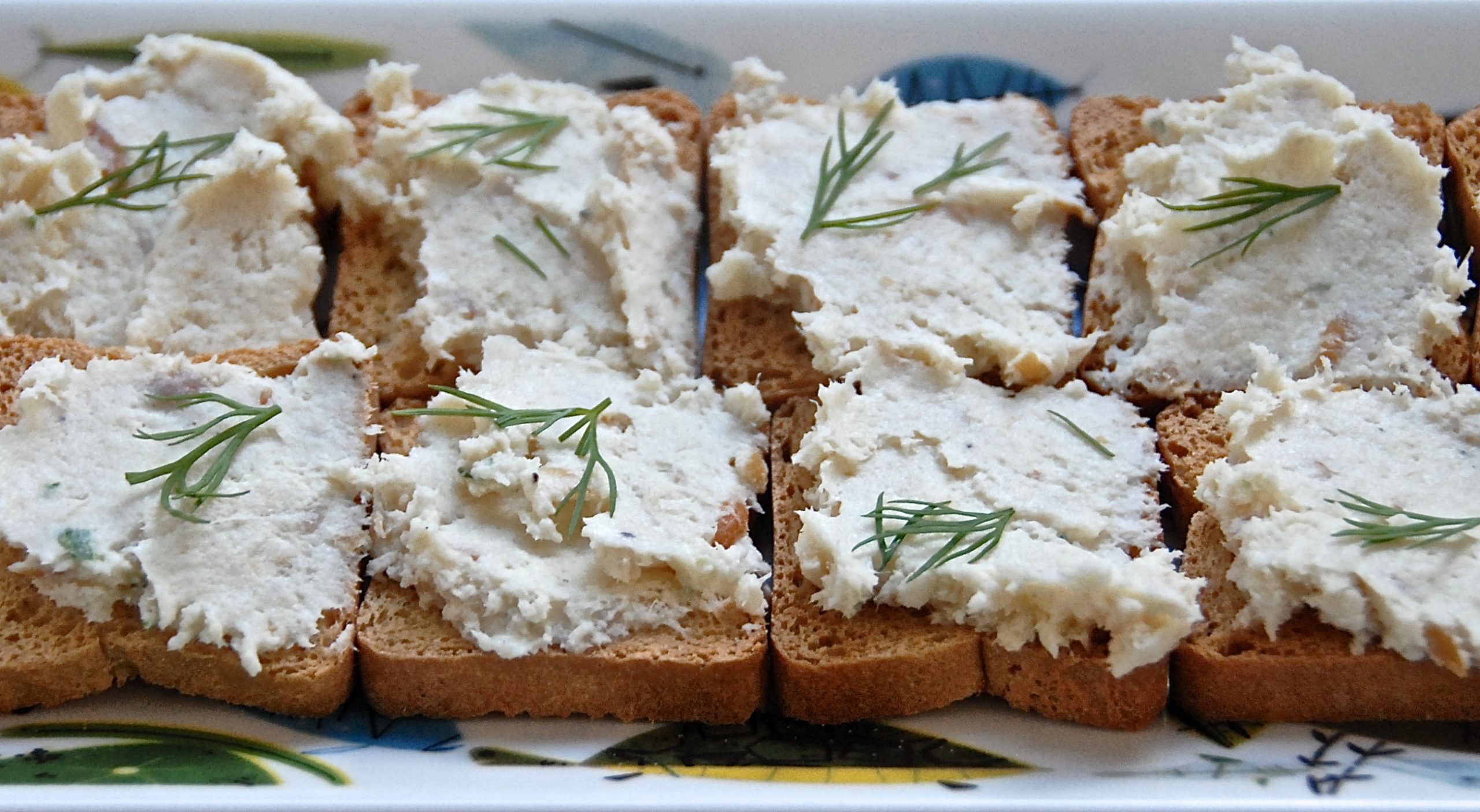
smoked trout pate

Hooray! Smoked Trout Paté!

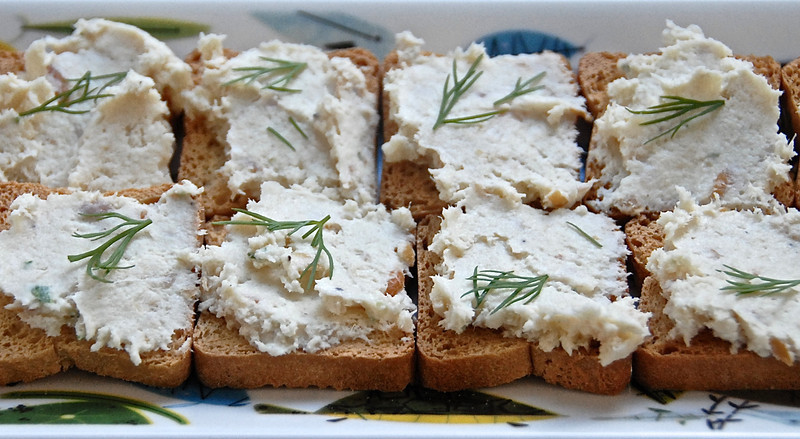
plate of smoked trout pate on crackers

Paté. It sounds like such a posh dish. In reality it’s just a spreadable mixture of cooked meat, fat and seasonings. So much for the elegant, French name, huh?

Originally, paté meant a baked, meat-filled pastry served hot or cold. It later referred to the chunky filling for this pie. Ultimately, it became known as the aforementioned spread.

What do you put in a paté? Among the most popular ingredients are goose liver, pork, veal and beef. Because I stopped eating meat long ago, I make less traditional patés featuring smoked fish, vegetables or mushrooms.

I served the following spread on Christmas Eve. Quick to make and equally fast to assemble, smoked trout paté is an easy hors d’oeuvre for the harried host.

SMOKED TROUT PATÉ
Whenever I forget to grab chives at the market, I substitute 1/4 teaspoon granulated onion for the chopped chives. Without that dash of green the paté will look a bit bland but it will still taste great.

Makes 1 1/4 cups

5 ounces cream cheese, softened
2 tablespoons good quality mayonnaise
1 teaspoon lemon juice
Pinch sweet paprika
Sea salt, to taste
Ground white pepper, to taste
1 tablespoon chopped fresh chives
6 ounces smoked trout fillets, skins removed
Petite toast points or crackers
Fresh dill, optional, for serving

In a medium bowl beat together the cream cheese, mayonnaise, lemon juice, paprika, salt and pepper until well blended. Stir in the chives.

Using a fork or your fingers, flake chunks of smoked trout into the bowl, removing any pin bones that you may encounter as you work over the fish. With a rubber spatula fold the trout into the cream cheese mixture. Taste and add more salt and pepper if desired. Refrigerate until ready to serve. To serve, spread over petite toast points or crackers, top with fresh dill and enjoy.

Steaming, White, Hot Chocolate

The latest East Coast snowstorm has left me craving a mug of good, steaming hot chocolate. It will come as no surprise that, as a person who grew up eating ‘Stove Top stuffing instead of potatoes,’ I have a long history with  those white, paper packets of instant hot cocoa. Whether in my parents’ kitchen, on camping trips or at sporting events, on cold winter days I imbibed that thin, not-quite-chocolate-flavored and often lukewarm drink.

In my early 20’s I learned a valuable lesson from a fellow grad student and friend. If you want rich, toasty hot chocolate, make it from scratch. It doesn’t take much time to do. Plus, the end result tastes so heavenly you’ll never be tempted to rip open a sleeve of instant again.
 
I often tinker with my hot chocolate recipe, alternating between cocoa powder, semi-sweet morsels or bittersweet chocolate as my flavor base. When I’m in the mood for a wildly sweet, hot treat, I whisk together the following recipe. I think of it as liquid dessert. I suspect that you will, too.

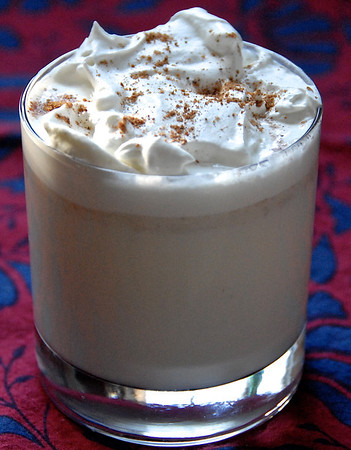
WHITE HOT CHOCOLATE

Makes 2 generous cups

1 cup heavy cream, divided

5 ounces white chocolate, roughly chopped

1/4 teaspoon vanilla extract

1/4 teaspoon almond extract

1 1/2 cups milk

1/8 teaspoon nutmeg, plus more for serving

In a small saucepan heat 1/2 cup heavy cream over medium-high until just simmering. Add the white chocolate and whisk the two together until well-blended. Remove from the heat and strain the liquid through a fine mesh sieve into a medium saucepan.

Add the vanilla and almond extracts, milk and nutmeg to the chocolate mixture and whisk together over medium heat.  As the hot chocolate is heating, make the whipped cream.

Using an electric mixer, beat the remaining 1/2 cup heavy cream until somewhat firm peaks form, 3 to 5 minutes.

Pour the hot chocolate into mugs, scoop whipped cream onto each and dust the cream with nutmeg. Serve immediately.

Whether You Like to Cook or Read a Good Book . . .

I’ve got a few suggestions for you.
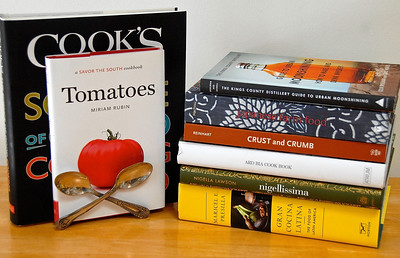
Being a food writer, avid reader and collector of cookbooks, I come across a wide assortment of food-focused books. Some are good. A few are awful. (Seriously, you don’t test your recipes?) Several end up being so spectacular that I add them to my eclectic collection of favorites. Such is the case with the following books. Great to give or receive, they would be fitting gifts for any foodie.

Ard Bia Cookbook by Aoibheann Mac Namara and Aoife Carrigy (Atrium, 2013)
Straight from Galway, Ireland comes a lovely, wholesome and tad exotic cookbook from the equally lovely, wholesome and tad exotic Ard Bia restaurant. Fitting for new as well as adventurous cooks, Ard Bia tempts readers with luscious photos, engaging anecdotes and fresh, creative recipes. Among the gems are smoked trout pate with caperberries and preserved lemon salsa, the easy, retro Ard Bia Mess, and chickpea pancake with spinach and feta, romesco sauce and tabouleh. With Ard Bia you’ll cook well and eat healthfully throughout the year.

Cook’s Illustrated The Science of Good Cooking by the Editors of America’s Test Kitchen (Cook’s Illustrated, 2012)
In The Science of Good Cooking readers learn how mastering 50 basic culinary concepts, such as “slow heating makes meat tender” and “a covered pot does not need liquid,” will improve their cooking and enhance their enjoyment of time spent in the kitchen. Featuring over 400 recipes and the science behind each technique, this is an invaluable book for any home cook.

Japanese Farm Food by Nancy Singleton Hachisu (Andrew McMeel, 2012)
Part memoir of an American cook living on a Japanese farm, part Japanese cookbook, Japanese Farm Food will charm both readers and cooks. As a cooking instructor, Slow Food movement leader and wife of a Japanese farmer, Hachisu imparts her immense knowledge of Japanese ingredients and cooking techniques with ease. Her recipes, including tofu and vegetable croquettes, egg custard squares with crab and spinach and steamed buns stuffed with azuki paste, are approachable, executable and delicious. Her cookbook is likewise beautiful and engaging. Definitely worth a read!

Nigellissima by Nigella Lawson (Clarkson Potter, 2013)
I’m a sucker for Nigella Lawson’s cookbooks. Smart, witty and lavishly produced, they always contain at least a half dozen recipes that become staples in my kitchen. Lawson’s fresh take on Italian cuisine is no different. Nigellissima provides a fun romp through 100-plus familiar and not-so-familiar Italian specialties.

Jerusalem by Yotam Ottolenghi and Sami Tamimi (Ten Speed Press, 2012)
Jerusalem made the ‘Great Books for Cooks’ list last year. I loved it so much that I’ve put it on the list again for 2013. For a review, click here.

Gran Cocina Latina by Maricel E. Presilla (Norton, 2012)
Winner of the 2013 James Beard Foundation’s Cookbook of the Year award, Gran Cocina Latina ranks as one of the most comprehensive cookbooks that I’ve ever used. At over 900 pages long this weighty tome covers the varied cuisines of Latin America and the Spanish-speaking Caribbean. Along with providing historical and cultural references, the book contains over 500 straightforward recipes and anecdotes for each dish. It also includes lush color photos, pairing suggestions and serving tips. Whether you crave a memorable tamale or just want to learn more about Latin American cuisine, Presilla’s detailed book is a must-have for your collection.

Crust and Crumb: Master Formulas for Serious Bread Bakers by Peter Reinhart (Ten Speed Press, 2006)
Baking enthusiasts will love Reinhart’s classic guide to making extraordinary bread. Known as one of the world’s authorities on bread, baking instructor and multiple James Beard awards-winning author Reinhart shares his vast knowledge of leavened and unleavened doughs. Through clear, detailed steps he takes beginning as well as seasoned bakers through creating a starter and then kneading, shaping and baking bread. Through his approachable coverage of 50 master formulas, he enables readers to create everything from rustic and whole wheat breads to bagels, brioche and challah. Crust and Crumb should appeal to any baker.

Tomatoes by Miriam Rubin (University of North Carolina Press, 2013)
Part of the “Savor the South” cookbook series, Tomatoes is a delightful look at the South’s longstanding relationship with the tomato and how this fruit stars in a host of delectable recipes. Among the 50 specialties included are Baby Plum Tomato and Olive Tapenade, Curried Tomato Soup and Spiced Green Tomato Crumb Cake. Knowing that not every cook has a lush garden or access to top notch produce, Rubin includes recipes using canned as well as pink tomatoes. Engaging and well-written, this is yet another book that would be wonderful for readers and cooks.

The Kings County Distillery Guide to Urban Moonshining by Colin Spoelman and David Haskell (Abrams, 2013)
Although I will never make moonshine in my apartment or amass a collection of whiskeys for my next cocktail party, I did get a kick out of The Kings County Distillery Guide to Urban Moonshining. Written by the owners of NYC’s first post-prohibition distillery, this book provides a fascinating look at the history of American whiskey, its resurgence among the cocktail crowd and the rise in home distillers. For DIY’ers it’s a detailed guide to making your own whiskey. For budding bartenders it’s a handy whiskey-based cocktail guide. For people like me who love culinary history, it’s a great read.

Fish Market by Kathy Hunt (Running Press, 2013)
Do I feel sheepish about putting my own book on this list? Of course I do. It’s shameless! And, yet, I don’t. I worked long and hard on Fish Market, wrote, tested and re-tested over 140 recipes and, ultimately, put out one heck of a seafood cookbook. Publisher’s Weekly, Weight Watcher’s and NPR’s Kitchen Table seem to agree. All have endorsed Fish Market. So, shameless or not, it’s on the list.
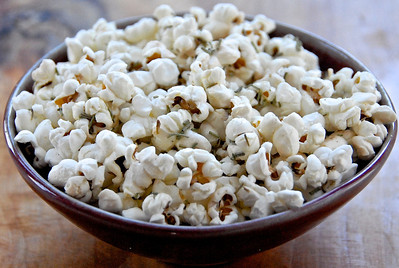
The Battle with Holiday Baking

Ah, the holidays! Such a sweet yet complicated time. We baking enthusiasts embrace the excuse to churn out batch upon batch of cookies, cakes, breads and pastries. On the flip side, sweets lovers like me have to battle the urge to conquer each and every one of these homemade confections.

All week I’ve waged this war. After spending Monday baking 24 dozen cookies with a college friend, I headed home with 12 dozen luscious temptations. All of them begged me to “eat, eat!” Two days later I tested European holiday cookie recipes and then faced six dozen more sweet adversaries. Although I’d love to say that I fought the good fight, well . . .. Amusingly enough, on the very day that I ate a plateful of ginger cookies for my lunch, I learned that Fish Market had made Weight Watcher’s “Good Enough to Read: Best Cookbooks for Giving and Getting” list for 2013. Ironic, huh?

As of last night the cookies and I have reached a compromise. They’ll stay tucked in our freezer, nestled between sheets of wax paper, and behave themselves until Christmas. I’ll refrain from any lunchtime pillages and from cracking a tooth on a frozen cookie.

In keeping with my stance that holiday cookies should be a bit nostalgic as well as easy to make, I’ll share the following perennial favorites.

AMY G’S GINGER COOKIES
Makes 4 dozen cookies

3/4 cup unsalted butter, softened
1 cup firmly packed light brown sugar
1/4 cup molasseses
1 large egg
2 1/4 cups all-purpose flour
2 teaspoons baking soda
1 teaspoons cinnamon
1 teaspoons ground ginger
1/2 teaspoon ground cloves
1/4 teaspoon salt
Granulated sugar, for dipping

In a bowl beat the butter until soft and creamy. Add the sugar, molasses and egg and beat again until well-combined.

In a separate bowl stir together the flour, baking soda, cinnamon, ginger, cloves and salt. Add the flour mixture to the butter mixture, stirring until well combined. Form the dough into a ball, cover and refrigerate for 1 hour.

Preheat the oven to 375 degrees Fahrenheit. Line several baking sheets with parchment paper.

Remove the dough from the refrigerator and, using your hands, roll into small balls. The top of each ball into a dish of granulated sugar. Place the cookie balls, sugar-sides up, on the sheet about 1 inch apart.

Bake for 9 to 12 min, until golden and cracked on top. Remove and cool completely on wire racks.

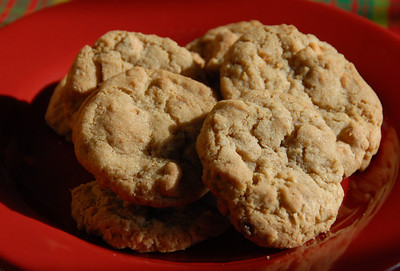
OATMEAL BUTTERSCOTCH COOKIES
Makes 4 dozen cookies

1/2 cup (8 tablespoons) unsalted butter, softened
1/2 cup firmly packed dark brown sugar
1/2 cup granulated sugar
1 large egg
1 teaspoon vanilla extract
1 cup plus 2 tablespoons all-purpose flour
1/2 teaspoon salt
1/2 teaspoon baking soda
1/2 cup uncooked oatmeal
1 cup butterscotch morsels

Preheat the oven to 375 degrees Fahrenheit. Grease two baking sheets and set aside.

In a mixing bowl beat the butter until creamy. Add the sugars and continue beating until light and smooth. Add the egg and vanilla and beat until incorporated.

In a separate bowl whisk together the flour, salt and baking soda. Add the flour to the butter mixture, beating until combined. Stir in the oats and butterscotch chips.

Using a spoon or small disher, form and place the cookies 1 inch apart on the baking sheets. Bake for 8 to 10 or until golden brown. Remove and cool completely on wire racks.

Scoop up Mulled Apple Cider Ice Cream

This time of year, along with a surplus of apples, I usually have a refrigerator crammed full of apple cider. In my twenties I could blame this excess on my next-door-neighbors and their prolific orchard. Every fall they’d collect the grubbiest apples, take them to a cider mill and press bushel upon bushel into sweet, murky cider. What they didn’t freeze, they gave away to family, friends, colleagues and me. Although I ended up with more than I could ever consume, this distribution barely put a dent in their cider supply.
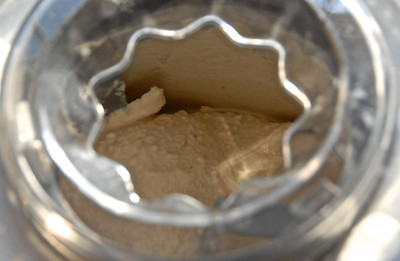
What did my neighbors do with all that apple cider? They roasted meats and sautéed vegetables in it. They poured it over dry cereal and, of course, drank it. Think of any creative way to use this beverage in your kitchen and, chances are, they did it.

Inspired by their resourcefulness, I occasionally cook with cider. As this practice is more rare than regular, I have multiple jugs of cider hiding out in my fridge.

When I do dig out a half-gallon container, I use the cider to jazz up pumpkin and butternut squash soups, quick breads and cookies. As of late, though, I’ve been spicing it up, boiling it down and churning it into ice cream.
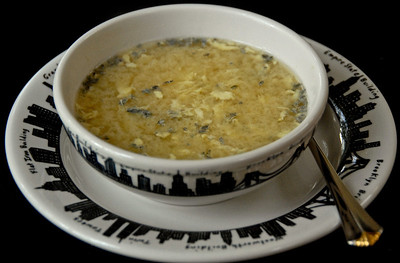
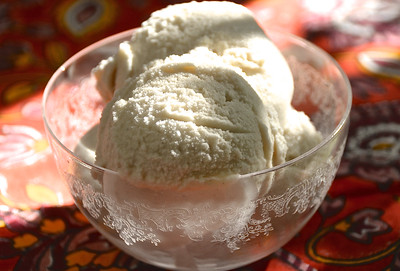
Mulled apple cider ice cream is delicious on its own, atop apple cobbler, pear tart or mince pie or alongside gingersnaps or a rich gingerbread. Needless to say, it’s a lovely ending to a fall meal and especially to Thanksgiving dinner.

MULLED APPLE CIDER ICE CREAM
Makes roughly 5 cups

2 1/2 cups apple cider
3/4 cup plus 1 tablespoon granulated sugar
2 cinnamon sticks
1 teaspoon whole cloves
1/2 teaspoon ground ginger
pinch of nutmeg
2 cups heavy whipping cream
2 cups low-fat milk
1/4 teaspoon ground cinnamon

Place the apple cider, sugar, cinnamon sticks, cloves, ginger and nutmeg in a medium saucepan and bring to a boil. Simmer, whisking periodically, until the liquid thickens and reduces down to 1 cup, 25 to 30 minutes. Pour the mulled cider through a fine mesh strainer and into a bowl; I usually strain the cider into a glass measuring cup first to ensure that it’s been reduced enough and then pour it into a bowl.

Add the cream, milk and cinnamon to the cider and whisk until well-combined. Refrigerate for an hour or until chilled.

If using an ice cream maker, follow the manufacturer’s instructions for making ice cream. If doing this by hand, pour the cream mixture into a shallow, glass or ceramic dish and place in the freezer. Remove the pan from the freezer at 40 to 60 minute intervals and stir to break up the ice. Continue freezing and stirring until a thick ice cream has formed.

Hometown Favorite — Stracciatella

This Saturday I’ll be back on my home turf, speaking at the Pittsburgh Public Market about writing, cooking and writing a seafood cookbook. While I’m in town, I won’t just be talking about food. I’ll also be eating my way through the city. Primanti’s fry-filled sandwiches, Pamela’s massive pancakes and Pierogies Plus’s handmade namesakes all appear on the weekend menu. Somewhere along the way I hope to encounter a bowl of steaming stracciatella, too. To me, stracciatella is what plain, old chicken noodle soup is to most—a restorative dish for when you’re cold, sick, blue or just craving a taste of home.
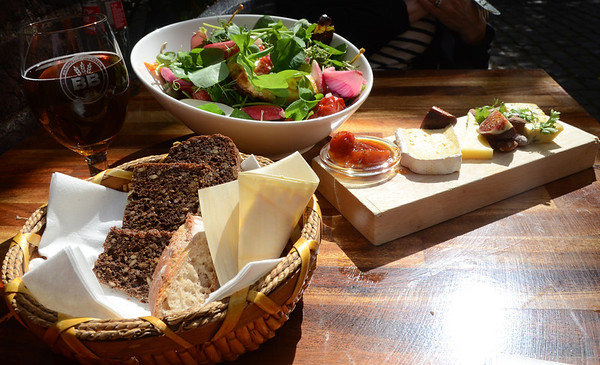
A specialty of Rome but popular throughout Central Italy and, of course, my hometown, stracciatella may remind the uninitiated of egg drop soup. Granted, it does feature two of the same major ingredients, eggs and chicken stock. Yet the resulting dish seems far more velvety and savory than the Chinese soup. I suspect that the ever-present Parmesan cheese and occasional addition of herbs such as basil and parsley are what make the Italian version so desirable.

To make stracciatella, grated Parmesan is whisked together with eggs, pepper and salt. The mixture is then drizzled into a boiling chicken broth. Cooked as they swirl about in the liquid, the cheesy eggs form the soup’s telltale, ragged strands. At this point herbs may be added to the mixture.

Who makes the best stracciatella in the ‘burgh? Give me the weekend and I’ll let you know.

STRACCIATELLA
When adding the eggs, make a point of stirring the liquid as you pour. This way you’ll ensure that you have shards of egg rather than one big, cheese-infused blob.

7 cups chicken stock
3 eggs
3 tablespoons plus 1 teaspoon finely grated Parmesan cheese
1 tablespoon finely chopped fresh basil
1/2 teaspoon salt
1/4 teaspoon ground white pepper

Bring the stock to a boil. Whisk together the eggs, cheese, basil, salt and pepper.

Slowly pour the egg mixture into the boiling stock, stirring to break up the eggs. Continue to boil for about 5 minutes, stirring periodically to keep the eggs from sticking together. Serve immediately.

Delightful Danish Brown Bread

basket of bread

Tasty Danish lunch featuring brown bread

At the end of summer I spent two idyllic weeks in the magical, Scandinavian land known as the Kingdom of Denmark. Vikings, Shakespeare’s Hamlet and Hans Christian Anderson as well as Legos, Lars von Trier and Chef Rene Redzepi have all called this series of lovely islands home. Frequently ranked as the world’s happiest country, Denmark has the world’s highest minimum wage, a high per capita income, environmental and historic preservation, free university education and universal healthcare. It’s a country of breathtaking architecture, influential designers, renowned writers, fervent cyclists, golden fields, rugged coastlines and amazingly fresh, tasty, wholesome foods.

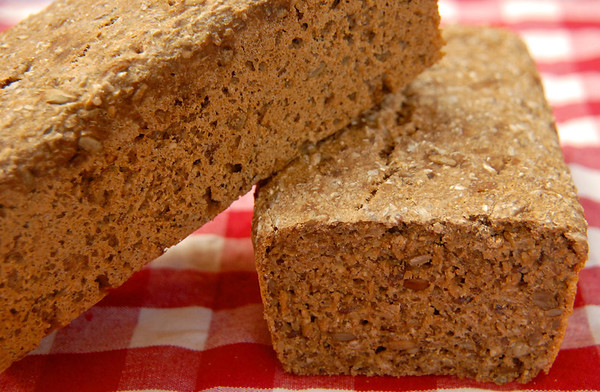
two loaves of bread

Two loaves of Danish brown bread

Weeks after returning from vacation I remain wildly smitten with Denmark. Top among my obsessions are Danish pastries, films, mystery writers, the TV series Forbrydelsen, Ilse Jacobsen rain boots and the country’s dark, nutty brown bread. I first tried this hearty specialty six years ago in Sweden. There it’s known simply as Danish bread. In Denmark it’s called rugbrød, a flavorful, dark rye bread chocked full of whole grains and fiber. Danes eat it at breakfast. I ate it every chance that I could get.

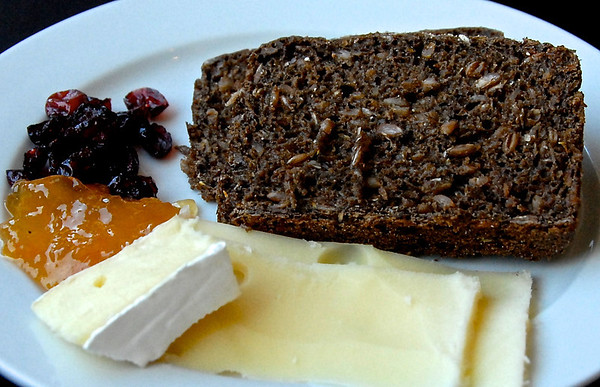
breakfast platter with brown bread

Typical breakfast in Copenhagen includes a slice of brown bread

Back in the States it’s been difficult not only to find a recipe but also the ingredients for rugbrød. In spite of being in New York City where I have access to a large, global pantry, I ended up buying barley malt syrup and cracked rye online. As for the recipe, I cobbled together one that’s loosely based upon Mogen’s Rye Bread from Camilla Plum’s The Scandinavian Kitchen (Kyle Books, 2011). Unlike Plum’s creation, mine does not use a sourdough starter; because my hunger for Danish brown bread was tremendous, I didn’t want to wait over five days for the starter to ferment. Instead I used a poolish sponge or starter, which only requires five hours to leaven.

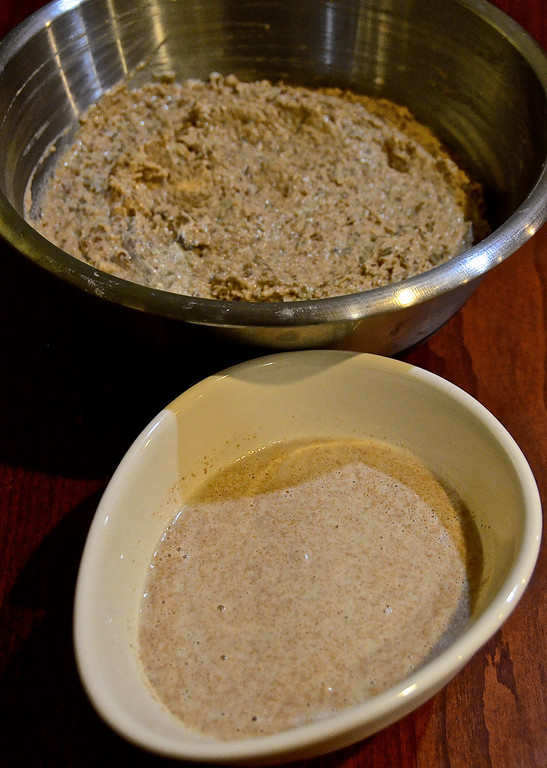
Bread batter and dough

Brown bread batter and dough

In the following recipe you can replace the poolish with sourdough starter. Likewise, you can eliminate the beer and just use water. I prefer a mix of seeds but that’s also a baker’s choice. Although I did make this with light rye flour, I suspect that dark rye would be even better. Serve the bread with good quality butter, cheese, apple butter or smoked fish.

DANISH BROWN BREAD
Makes 2 (8″ x 4″) loaves

for the starter:
2 cups whole wheat flour
2 cups water
1/8 teaspoon active dry yeast

for the bread:
1 1/4 cups starter
2 cups cracked rye
2 cups rye flour
2 cups whole wheat flour
3/4 cup roasted sunflower seeds
1/4 cup flax seeds
1 tablespoon coarse sea salt
1 cup beer (lager)
2 cups water, plus more if needed
2 tablespoons barley malt syrup

To make the starter, mix the flour, water and yeast in a bowl. Cover with cling wrap and allow the mixture to ferment for five hours at room temperature. Note that, once it’s finished fermenting, you can refrigerate the starter for up to three days.

Measure out 1 1/4 cups of starter. Place that along with the cracked rye, rye flour, wheat flour, sunflower and flax seeds, salt, beer, 2 cups of water and barley malt syrup in a large bowl. Mix together until well combined. Cover and allow the dough to rest for 30 minutes.

Grease two 8″ x 2″ loaf pans and set aside.

After 30 minutes check the dough’s consistency. If it seems overly dry and unyielding, stir in up to 1/4 cup of water; you want the dough to be firm but also soft. Using a spatula, spoon equal amounts of dough into each loaf pan. Smooth out the tops so that the dough is distributed evenly. Cover the pans with a clean, damp dishcloth and allow the loaves to rise for 12 hours at room temperature.

Preheat the oven to 325 degrees Fahrenheit.

Uncover the loaves and, using a toothpick or skewer, poke 20 or so holes, from top to bottom, in each loaf. This will stop the loaves from forming air pockets and, subsequently, holes in the bread.

Bake for 1 1/4 hours, until a firm crust forms on top and the loaves begin to separate from the sides of the pan. Remove and cool the loaves in their pans for 5 minutes before removing and placing them on wire racks to cool completely.

Back in Season & in Kitchens – Oysters!

When the invitations to oyster festivals start rolling in, I know that fall is here. Any diehard oyster fan will tell you that during the months of May through August these shellfish spawn, becoming watery and not terribly tasty. Hence the old rule of not eating oysters in a month without an “r” in its name. Once September kicks into full swing, these guys come back, ready to dazzle diners.
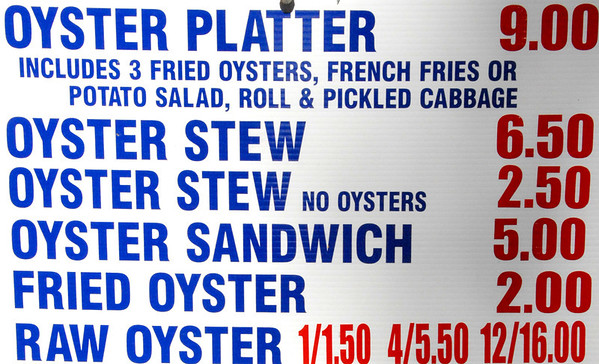
Although certainly not the most beautiful of bivalves, these gray, rough-shelled creatures have long held tremendous culinary allure. Considered to be a delicacy and an aphrodisiac, they were over-consumed during the 19th century. This, unsurprisingly, led to shortages. Today both American farmed and wild oysters are abundant, healthy and relatively inexpensive to buy.

What should you do with a mound of live oysters? Like their bivalve brethren, they do well when baked, broiled, grilled, or steamed. They also can be poached, roasted, or sautéed. As evidenced by the event menu above, they’re quite popular when fried, made into a stew or consumed raw on the half shell. High in omega-three fatty acids and iron, they’re likewise low in calories and fat. Talk about a good treat!
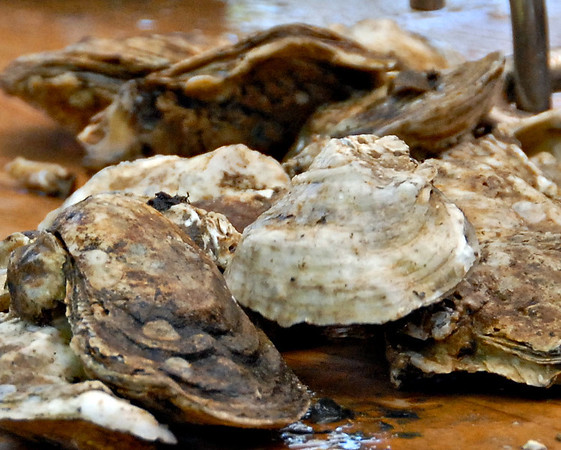
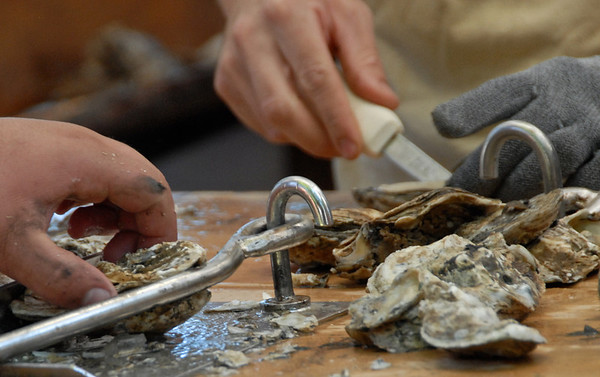
Being faced with counter covered in live oysters can be a bit intimidating. Recently I watched first-time shuckers clumsily pry open shell after sharp, jagged shell. Each time someone placed an oyster in the palm of one bare hand and a paring knife in the other, I imagined the imminent ER trip. If you don’t want to risk stabbing yourself or severing a finger, you can always buy pre-shucked oysters. Before taking them home, check to see that the liquid in their container appears clear. You can also find canned, frozen and smoked oysters in grocery, gourmet, and seafood stores.

If you’d like to learn more about oysters and other fish and shellfish, I’ll be teaching a seafood cooking at class at Hockessin, Del.’s Everything but the Kitchen Sink on Wednesday September 25 and at the Sur la Table in King of Prussia, Pa. on Thursday October 17. Details about both events are available by clicking on the bolded links, on the Kitchen Kat events page and at FishMarketBook.com.

OYSTER AND POTATO STEW
Serves 6

3 tablespoons unsalted butter
1 cup minced yellow onion
1/2 cup minced celery
1 pound baking potatoes, washed, skinned and diced
2 cups whole milk
3/4 teaspoon salt
1/4 teaspoon ground black pepper
1 clove garlic, minced
2 dozen oysters, shucked and drained and with their liquid reserved

In a small stockpot melt the butter. Add the onions and celery and sauté until softened and almost translucent, about 5 to 7 minutes. Add the potatoes, stir and allow the mixture to cook for 5 minutes. Add the milk, salt, white pepper and reserved oyster juices and bring to a boil.

Reduce the heat to low and simmer until the potatoes have softened slightly. Skim off any fat that has collected on the top.

Add the garlic, oysters and cook until the oysters’ edges begin to curl, about 4 minutes. Taste and adjust the seasonings if necessary. Serve in warmed bowls with oyster crackers