All posts filed under: Amazing Sweets

A Love Affair with Greek Cookies

This year Valentine’s Day fell on the very same night that for the past six years my literary fiction book group has met. I had a tough choice to make; eat a romantic dinner with my husband or moderate a discussion of Jeffrey Eugenides’ The Marriage Plot. In the end I did what any lifelong, insatiable reader would do. I baked a batch of Greek cookies, invited Sean to the book group and spent the evening with some of my favorite people, treats and activities. The cookies that I baked are kourabiedes. Reminiscent of shortbread cookies, these crescent-shaped sweets are usually consumed at holidays and special occasions. Hence my decision to serve them on Valentine’s Day. Okay, that isn’t the only reason behind my making them. Flavored with splashes of vanilla extract and anise liqueur and blanketed with soft, fluffy confectioner’s sugar, they have been my cookie of choice since the ninth grade. My addiction started in the home of one of my closest childhood friends. The daughter of Greek immigrants and restaurant owners, Nickie …
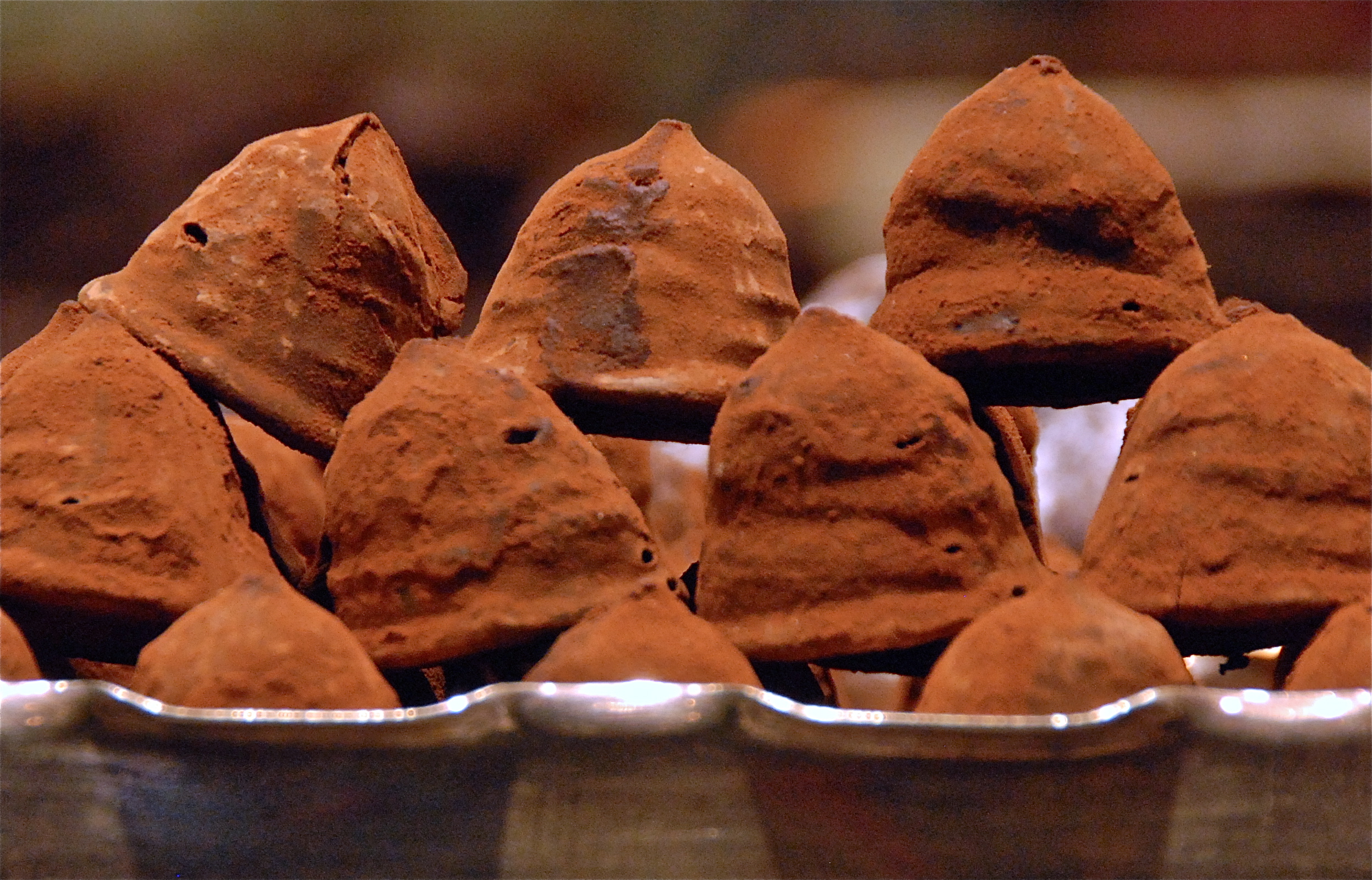
dark chocolate truffles

Truffles for Valentine’s Day and Beyond!

Although I am one of the least craftsy people alive, I love making Valentine’s Day gifts. Specifically, I adore homemade, chocolate truffles. Shaped like the plump, lopsided mushrooms for which they’re named, hand-rolled truffles are a snap to prepare. If you can melt chocolate and don’t mind getting the palms of your hands a little gooey, you can create these sweets in no time. Dating back to 19th century France, truffles consist primarily of ganache, a blend of chopped white, milk or dark chocolate, heavy cream and optional smidgen of butter. To make ganache, cream is heated until scalding and then poured over the chocolate bits. Stirred together until smooth and creamy, the mixture is set aside to cool. Depending upon the ratio of cream to chocolate and the amount of time cooled, ganache can be used as a filling, icing or, as in the case of truffles, candy. As much as I like chocolate, I do think that truffles benefit from a dash of flavoring. Liqueurs, extracts, fruit purees or spices lend these bite-sized …

The Best Carrot Cake Ever

My husband likes to say that he’s a simple man but I’ve never known anyone to have a more complicated relationship with carrots than he. Just try sneaking an orange sliver into a stew, pot pie or casserole. With the quick flick of his spoon the offending veg flies off his plate and onto mine. Forget about slipping raw, julienned carrots into a salad or slaw. The cat, who eats anything, ends up eating them. However, if you ask Sean what his favorite dessert is, his answer will be carrot cake. If you like to cook and live with someone who has a favorite dish, chances are that you’ve tried to perfect it. Such is the case with me and carrot cake. After countless years and cakes I found perfection yesterday in the following recipe. I’d love to claim that I conjured up this winsome sweet on my own but I can’t; the recipe comes courtesy of my husband’s aunt, Nancy Haberberger. Sweet but not cloying, moist but not soggy, flavorful but not overly rich, …

A Basket of Bakers’ Delights

It’s my favorite time of the year — time to bake and eat lots of glorious sweets! For bakers and the bakers on your shopping list I offer a few cookbook titles for the holiday season. Included are some oldies but goodies and loads of delicious treats. The Great British Book of Baking by Linda Collister (Michael Joseph, 2010) A British import, The Great British Book of Baking delights the Anglophile in me. Yet, you don’t have to love scones or soda bread to appreciate this beautiful book. Featuring 120 classic as well as modern recipes and histories and anecdotes for each, it takes readers on a journey through the best of British baking. Please note that ingredient measurements are in metric. Maida Heatter’s Cakes by Maida Heatter (Andrews McMeel, 2011) First published in 1982, Maida Heatter’s Cakes offers 175 reliable, delectable recipes for cakes of countless stripes. Plain, chocolate, layer, fruit, nut, cheese, gingerbread, vegetable . . . you name the cake, this James Beard Award-winning “Queen of Desserts” has it covered. Similar to …

‘Tis the Season for Cranberries

Cranberries never seem to get their due. At Thanksgiving we mash them into chunky, oft neglected sauces. Face it—no matter how tasty it may be, no one asks for seconds on cranberry sauce. Once that holiday passes, we shove string through their waxy, red skins and fling them across fir trees. The rest of the year we squeeze out their tart, crimson juice for fruit cocktails or dry them until withered and toss them into scones and salads. All and all, not very dignified ways to use such a spectacular fruit. Native to North America, cranberries were a favorite of Native Americans and European settlers. They made them into compotes, jams, sauces, soups, tarts, cakes, breads and wine. Sometimes they dried them. Other times they ate them straight from the vine. Unquestionably, the settlers knew a good fruit when they saw one. High in antioxidants and fiber, cranberries go well with a myriad of foods and flavors. As you might expect, they pair beautifully with apples, cinnamon, cloves, chicken, pumpkin, sweet potatoes and turkey. They …

Misunderstood Macadamias

Compile a list of misunderstood foods and macadamia nuts would undoubtedly rank near the top. For years I’ve heard them called everything from macadamien and macadam to plain old mag nuts. Then there’s the issue of origin. Although macadamia trees hail from Northeast Australia, many folks insist that they’re native, if not exclusive, to Hawaii. Get past those misconceptions and you face the question of consumption. How do you cook with macadamia nuts? More than a handful will argue that you don’t cook these plump, buttery jewels; you eat them straight from the vacuum-packed can. Uncultivated in Australia until the late 1800’s, these nuts initially were called Queenslands nuts. Botanists later changed their name to macadamia to honor the chemist, John McAdam, who had promoted their cultivation. In the 1890’s macadamia nuts traveled to Hawaii. Because they prefer moist yet well-drained, fertile soils and moderate temperatures, the trees and nuts thrived there. In fact, today the state produces close to 90% of the world’s macadamia nuts. What do you do with macadamia nuts? Most people …

When in Singapore, Sling It!

To me, no trip to Singapore could ever be complete without trying a deliciously fruity, ever-so potent Singapore Sling. Face it. If you’ve been shoe horned into your economy class seat for 25-plus hours — or a paltry 19, if you can swing a non-stop flight — then you’ve earned a vibrant and strong chilled cocktail. You’ve earned a Singapore Sling. Drop by Raffles Hotel and you’ll get not only the colorful drink but also its history. As the lore goes, it was here, in the hotel’s Long Bar, that bartender Ngiam Tong Boon whipped up the first Singapore Sling. Although the exact date remains unknown, it’s believed that he created his ‘cocktail for ladies’ sometime between 1907 and 1910. The sling itself had been around since the turn of the 19th century. A fairly generic term, sling referred to a beverage containing brandy, gin, vodka or whisky, confectioner’s sugar and fruit juice. What Boon had invented contained far more than just three ingredients. While the original recipe was lost in the 1930’s, notes from …

Feast from the Forest and Field

Last week I owned up to my dearth of gardening skills. What I lack in ability, I more than make up for in my enthusiasm for others’ horticultural handiness. So, when a friend invited me on a foraging walk last weekend, I jumped at the chance. I mean, really, who has a greener thumb than Mother Nature? As you might expect from someone who blundered through gardening, I struggle with identifying wild edibles. Set set me loose in the forest to collect stinging nettles or chanterelles, I’m likely to pull out a clump of poison ivy or toxic jack o’ lantern mushrooms. Obviously, these are not the ingredients of a lovely soup or sauté. However, if you put me in charge of foraging, these are what you might receive. Yeah, I need to learn a bit about harmless versus deadly wild plants. Led by naturalist Steve Brill, the ecology walk featured such wholesome plants as garlic mustard, wild ginger and purslane. Things that I had dubbed “worthless weeds” and yanked from my overgrown garden likewise …

The Hidden Charm of Durian

Travel to far-flung locations and you’re bound to encounter extraordinary food. Although I tend to skip the more offbeat or infamous dishes—crickets on a stick, deep-fried chicken feet—I invariably try all the local produce. Yeah, I’m a risk taker. Produce may not seem all that exciting until you consider the spiky, hard-shelled durian fruit. Native to Malaysia and found in tall trees, it’s known for its tough exterior, custardy interior and horrific odor. If its overpowering scent doesn’t get you, its size and sharp spikes might. Weighing up to 10 pounds, falling durian has caused serious injuries and death. Thanks to its tough reputation, durian ranked high as a food that I had to try. Anything that smelled of rotten cheese, stinky feet and raw sewage and could kill and yet was still willingly, even eagerly, consumed must be good. While durian will never replace bananas, raspberries or cantaloupe as my favorite fruit, it does have its charms. Its sticky, yellow pulp possesses a warm, nutty, creamy flavor unlike any other produce. Versatile, it pairs …

Time to Make a Cherry Pie, Sauce . . ..

Every June I’m on pins and needles, anticipating the kick off of the East Coast’s all-too-brief cherry season. As soon as those ruby globes hit the farmers’ markets, I’m stuffing canvas bags with as many sour cherries as I can carry. What’s the allure to sour cherries? Softer and smaller than the sweet varieties, they are a highly versatile, colorful and flavorful fruit. Toss them into a saucepan with a smidgen of sugar and simmer them over low heat and I end up with the foundation for an array of amazing treats. Think I exaggerate? Think again. These guys star in, among other things, pies, tarts, preserves, sauces, meat dishes, drinks and colds soups. Out of the 1,200 varieties of cultivated cherries, 300 are classified as sour. Within the sour family exist the aptly named Early Richmond, which is the first cherry to appear in spring, the juicy, white-fleshed Montmorency and red-fleshed Morello. Chances are that if you’ve ever drunk the liqueur Kirsch or the cocktail guignolo, then you’ve had Morellos; they form the base …