Latest Posts

Jaipur in the Heart (and Heat) of Rajasthan

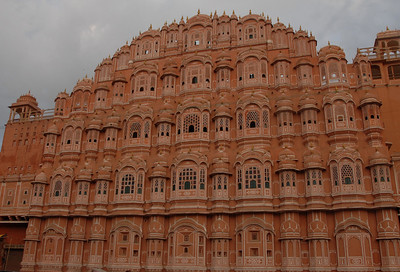
Popularly known as the “Pink City,” Jaipur is the capital of India’s sprawling, northwestern state of Rajasthan.  Last week Sean and I spent four days here, exploring the wealth of stunning sites while wilting in the hot sun.  With a population of over five million this busy city offers a little something for every taste — historical sites, bazaars, temples, art, wildlife, Bollywood movies and the ever-present flavorful cuisine.
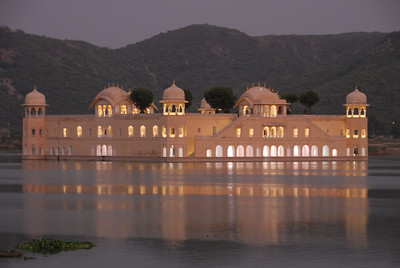
We found Jaipur to be equally enchanting and exasperating.  The prevalence of cheeky monkeys, loping elephants, camels, kingfisher birds, colorful markets, historic forts, delectable food and beautiful vistas made us fall in love with the region again and again.  Yet, the intense heat (when factoring in the heat index, it’s around 115 degrees Fahrenheit) and overabundance of homicidal drivers, pushy vendors and aggressive beggars left both of us aggravated and spent.

Setting aside the annoyances, I’ll share some of the day-to-day pleasures of our time in this mesmerizing, 17th century metropolis. Think of it as a daily things-to-do list should you ever find yourself in Jaipur.
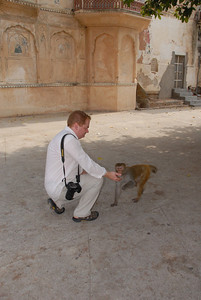
Feeding the pigeons of the East – It will come as no huge surprise to read that we love animals and that I, in particular, have a soft spot for soulful-eyed, furry creatures.  Thus, you can imagine our mutual delight whenever we spotted and interacted with the ridiculous number of monkeys in this city.  Red-faced macaques were the most common but we also bumped into quite a few easy going, black-faced langur monkeys.  So, so cool!
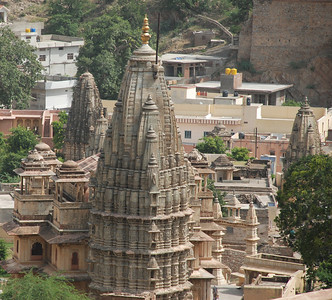
Learning about other religions – While Hinduism is the predominant religion in India, the devout also co-exist with such faiths as Islam, Jainism, Sikhism, Buddhism, Zoroastrianism and Christianity.  While in Jaipur, we had the privilege of visiting several tranquil temples and of learning a bit about what the followers of Hinduism and Sikhism believe.  Talk about enriching experiences!
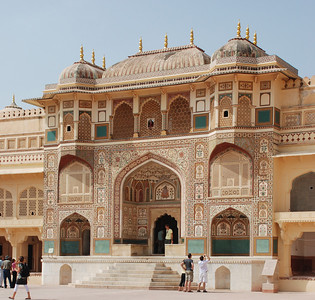
Finding a breathtaking sight/site at literally every corner – I’ll write more about this in another entry but I will say that tooling around Jaipur became a non-stop, jaw-dropping event.  Everywhere we looked, we found something new and astonishing to see.
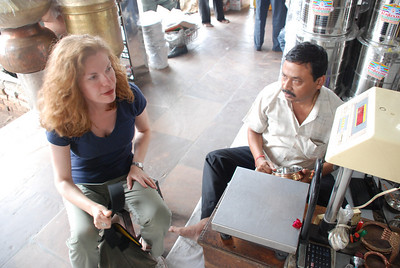
Shopping at the bazaars – You know the stereotype:  women love to shop.  Well, I defy that stereotype by being a browser.  Sadly, I couldn’t do ‘my thing’ and just look around Jaipur’s bazaars.  If I slowed down near a stall or was so daring as to pause or even stop, I’d be crushed by boys and men selling trinkets, women telling me to buy them food and the vendors themselves.  However, when I knew what I wanted — a copper serving dish — and found a vendor willing to sell one at a fair price, the bustling bazaar seemed pretty darned good to me.
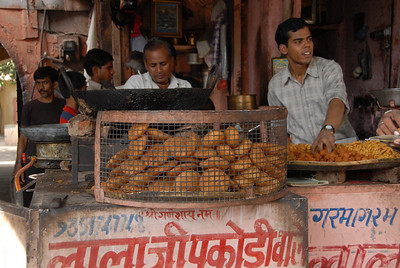
Eating delightful Indian food – Imagine that.  Great Indian food in India.  Over the course of our stay we indulged in zesty curries, delicate dals, crisp garlic naan, fluffy Basmati rice and so many otherworldly soups.  Jaipur was an Indian-food-lover’s heaven.  Unfortunately, as we were obsessed with avoiding “Delhi belly,” we steered clear of the street food stalls and stuck with restaurant meals.  I’d like to think that we still had a true taste of India.  At least I hope that we did.
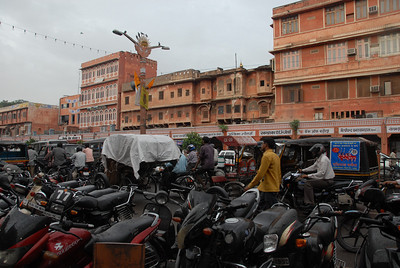
Not being killed in traffic – I know.  It sounds as though I’m ending this on a snotty, ugly American note.  However, not being clipped, scraped or hit full-on by the non-stop, careening cars and trucks was a constant concern.  Consider the fact that in the first hour spent with our cross-country driver JP, he smacked the side of a moving semi, bounced off the truck and then pulled off the guy’s front bumper before screeching to a stop.  Thankfully, we weren’t hurt — not even by the angry mob that clustered around our car — but we did get a quick, early lesson in how terrifying traffic here is.
Feeling Snarky in the Holiest Hindu City of Pushkar

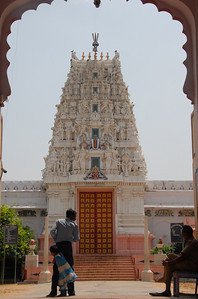
Imagine a pristine, holy city situated on a clear lake.  Imagine that tranquil spot filled with serene followers gathered together to worship and pray at one of 400 temples.  Imagine how relaxing, pretty and peaceful such a place would be.   Go on.  Keep imagining for the sacred Hindu city of Pushkar is nothing like what you’d expect it to be.

After a jaw-clenching, 3-hour drive from Jaipur we arrived in the dusty, trash-strewn town of Pushkar, population 15,000.  Here the streets are paved not with gold or even macadam but with tourists and peddlers.  The beautiful lake?  Thanks to a dry monsoon season, it is muddy and filled with garbage.

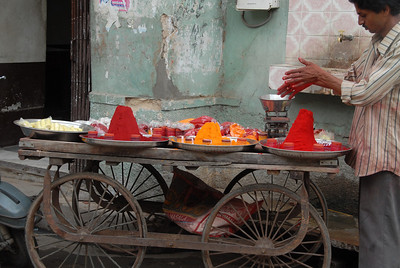
Upon our arrival we quickly caught on to the overall tone of Pushkar.  Visiting a temple?  Buy some marigolds or puffed rice to throw as an offering.  Looking for a trinket to sum up your pilgrimage to this hallowed land?  Buy my wool pashmina, semi-precious stone bracelet, brass Ganesha, leather sandals or mirrored pillowcase.   Just feeling generous?  Then buy me a chapati for lunch.

Although surprising to see in such a spiritual site, the constant commerce on the streets did not rile us.  Rather, it was the blatant shake-down for money by Pushkar’s  brahman priests that left me, in particular, feeling snarky.

Against our polite protestations Sean and I were unwittingly pushed into receiving blessings from two brahman priests.  Each of us paired off with a priest, we sat on opposite ends of the same marble steps and listened while the two young men presented highly different versions of their religion.  Sean’s priest offered prayers to Sean’s ancestors and tributes to those loved ones recently deceased.  My priest discussed how Pushkar’s temples were the result of generous donations from the “English” like me; although I had stated that we were from NY, he repeatedly referred to me as a “Londoner.”

While Sean thought positive thoughts about his family and the planet, I echoed my assigned priest in chants of “Brahma, Vishnu, Shiva, Ganesha, I pray to you to give me good job, good fortune, good money so that I can give money to the temple . . ..”   When the priest asked me to chant how much money I was donating — all Londoners give between 3000 to 5000 rupees (roughly $60 to $100) — I explained that I did not know the amount for I had no money on me.

I do not lie to holy men, extorting ones or not.  I had handed my cash to Sean for safekeeping before arriving in Pushkar.   This information did not, however, go over well with my priest.

Rather than play out the ugliness, let’s go back to imagination land.  Let’s imagine that you’ve invited two visiting friends of another faith to attend Catholic mass.  At the end of mass your friends spend a few minutes chatting with Father O’Leary.  After several minutes Father O’Leary turns to your friends and says, “You are both rich.  You must each give me $50 for the privilege of speaking with me about Catholicism.  You cannot give me less than that or else God will curse you for eternity.  Give me the money now and you can go with good will.  $50 each.”

Yes, folks.  I was threatened with bad karma for not donating at least $50 to this priest.  Who knows?  Perhaps this is why, two days later, I came down with Delhi belly.  Then again, maybe not.

Sean likewise was pressed for a generous donation.  He also gave far less than what was demanded.  At least, though, he had a more authentic blessing than I.  As for a customary cursing, well, I trumped him on that one.  Hence, my snarkiness about our time in Pushkar.

I realize that those who have experienced a more heartfelt and sincere time in Pushkar will disagree and perhaps even be outraged by my story.  To them, I offer my apologies.  Unfortunately, we experienced the commercialized side of this sacred city, one that did not leave a very positive impression.

In and around Agra – Fatehpur Sikri and the Agra Fort

Due to a great monsoon rate at our luxurious hotel in Agra, Sean and I decided to spend three nights in this sultry city.  The extra time afforded us the rare opportunity to relax, explore a major site per day and return to the Taj Mahal and enjoy it at our leisure.

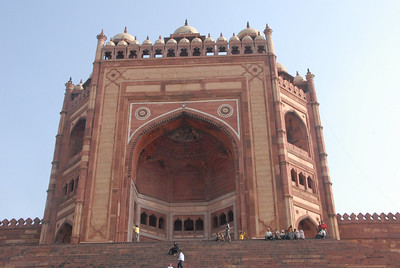
On our second day in Agra we took a nail-biting, 50 minute drive to the UNESCO World Heritage Site of Fatehpur Sikri.  Fans of the writer Salman Rushdie may remember Fatehpur Sikri as the setting for his 2008 novel “The Enchantress of Florence.”  Others may know it as the Mughal emperor Akbar’s “ghost city.”  Due to a water shortage the settlement was abandoned in 1585, only 14 years after its construction and shortly after the death of Akbar. For being uninhabited for over four centuries Fatehpur Sikri remained in spectacular shape.

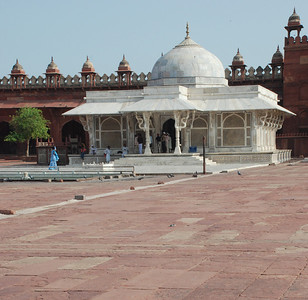
The Jama Masjid (Dargah Mosque), which we visited first, was completed in 1571.  Inside its courtyard rested the marble tomb of Shaikh Salim Chisti, the saint whom the Emperor Akbar had consulted throughout his reign.  Childless women now visit the mausoleum and tie colorful strings to the marble lattice screens.  Each thread represents a request for the saint to grant children to these women.

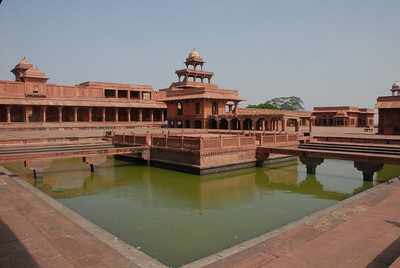
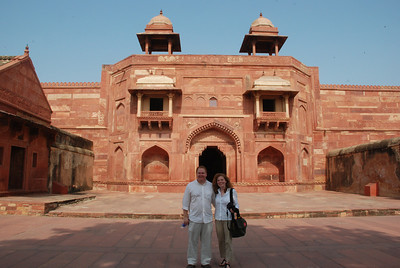
From the mosque we walked uphill to the palace complex.  There we saw the large and ornate Palace of Jodh Bai, the emperor’s favorite wife and the smaller palaces of his Christian wife Mariam and another unnamed spouse.  Other spectacular sandstone structures included the five-story Panch Mahal, a pavilion used by the court ladies, the Hall of Private Audience, the Hall of Public Audience and the 21-meter high Hiran Minar tower.  Decorated with stone replicas of elephant tusks, the tower supposedly marked the final resting place of Akbar’s favorite elephant.

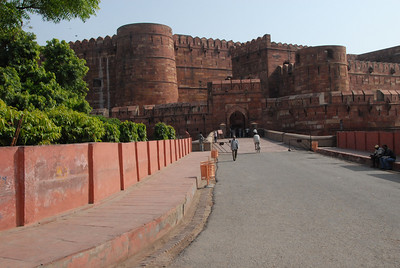
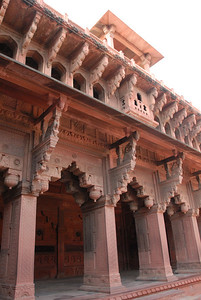
Back in Agra we tromped around another Akbar-inspired site, the 16th century Agra Fort.  Unlike European forts, Indian forts invariably contained elaborate palaces, gardens, meeting halls and courtyards.  They were cities within cities.  Agra Fort proved to be no different.

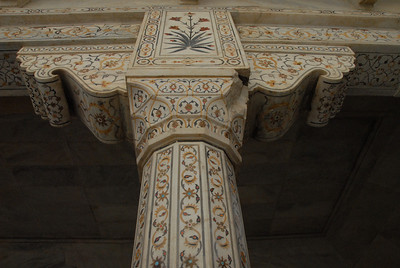
Akbar’s grandson, Shah Jahan, oversaw the completion of the fort.  As a result, it displayed an abundance of white marble buildings, decorated in a fashion similar to his masterpiece, the Taj Mahal.   It also possessed both Hindu and Moghul architectural influences.

Thanks to his zealous, hardliner son Aurangzeb, Shah Jahan spent his last eight years under house arrest at the fort.  From his window he could gaze out at the Taj Mahal on the opposite bank of the Yamuna River.  Not much of a consolation for him but it makes a good story for the rest of us.

The Taj Mahal – Agra, India

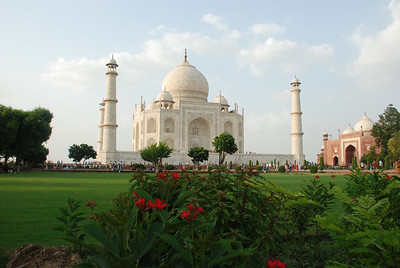
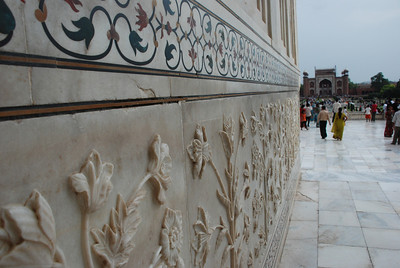
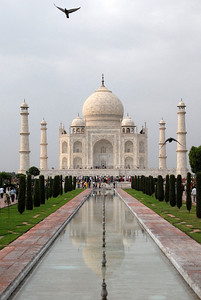
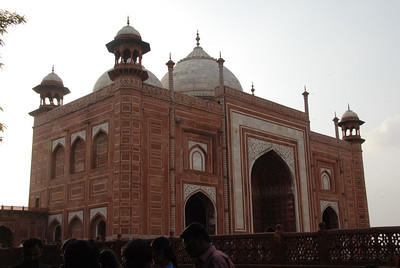
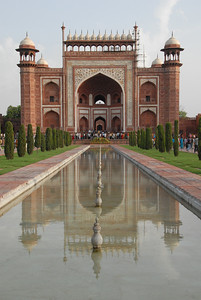
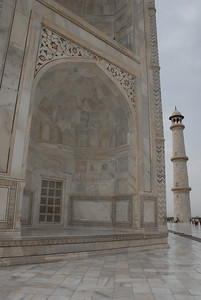
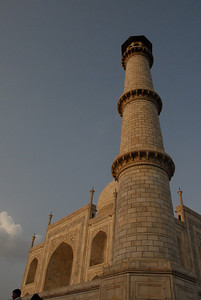
You — or at least I — cannot travel to India without seeing the majestic Taj Mahal.  One of the seven wonders of the world,  this mausoleum was built by the emperor Shah Jahan for his second wife and the love of his life, Mumtaz.  She died giving birth to his 14th child in 1631.  From the Indian marble mausoleum and red sandstone gates to sandstone and marble mosque and guesthouse the site took 22 years to complete.   Time and effort paid off for the Taj is truly an architectural and aesthetic marvel.  Believe me, I’ll be dreaming of this jaw-dropping monument for decades.

Since so much has been written and said about the Taj Mahal, I’d like instead to offer tips for visiting this site.  This will save me from having to think of something beyond my initial and lingering reaction of “Wow!  Wow!  Wow!”  Plus, it also may provide fellow travelers with a few useful tidbits.

Guides:  Your hotel concierge and the hordes of men lining the initial entrance to the Taj will insist that you hire a guide.   Without him (it’s always a man) to explain the site and keep the hawkers at the front gate at bay, you won’t get much from your trip to the tomb.  Truthfully, if you’ve read about the Taj in a good guidebook beforehand, you’ll have no problem navigating the well-manicured grounds.

Sean and I had the time and luxury of making two trips to the Taj, with and without guide.  We were far happier on our own.  The reason?  Without a guide we could linger for as long as we liked, take as many photos as we desired and just stand, slack-jawed, in awe of the beauty before us.   With a guide we felt pressured to keep moving and to listen to his every word, periodically missing what we were there to experience — the Taj Mahal.

More on guides and the whole aggressive, local vendor angle:  Likewise, if you are an intrepid, independent traveler — and, let’s face it, you probably are if you’re hanging out in India — you know how to handle the pushy peddlers.  In our experiences the touts have been far more hardcore in places such as Turkey, Mexico and Morocco.  Here, if you ignore their pleas of “Madame, madame.  I have something to show for you,” they leave you alone.  And did they not bother us when we had a guide?  Nope.  Men and boys alike still attempted to sell us trinkets, rickshaw rides and even tour guides for other sites.

Backpacks, bags, paper of any kind:  Leave them in your room or car.  Otherwise, you’ll wait in the long security line only to be told that you can’t enter the site without first checking your bag.   Our “Happy Holidays” sign, used in our annual holiday card, ended up in the trash because I couldn’t bear the thought of queuing up again.

Water bottles and cameras:  Both are allowed on the site.  Absolutely bring both.  Combined, Sean and I took close to 400 photos on our two trips to the Taj.  As for the water, I drank a liter each time.  It truly is that hot and parching in India.

When to visit:  Early morning or an hour before dusk.  The crowds are lighter.  The temperature is slightly lower (mid to upper 90s).   And, perhaps most importantly for us, the lighting is stunning.  At night the marble glows in the sunset.  Just breathtaking!

Dazzling Delhi

One city.  Countless facets.  It’s the land of government, commerce, religion, modernity, antiquity, wealth, poverty, lush gardens, dusty streets.  Just when you think that you have Delhi pigeon holed, it changes yet again.

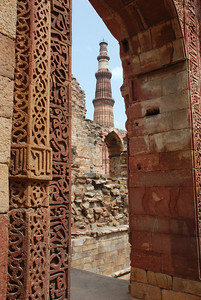
Such diversity spawns a wide range of sites and activities.  Along with visiting mosques, temples and gardens, Sean and I sweated it out with an afternoon trip to Qutub Minar.  An impressive monument from the period of Islamic rule in India, the Minar was constructed in 1193.  Today it is surrounded by the remains of Mughal summer palaces.

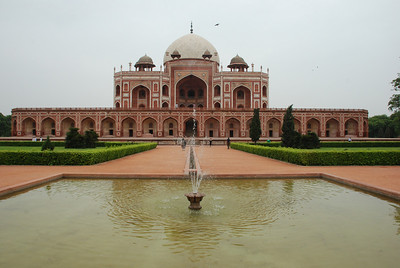
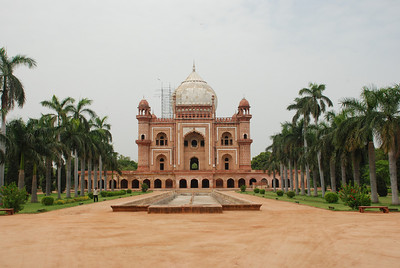
We also wandered around the grounds of the 16th century Humayun’s Tomb and 18th century Safdarjang’s Tomb.   Emperor Humayun’s grand burial site was initiated by his wife, who camped out and oversaw its construction until its completion.  Viceroy Safdarjang’s son prompted the creation of his father’s majestic tomb.  It is one of the most recent examples of Mughal architecture in India.

A contemporary site that drew in throngs was the memorial for Mahatma Gandhi.  Here the brick platform on which his funeral pyre had been built was encased in marble for all to see.   An elegant yet understated tribute to the father of modern India.

Although shopping never plays a huge role in our journeys, we did make a stop at the Khan Market.  How could we not?  It was right next to our hotel.  Our driver, Sher-Singh, had described it as a ‘rich person’s place to shop.’  From the buildings’ faded exteriors we wouldn’t have guessed this.  However, at Khan Market we found a well-stocked cookware shop, Nike, Reebok and Apple stores, beautiful handcrafted silver jewelry, several bookstores, an upscale pet shop and countless little restaurants.
One Hot Destination – Delhi, India

Many thought that Sean and I had lost our minds when we announced that we’d be spending much of August in India.  Scorching heat.  Monsoons.  Not to mention all the wonderful diseases, such as Dengue fever, malaria, typhoid and polio, that we could contract.  However, by day four we’re both alive, well and, beyond being drenched in sweat, dry each day.

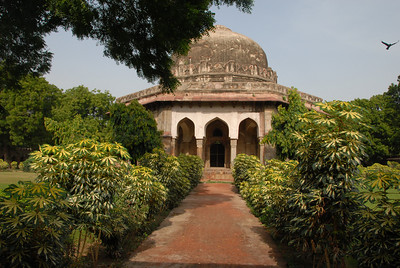
Our sultry journey began in New Delhi, the bustling capital of this exotic land.   On our first morning here we strolled over to Lodi Gardens where women in colorful saris and white running shoes jogged alongside men in shorts and T-shirts.  As with all of Delhi, Lodi Gardens was dotted with ruins from the region’s Mughal period.  Lodi was beautiful but, at 8 a.m., already quite a warm place to be — 90 degrees and climbing.

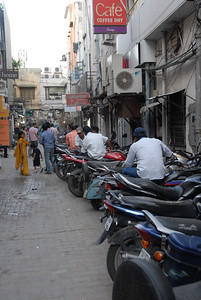
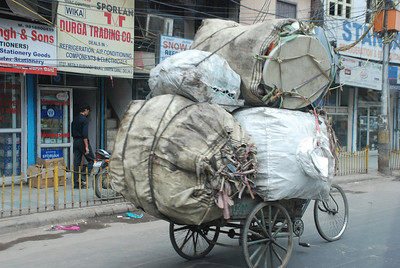
Following in the footsteps of locals and tourists alike, we rented not a car but a car and driver to take us around the city.  Smart move.   As in Turkey and Morocco, where Sean drove and I nervously navigated, the traffic is constant and chaotic. Unlike in the aforementioned countries, it’s comprised not only of cars and trucks but overloaded rickshaws, motorbikes, cyclists, pedestrians, 3-wheeled tuk tuks and the rare donkey, horse and elephant.

Our driver, Sher-Singh, carried us in air conditioned comfort to Old Delhi and the country’s largest mosque, Jama Masjid, where the courtyard alone holds 25,000 devotees.  Tucked at the end of a lane teeming with people and traffic, the mosque was constructed under the ruler Shah Jahan.  It is one of many mosques serving the large Muslim population in Northern India.

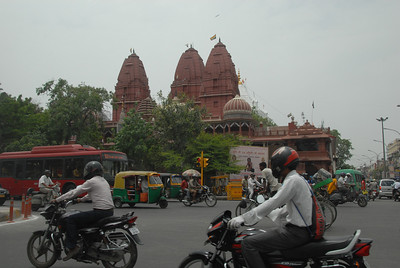
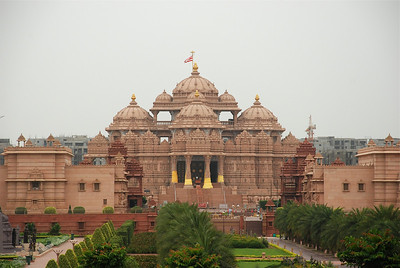
Along with mosques we also had the privilege of seeing Jain, Sikh and Hindu temples and, oddly enough, a huge Methodist church.  One of the more unusual religious centers was the Akshar Dham Temple.  Over 15,000 artisans and volunteers worked on this elaborate Hindu complex.  Opened in 2005, Akshar Dham featured “boat” tours on the man-made canals around the temple, movies and an extensive food court.

A Dumpling by Any Other Name

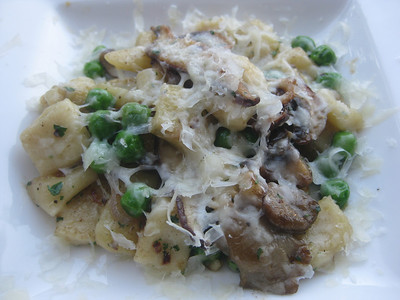
When I tell friends that the first dumplings that I tasted were brown butter-coated gnocchi, more than a few eyebrows raise. Accustomed to the whole-apple-baked-inside-a-flaky-dough dumpling, they think that I am confused. How could I mistake a savory Italian entree for this luscious treat?

Made from a simple mixture of potatoes, flour and egg, gnocchi is, in fact, a savory, Italian dumpling. Like all dumplings, it originally provided a means to stretching meals and satisfying hunger at a time when appetite-sating meat was a rare luxury. Added to a soup or stew, it afforded an inexpensive means to expanding these dishes. Topped with a sauce, gravy, butter or meat drippings, it became economical and hearty entrees in its own right.

Historians quibble over gnocchi’s exact origins. More than likely these orbs of dough came to Italy via the Middle East during Roman times.  Originally made from semolina, they later became known as Italian potato dumplings.  Today you can enjoy not only potato-based gnocchi but also spinach, bread and the traditional semolina.

Toppings vary as well. Although I lean toward simpler sauces, such as brown butter or garlic and olive oil with a sprinkle of basil and Locatelli, I could just as easily blanket my gnocchi with pesto or marinara.

GNOCCHI

Serves 4

1 ½ pounds baking potatoes, peeled, cut, cooked and drained

1 large egg, beaten

1 teaspoon salt

freshly ground white pepper, to taste

pinch of freshly ground nutmeg

1 cup all purpose flour, more or less as needed

6 to 8 quarts salted water, for cooking

Using either a potato ricer or a food mill and a large bowl, puree the potatoes. Add the egg, salt, pepper, nutmeg and enough flour to make a soft, satiny dough. Depending on how moist the potatoes are, you may need to add more or less flour. Keep in mind that the more flour added, the heavier the dough (and gnocchi) will be.

Place the dough on a lightly floured surface and divide it into four equal portions. Roll the dough between your hands and work surface until a 1/2-inch thick strand has formed. Using a knife, cut off ¾-inch pieces and press one side of each piece into the tines of a fork. Place on a floured baking sheet and repeat the same process with the other portions.

Bring the salted water in a stockpot to a boil and cook the gnocchi in batches, about 5 to 8 minutes. They will float to the surface of the water when ready. Use a slotted spoon to remove the dumplings and place in bowls or on plates. Top with butter and grated Romano cheese, pesto or a marinara sauce and serve.

Spread Some Excitement

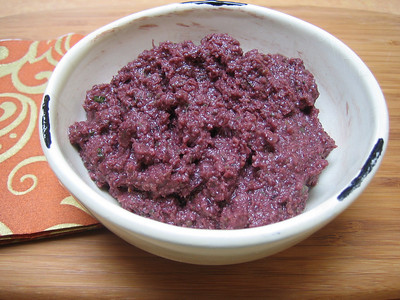
Tapenade.  That piquant condiment found on virtually every dining table in the Mediterranean.   Most people associate it with olives.  Tapenade isn’t just about olives, though.  Rather, this biting spread represents the successful marriage between capers and olives.  In fact, its name comes from the French Provencale word for capers — tapeno.

To make a fresh tapenade takes only scant minutes and ingredients.  Pitted olives, capers, anchovies and olive oil are either pulverized with a mortar and pestle or processed in a food processor until they become a chunky puree.  The resultant tapenade is either served or refrigerated until ready to use.

And just how to utilize a tapenade?  Along with slathering it on baguettes for a quick appetizer, Mediterranean cooks may spread it over seared fish steaks, grilled vegetables, crackers or warm pita bread. They may also employ it as a stuffing for oven-roasted tomatoes or as a savory dressing for sandwiches.

Simple to make and a pleasure to eat, tapenades are quite the Mediterranean treat.

OLIVE  TAPENADE
Makes roughly 1 cup

½ pound Kalamata olives, pitted
1 tablespoon capers
2 cloves garlic, roughly chopped
1 tablespoon fresh parsley, roughly chopped
2 tablespoons olive oil
1 1/2 teaspoons lemon juice
¼ teaspoon ground black pepper

Place all of the ingredients in the bowl of a food processor and pulse until somewhat smooth.  Serve immediately or refrigerate until ready to use.

Molten Chocolate Lava Land

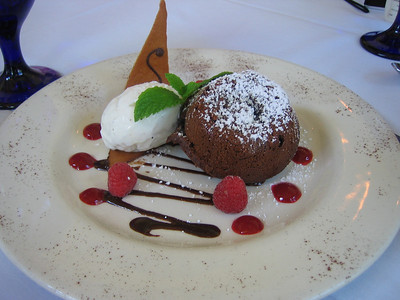
I know that many will disagree but, for me, this decade will go down in history as the ten long years of molten chocolate lava cakes.  My first experience with them came not in a restaurant but in my own kitchen.  Armed with Nigella Lawson’s classic cookbook “How to Eat” (Wiley, 2000), I set out to create her gooey chocolate puddings.  These wonderfully decadent treats, I later came to learn, are also known by such monikers as molten chocolate cakes, chocolate lava cakes, and chocolate cakes with warm ganache centers.  Same dessert.  Countless names.

Check out the dessert menu at any upscale and/or New American restaurant and I bet that you will spot this sweet. Every 21st century chef seems to have fallen for this moist and oozing chocolate specialty.  

Although the recipe is quite simple, many mess up the molten chocolate lava cake (MCLC). Usually the chef has baked the pudding for far too long. Insert your fork into one of these overcooked MCLC’s and you’ll not see that glorious stream of steaming chocolate cascade onto your plate.  Instead you’ll have a forkful of dry chocolate cake. 

To avoid this disappointment, I’ve stopped ordering MCLC’s altogether. If I want to indulge in one, I’ll just make it a home. The recipe couldn’t be easier. 

To make MCLC’s or gooey chocolate puddings as they’re called in Lawson’s cookbook, melt chocolate and butter together.  Add the liquids to a mixture of sugar, flour and eggs and whisk until a smooth batter forms.  Pour the batter into greased and floured ramekins and bake until the edges are firm and cracking but the centers are still very soft.  Invert the warm MCLC on a plate and serve with ice cream, chocolate syrup, raspberry coulis or dusting of powdered sugar.  If you’re as impatient as I am, you could also eat it straight from the ramekin.  

GOOEY CHOCOLATE PUDDINGS
From Nigella Lawson’s “How to Eat”  (John Wiley and Sons, 2000)
Serves 4

4½ ounces bittersweet chocolate
8 tablespoons unsalted butter
3 large eggs (or egg beaters)
¾ cup sugar
¼ cup all-purpose flour

Preheat oven to 400 degrees Fahrenheit.
       
Grease and flour 4 1-cup ramekins.
       
Put the chocolate and butter in a microwave-safe bowl and microwave, stirring occasionally, until chocolate is melted and the two are well-blended.
       
Whisk together the eggs, sugar and flour. Add the egg mixture to the chocolate mixture and whisk together.
       
Pour the pudding mix into the ramekins. Place them on a baking sheet and bake for 10 to 12 minutes until tops are set. Serve immediately.

Beignet v. Funnel Cake – Let the Games Begin

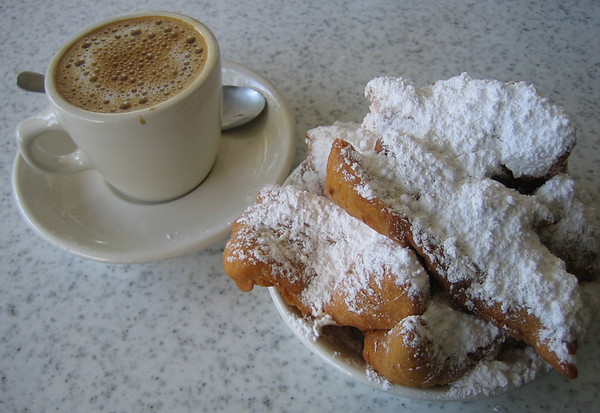
beignets and coffee

Beignets and cafe au lait at Cafe du Monde, New Orleans

Ah, beignets and funnel cakes.  I can’t think of two more delectable, fried, sugar-coated snacks.  After years of gorging on beignets each time that I visit New Orleans and of living next to Apple Frankie, the undisputed “funnel cake king,” I consider myself somewhat of an expert on the two.  So, with a nod to the aforementioned A. Frankie, I shall attempt to determine, once and for all, which is truly the best greasy sweet. 

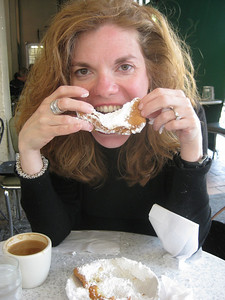
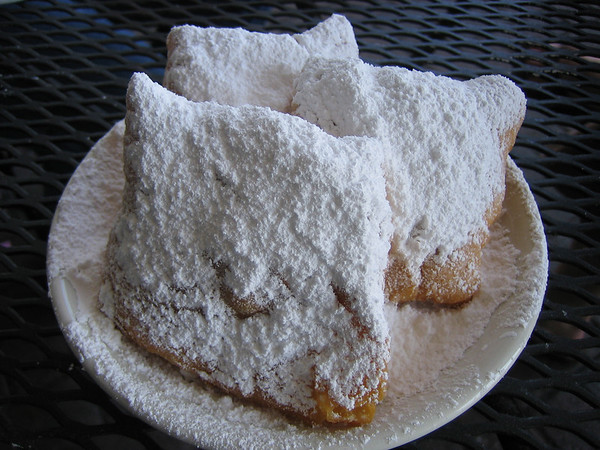
Although I flew back from New Orleans over a month ago, beignets linger on my palate and mind.  Blanketed with powdered sugar, these pillows of dough are served hot and as a trio at the Crescent City landmark Cafe du Monde.  Light and oh-so sweet, they are a heavenly treat.  To balance out the avalanche of sugar hitting my bloodstream and clothes, I pair beignets with a decaf, chicory-laced cafe au lait and plenty of napkins.  

While I associate beignets with New Orleans, they actually originated in France.  Made from the delicate, spongy pâte à choux, these airy, square pastries are found throughout the country.  They likewise pop up in such French-influenced regions as Quebec and, of course, New Orleans. 

Because of their lightness and semblance to a doughnut, I may eat beignets for breakfast or as a late night bite.  I would not do this, though, with a funnel cake.  Heartier and bigger than a beignet, this golden latticework of deep-fried batter seems better suited for dessert, if not for a decadent dinner. 

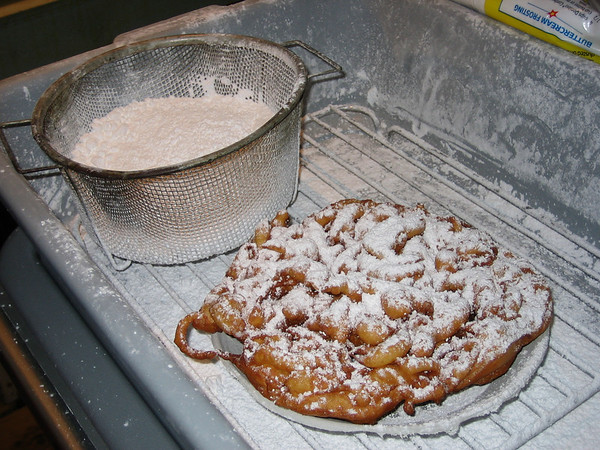
hot funnel cake

Funnel cake fresh from the fryer

Not everyone shares my view.  Called “drechter kuche” by its creators, the Pennsylvania Dutch, the funnel cake was reputedly served to farmers as a mid-morning snack.  Today, however, most people consume them at street fairs, carnivals, festivals and concerts. 

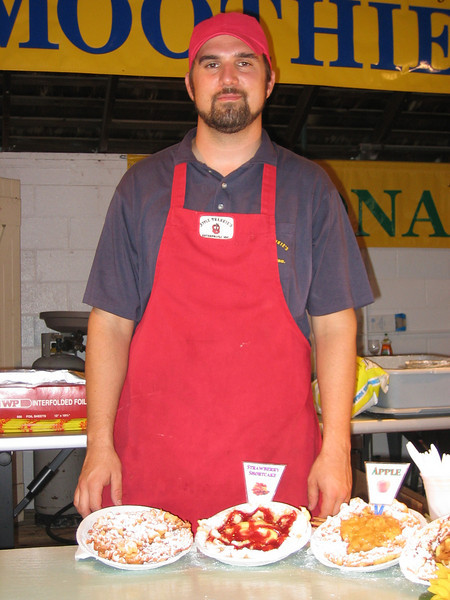
Unlike beignets, the funnel cake starts with a batter of eggs, milk, flour, brown sugar, vanilla and baking powder. Drizzled into a deep fryer, the resultant cake gets sprinkled with powdered sugar and optionally topped with apples, strawberries, or chocolate sauce.  No question that it’s a bit heavier — and sweeter — than its French counterpart.

funnel cakes with toppings

Funnel cake “heir” Cody Wilmer with three types of funnel cakes

So, which is the better deep-fried sweet?  After years of random samples and thoughtful analysis I fear that I have to sit the fence on this one.  Whether for breakfast, dessert, dinner or a late night snack both are a divine delicacy.      

BEIGNETS

From Rima and Richard Collin’s “The New Orleans Cookbook” (Alfred A. Knopf, 2004)
Makes roughly 5 dozen beignets
*Note that the dough must be prepared in advance and refrigerated overnight. If you don’t wish to make the beignets right away, the dough will keep for 1 week in the refrigerator.

1 1/2 cup warm water
1 package active dry yeast
1/2 cup sugar
1 teaspoon salt
2 large eggs
1 cup undiluted canned evaporated milk
7 cups flour
1/4 vegetable shortening
oil for deep frying
confectioner’s sugar

Put the warm water in a large bowl, add the dry yeast and stir until thoroughly dissolved. Add the sugar, salt, eggs and evaporated milk. Slowly stir in 4 cups of flour. Beat with a wooden spoon until smooth and well combined. Beat in the shortening then add the remaining flour, about 1/3 cup at a time. Stir until it becomes too stiff to do so and then work the dough with your fingers. Cover the bowl with plastic wrap and refrigerate overnight.

On a clean, floured surface roll out the dough to a thickness of 1/8-inch. Using a sharp knife, cut the dough into rectangles measuring 2 1/2 inches by 3 1/2 inches.

Preheat the oven to 200 degrees Fahrenheit. Preheat the oil in a deep fryer to 360 degrees Fahrenheit.

Fry 3 or 4 beignets at a time until they are puffed and golden brown on both sides, about 2 to 3 minutes per batch. Using tongs, turn them over once or twice so that they are evenly browned. Drain each batch on a wire cooling rack. Place them on a platter covered with paper towels and put the platter in the oven to keep warm. Repeat with the remaining beignets.

beignet

Beignets!

Liberally cover the beignets with powdered sugar and serve hot. Yum!