Latest Posts

The Perfect Portuguese Pastry

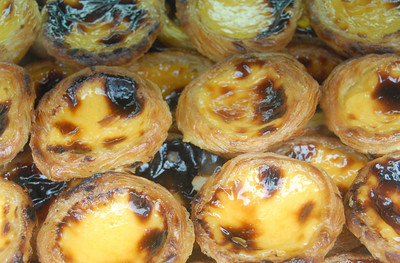
Spend a week in Portugal and no doubt you’ll end up with a serious addiction to pasteis de natas. Sweet and creamy yet with a slight crunch, these small custard tarts line the windows of most bakeries and coffee shops. The locals blanket them with cinnamon and a smidgen of powdered sugar before consuming them at breakfast or as a snack. In my case no day in Portugal was complete without at least one of these bite-sized treats.

Although I found them throughout Portugal, legend has it that de natas originated on the outskirts of Lisbon, at Belem’s Mosteiro dos Jerónimos. There lay bakers produced pasteis de natas for the general public. In the early 19th century, when the monastery closed, a neighboring confectioner, Domingo Rafael Alves, bought the recipe from one of the out-of-work bakers and started offering them in his shop.
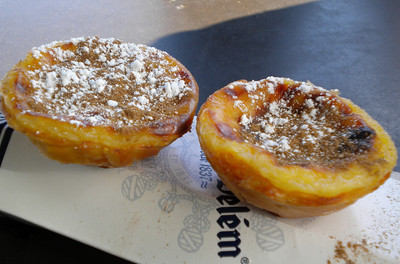
Today Alves’ Pasteis de Belem has become a tourist attraction in its own right. Made using the monastery’s original, secret recipe, Pasteis de Belem’s tarts draw countless customers to the cafe seven days per week. On the late afternoon that I visited, a dozen people lined the stone sidewalk outside, patiently waiting for their turn to buy boxes of this delectable sweet. Just remember that here they are called pasteis de Belem while everywhere else they’re known as pasteis de nata.

What makes this pastry so delicious? Perhaps it’s the de nata’s light shell. Reminiscent of puff pastry, its airy crispness provides the perfect contrast to a velvety custard. Then again, maybe it’s the custard. Whipped together from fresh cream, egg yolks and sugar, its warm, gentle flavor makes me yearn for more.

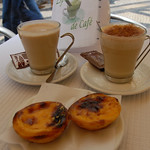
If traveling to Portugal isn’t in your future and you don’t have a Portuguese bakery or restaurant nearby, try baking pasteis de natas at home. Serve them warm, with a demitasse of espresso or cup of strong, black coffee, just as they would in Portugal.
PASTEIS DE NATA
From “Portuguese Cooking” (Casa Editrice Bonechi)
Serves 6

2 cups all purpose flour
lukewarm water
1 cup butter, softened
8 ounces cream
4 egg yolks
1 tablespoon all purpose flour
¾ cup superfine sugar
zest of one lemon
powdered sugar, for decorating
cinnamon, for decorating
Special equipment — 6 (3 1/2-inch to 4-inch) tart pans

Sift the flour into a large bowl. Using a hand mixer, mix with enough lukewarm water so that a soft dough forms. Allow to stand for 15 minutes. Place on a lightly floured surface and knead briefly before forming into a block. Roll out to about 1/2-inch thick. Spread 1/3 of the softened butter over the dough, fold over into thirds, knead and shape into a block again. Repeat these steps for the remaining two-thirds of butter. When finished, allow the dough to rest for 15 minutes.

Roll out the dough to 1/3-inch thick. Cut into 4-inch wide strips then roll these, one by one, into tight cylinders. Cut the cylinders into 1/2-inch thick slices and place each in a tart pan. After wetting your fingers, fit the pastry over the bottom and sides of the pans to line them; don’t allow the pastry to go over the rims.

Preheat the oven to 425 degrees Fahrenheit.

To make the custard, whisk together the cream, egg yolks, flour, sugar and lemon zest in a medium-sized saucepan. Heat the mixture over low heat and slowly bring to a boil, stirring the entire time. As soon as the custard starts to boil, remove from the heat and allow to it to cool to room temperature before pouring into the individual pans. Smooth out the surface of the custards and then bake them until golden brown on top, about 10 to 15 minutes. Remove them from the oven and allow them to cool in their pans. Dust the tops with cinnamon and powdered sugar and serve.
Smokin'

Some consider it a luxury item, served only on special occasions. Others relegate it to the brunch table, as topping for a bagel. Yet, to me, smoked salmon is far more than fancy finger food. Whether featured in a pasta dish, incorporated into a salad or filling a fajita, it remains a versatile, multi-faceted fish.

Although considered a delicacy, smoked salmon has quite humble beginnings. Born out of necessity, smoking was the means by which medieval Europeans ensured that their bountiful salmon catches would remain edible throughout the year.

To preserve their fish, the anglers would first clean and fillet their salmon. They then sprinkled salt and sugar onto the flesh, stacked the fillets on top of each other and inserted them into an active smokehouse. There the salmon would remain in roughly 75 to 85 degree Fahrenheit temperature until smoked completely.

Unlike the tender, moist products of today, the early European versions had a tough texture reminiscent of jerky. They also possessed a strong, salty tang that differed greatly from the present day’s milder flavor.

While the taste and texture have evolved over the years, what hasn’t changed is its healthfulness. Rich in omega-3 fatty acids, smoked salmon remains a high protein, low calorie food.

Although purists may opt to eat smoked salmon with a dusting of ground pepper and on a cracker, bagel or slice of rye or pumpernickel bread, a wealth of hot and cold recipes exist. Consider an updated croque-monsieur or eggs Benedict where smoked salmon replaces the ham. For breakfast sample a smoked salmon quiche, omelet or frittata or smoked salmon wrap, pasta or polenta at dinner.

Prefer cold dishes? Try a chopped smoked salmon-avocado-tomato-red onion salad, smoked salmon and cucumber tea sandwiches or smoked salmon gazpacho or vichyssoise soup.

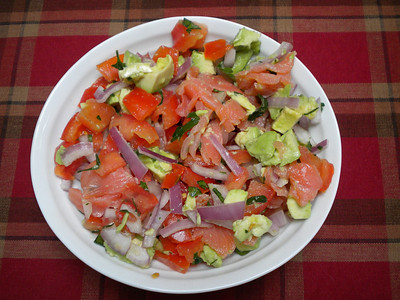
SMOKED SALMON-AVOCADO-TOMATO TARTARE
Serves 4 to 6

You can call this either a tartare or chopped salad and serve it as an appetizer, side or first course.

4 tomatoes, seeded and diced
1 cup red onion, cut into thin, ½ to 1-inch long strips
2 avocados, flesh scooped out and cut into cubes
¼ cup fresh parsley, washed, dried and chopped
juice of 1 lemon
1 cup (approximately 6 ounces) smoked salmon, cut into small strips
freshly ground white pepper, to taste

Place the tomatoes, onions, avocados and parsley in a medium-sized bowl and drizzle the lemon juice over top. Add the smoked salmon and a dash of ground white pepper. Stir to combine and taste for seasoning, adding more ground pepper if necessary. Serve immediately or cover with plastic wrap, pressing down on the surface so that no air collects beneath the wrap, and refrigerate for up to 5 hours.

Bit of the Bubbly


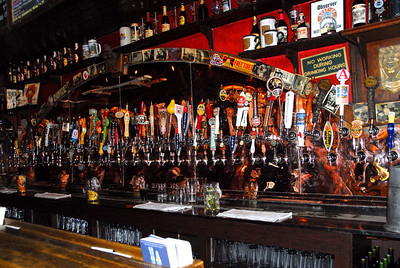
I spent much of last week in Dallas so the obvious choice would be to write about Tex Mex food. Yet, as I quickly learned, there’s more to Texas cuisine than chilies and guacamole. For instance, there is beer. No, I don’t mean the obvious, South-of-the-Border choices such as Corona or Dos Equis but rather all the other fine brews found on tap there.

Want an American craft beer such as Ommegang‘s Three Philosophers or Dogfish Head 60 Minute IPA? How about an Italian Peroni, English Young’s Double Chocolate Stout or a Belgian Maredsous, Leffe Blonde or Chimay? I could enjoy them all and many more at the lively Old Monk and The Ginger Man.

Drinking all these heady lagers and ales made me think, unsurprisingly, about food and how infrequently I use beer when cooking. Sure, every now and then I pull together a tasty Guinness- or Victory Lager-based cheese fondue. Still, I’ve not spent enough time tinkering in the kitchen and seeing what other recipes can benefit from a bottle of good beer.

Thanks to adventurous friends and restaurants, I do know the pleasures of shellfish cooked in this liquid. Mussels, clams and shrimp all perk up when steamed or sauteed in beer. Pair them with an IPA and molasses barbecue sauce and you’ve got a lip-smacking, finger-licking meal.

Fish not your favorite? Braise pork, sausage, beef or chicken in a pilsner. Use stout as the stock for an incredibly rich chili or beef or vegetable stew. Bake bread from an ale-based batter or cake from a porter-chocolate mix. If all else fails, fire up the barbecue and grill some succulent beer can chicken. The options are endless.

Likewise limitless are the number of books devoted to this subject. When searching for a quality beer cookbook, avoid those with recipes that don’t differentiate between varieties — i.e. “12 ounces of beer” versus “12 ounces of stout, pale ale . . ..” Contrary to the generic instructions, the brew that you choose will greatly influence how your dish tastes.

Until I have more time to experiment and test other beer-infused offerings, I’ll pass along a tried and true recipe for cheese fondue. Needless to say, it goes well with an iced cold beer or two.

VICTORY LAGER CHEESE FONDUE
Serves 2 to 3

3 apples, peeled, cored and cut into slices
juice of a lemon
8 ounces Victory Lager or any well-balanced, German-style lager
2 cups Grueyere cheese, shredded
2 cups Emmental cheese, shredded
1/8 teaspoon ground nutmeg
dash ground white pepper
1 baguette, cut into cubes

Special equipment: Fondue pot and fondue forks or long, wooden or bamboo skewers

Place the apple slices in a bowl and sprinkle the lemon juice over them to stop them from browning.

Pour the beer into a fondue pot and bring the liquid to a simmer over moderate heat. Gradually add the cheese to the pot and stir so that the cheese melts evenly. Cook for 5 to 10 minutes until cheese is completely melted and the liquid is creamy. Add the nutmeg and pepper and stir to combine.

Place the bread cubes in a separate bowl. Serve them, along with the apple slices, for dipping.

Wonders of Won Tons

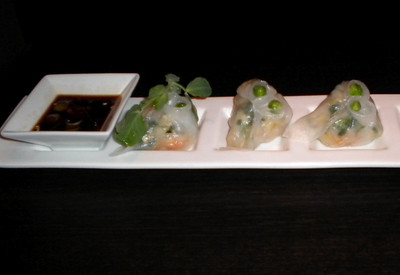
I used to believe that some cuisines were best left to the professionals. Why spend hours scouring specialty markets for hard-to-find ingredients when I could just order take-out from the nearby Thai, Vietnamese, Chinese or Japanese restaurant? Then I spent a day in the kitchen with my husband’s step-father. A native of Vietnam, Luong is the guy to go to if you want to learn about, if not master, the fine art of Asian cooking.

On that transformative day we focused on won tons. A staple of Chinese cuisine, these dumplings required no lengthy shopping trips for rare ingredients. Likewise, they involved no special culinary skills. Just chop, stuff and boil. Who knew that cooking Asian food could be so easy? Not me!

With our ingredients spread out on the kitchen counter, Luong coached me on how to make the perfect, time-saving won tons. His trick? Store-bought, wheat flour dumpling wrappers. These can be found online as well as in specialty grocery stores and the Asian section of most supermarkets. Remember to moisten the wrappers with a damp towel and let them sit and soften for a few minutes before using.

Wrappers limber, we set out to stuff and seal our dumplings. Although usually loaded with ground pork as well as shrimp and minced onions, these won tons contained chicken. Perfect for pork-abstaining or shellfish-sensitive Asian food fans.

Once we had formed the dumplings, we reserved half for a bubbling pot of won ton soup. The others we boiled and paired with a dipping sauce of two parts soy sauce to one part honey and rice vinegar. In the end we had two fabulous Asian meals, neither of which depended upon calling for take-out.

CHICKEN WON TONS
Makes approximately 60 dumplings

1 lb. lean ground chicken
2 scallions, finely chopped
2 shallots, finely chopped
4 shitake mushrooms, roughly chopped
small piece of ginger, grated
12 water chestnuts, chopped
2 cloves of garlic, peeled and minced
8 – 10 shrimp, cut into pieces
6 tablespoons soy sauce
60 Shanghai-style won ton or dumpling wrappers
salt and pepper to taste
6 to 8 quarts salted water, for cooking
soy sauce, for garnish

Fill a medium-sized stockpot with lightly salted water and bring to a boil.

Wet a paper towel and place it over the dumpling/won ton wrappers to moisten them.

Place the shallots, scallions, mushrooms, garlic, water chestnuts, ground chicken, shrimp, ginger, salt and pepper in a large bowl and stir to combine. Add the soy sauce and stir again.

Bring the salted water to a boil.

Peel off a dumpling wrapper and place 1 tablespoon of filling in the middle of the wrapper. Moisten the edges of the wrapper and fold into a crescent. Press down on the edges with the tines of a fork. Place on plate.

Repeat this process with all the wrappers, making sure not to overlap the dumplings on the plate or they will stick together.

In batches place the dumplings in the boiling water and cook. When they float to the surface, they are finished. Remove won tons with wire skimmer or slotted spoon. Serve on plates with soy sauce or place in a broth and serve as a soup.

*Note: The same ingredients can be used for won ton soup. After filling the won ton wrappers, twist the edges up into a tepee. Place in won ton soup broth (1 chunk of whole ginger to be removed once soup is finished, 1 sliced shallot, 1 can of chicken broth) and cook.

Sardines, The Smart Choice

Over the weekend, while everyone else was off enjoying a few snow-free days, I sat in my office, struggling over an assignment on sardines. Whenever I became convinced that I had captured the delights of these small, iridescent fish, my husband would read a few lines and announce that I still hadn’t sold him, yet.

He isn’t alone in his status of sardine sourpuss. Many Americans write off this flavorful, little fellow as being too oily, boney, fishy or just too startling – with its head and tail intact – to use in a dish.


For me, though, sardines remain a tasty, smart, and economical alternative to ‘fast fish’ such as canned tuna and larger, carnivorous creatures such as salmon. With a flavor reminiscent of a heartier, earthier tuna sardines can jazz up a variety foods including sandwiches and subs, salads, pasta, pizza and dips.

Their rich, meaty flavor also allows them to stand on their own, grilled and served with a side of mixed greens or couscous. Their fatty flesh makes them perfect not only for grilling but also for broiling and frying.

Recoil at the thought of fattiness? Think again. Sardines are high in omega-3 fatty acids, which may reduce the risk of cardiovascular disease, cancer and arthritis. They likewise are a good source of protein.

The health benefits don’t end here. Thanks to their short life spans, primarily herbivore eating habits and wild-caught status, sardines are low in mercury and other toxins. Although abundant in supply, these guys have stringent catch quotas, further enhancing their low environmental impact.

If these wonderful aspects don’t sway naysayers, consider the price. A 3.75-ounce can of boneless, skinless sardines cost as little as $1. Talk about value on your plate.

Still feel that you’ll never try a sardine? Chances are that you already have. A generic term, “sardine” applies to a variety of tiny, soft-boned, saltwater fish. Anchovies, herring, pilchards and sprat all fall under this category. So, if you’ve ever nibbled on a Caesar salad, with its salty, anchovy-laced dressing, or chowed down on bread slathered in the warm Italian dip bagna cauda, then you’ve eaten sardines.

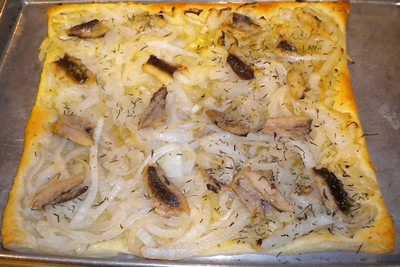
ONION-SARDINE PUFF
Serves 4 to 6

1 sheet of frozen puff pastry, thawed
3 tablespoons olive oil
1 ½ medium white onions, peeled and sliced into crescents
¾ teaspoon salt
1 (3.75-ounce) can of skinless, boneless sardines
1 teaspoon fresh rosemary, chopped
½ teaspoon dried thyme

Preheat the oven to 400 degrees Fahrenheit. Roll out the thawed puff pastry and place it on an ungreased baking sheet.

In a medium frying or sauté pan heat the oil on medium high. Add the onions and salt and sauté until softened, about 6 minutes. You should end up with about 1 1/2 cups cooked onion. Remove the onions from the pan and spread them evenly over the puff pastry.

Using your fingers, break the sardines into chunks and place them on top of the onions, spacing them evenly apart. Sprinkle the fresh rosemary and dried thyme over the onions and sardines and insert the puff into the oven.

Bake for 15 to 20 minutes, until the pastry has puffed up and the edges have browned slightly. Cut into squares and serve warm.

Go Bananas

When I’m hungry and in a rush, I reach for my curvy, tropical friend, the banana. This potassium- and Vitamin C-rich fruit has filled the bellies of the ravenous since ancient times. No wonder. Whether you pluck it off a tree or buy it from a fruit stand, grocery store or coffee shop, the ubiquitous banana persists in being easy to find, transport and eat. Just pop it into your bag or slip it into a “banana guard” and shove it into your jacket pocket and you’re set to snack healthfully any time, any place.

Because I enjoy the gentle sweetness and soft texture of bananas so much, I frequently incorporate them into my cooking. Banana bread, muffins and pancakes have all kicked off my days while banana cream pies, puddings, ice cream sandwiches and splits have brought luscious endings to my nights.

On those evenings when I crave a bit of a spectacle with dessert, I whisk together the flamboyant New Orleans classic Bananas Foster. In this dish bananas are sauteed in a mixture of brown sugar, cinnamon, unsalted butter and banana liqueur before being set aflame in dark rum. Once the fire dies out, the bananas and rich, amber sauce are spooned over ice cream. While vanilla ice cream has become the standard choice for Bananas Foster, alternate flavors such as chocolate, toffee, caramel or hazelnut can add an extra dash of excitement to this sweet.

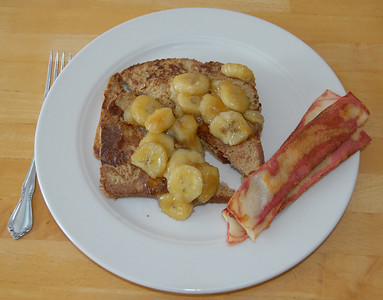
When I don’t feel up to fiddling around with more than a few ingredients, I pull out some brown sugar and unsalted butter and make caramelized bananas. This simple treat can top French toast and pancakes, fill crepes, or be layered between scoops of ice cream or yogurt. Caramelized bananas can also stand on their own, served in small bowls with whipped cream or crisp sugar cookies.

So many cooking options. Such delicious food. It’s no surprise that bananas have become North America’s – and my – favorite fruit.

CARAMELIZED BANANAS
Serves 2 to 4

2 tablespoons unsalted butter
2 tablespoons light brown sugar
1 tablespoon granulated sugar
2 large, ripe bananas, peeled and sliced into coins

Melt the butter and sugar together in a medium frying or saute pan. Stir frequently so that the ingredients are well-combined. Lay the bananas on top of the sauce and cook for approximately 45 seconds. Flip over the banana coins and cook on the other side for roughly the same time. The bananas should be soft but not mushy. Spoon the caramelized bananas over French toast, pancakes, crepes, plain Greek yogurt or ice cream and serve immediately.

Stir the Pot

“Stir constantly with a wooden spoon until the cornmeal thickens, about 30 to 45 minutes.” Those instructions have daunted countless would-be polenta makers, including me. Who wants to stand over a steaming pot for 45 minutes, stirring cornmeal non-stop? No doubt anyone who has discovered the tastiness and versatility of this savory comfort food would, that’s who.

A staple of Northern Italian cuisine, modern polenta dates back to the mid 17th century. It was during this time that the Venetians introduced American corn to the region. Prior to the 1600s a variation of polenta was reputedly made using chestnut flour while another version may have existed that employed barley.

Cooked in an unlined copper kettle, the combination of yellow cornmeal, or ground corn, and water was ceaselessly stirred until a thick mush formed. To test for doneness, the cook would insert her wooden spoon in the center of the mixture. If the spoon stood up on its own, without falling over or shifting its position, the polenta was done.

Once finished, the polenta was either served immediately in its porridge-like state or spooned out of the pot, spread out on a flat surface to cool and solidify and then cut into squares. The pieces would then be grilled or fried and paired up with seafood, vegetables or a sauce. An extremely adaptable food, it was offered as a first course, side and even an entrée. When teamed with spicy sausages or sweet syrup or preserves, it became a hearty breakfast.

Although polenta can be delicious on its own, it also compliments a variety of foods. Stewed, braised or roasted meats, grilled fish and shellfish and roasted fowl all couple well with it. When working with meats and fish, be sure to reserve some of their cooking juices so that the liquid can be used as a light sauce for the polenta.

Likewise, polenta can serve as a stand-in for such basic ingredients as the potatoes in mashed potatoes or pasta in lasagna. Just spread out, cool and cut the cooked polenta into strips. Place the strips in a baking dish and cover with cheese, meat or vegetables and tomato sauce and bake. Outstanding!

MEDITERRANEAN POLENTA TRIANGLES
Serves 4 to 6

For the polenta:
3 ¾ cups water
1 tablespoon salt
1 tablespoon olive oil, plus 2 to 3 tablespoons for frying
1 cup instant polenta

For the topping:
1 (14 ½) ounce can of diced tomatoes, drained and with juice reserved in separate bowl
2 cloves garlic, minced
1 tablespoon extra virgin olive oil
2 tablespoons lemon juice
¾ teaspoon dried oregano
¾ teaspoon dried thyme
1 ½ teaspoons fresh, chopped parsley or ¾ teaspoon dried parsley
½ teaspoon ground black pepper

In a large saucepan bring the water to a boil. Add the salt and 1 tablespoon of olive oil. Slowly pour in the cornmeal, stirring with a wooden spoon as you add it. Reduce the heat to medium and continue to cook, stirring constantly, until the mixture thickens, about 5 minutes. Remove from the heat and spoon the polenta into a rectangular, lightly oiled, 2-quart baking dish. Allow the polenta to cool and solidify.

Meanwhile, in a medium bowl mix together the tomatoes, garlic, oil, lemon juice, oregano, thyme, parsley and pepper. Depending on how thick you want the topping to be, add 2 to 4 tablespoons of the reserved tomato juice to the mixture and stir together.

Once the polenta is firm, cut it into triangles about 2 inches in diameter at the base. (You can do this by first cutting the polenta into a rectangle and then slicing it diagonally to make 2 triangles.)

In a non-stick frying pan heat the remaining 2 tablespoons of olive oil. Place several polenta triangles in the pan and fry on both sides until golden brown. Remove and arrange the cooked polenta on a large plate or platter. Repeat these steps with the remaining triangles.

Spoon the topping over the fried polenta and serve immediately.

Simple Ways to Start the Day

This past fall a series of house guests prompted me to re-think what I consume at the start of each and every day. While I may love to greet the morn with a slice of double fiber wheat toast with organic peanut butter and Le Pain Quotidien four-berry preserves slathered over top, I suspected that my friends would expect a little more than a hunk of toast dressed up with PB and J. No doubt about it, I’d have to come up with something more interesting and filling to offer my traveling guests.

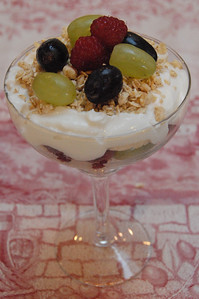
One of the fastest yet prettiest ways to kick off the day was with a yogurt-fruit-granola parfait. For this I just dug out some margarita glasses and filled the bottoms with homemade granola. I then covered the granola with a few spoonfuls of organic, Greek yogurt followed by fresh berries and more granola. I topped the parfait off with a handful of berries and then — Voila! — breakfast was ready.

When pressed for time, I spread delicate, coral slices of smoked salmon on a white platter, sprinkled feathery, fresh dill and piquant capers around the edges and presented the dish alongside a slab of cream cheese and wedges of savory pumpernickel bread. The entree looked elegant and tasted delicious. Yet, it took only a few minutes to prepare.


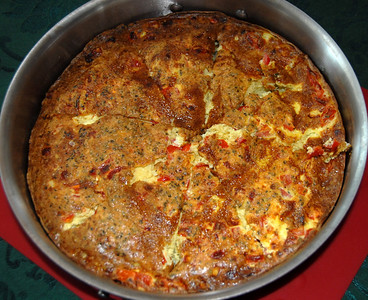
On mornings when I had time to spare, I whipped up a Mediterranean frittata. An Italian version of an omelet, the frittata has its extra ingredients – cheese, tomatoes, etc. – mixed and cooked with the eggs rather than folded inside them as its French cousin does. Finished under a broiler, the frittata, unlike an omelet, keeps its round shape.

Although whisking together eggs, herbs, and cheese at the crack of dawn might seem too onerous to bear, the frittata proved to be yet another easy offering. Since I didn’t have to fiddle with a crust, as I would with a quiche, I could pour the egg mixture into a heated pan and let the stovetop do its work. Likewise, I didn’t have to worry about hovering over the stove, evenly folding over eggs or contending with too much filling slopping out over the sides. This self-contained dish cooked away while I devoted my attention to brewing a much-needed pot of coffee.

While frittatas, smoked salmon platters and yogurt-granola parfaits all had their charms, some mornings the best and simplest way to ease into the day was with breakfast at a local diner. All the comforts of home cooking but without any of the dishes to clean at the end of the meal. And this, ultimately, was my visiting friends’ favorite way to begin their stays.

MEDITERRANEAN FRITTATA
Serves 4

1 to 2 tablespoons olive oil
3 eggs
5 egg beaters
1/3 cup tomatoes, seeded and chopped
1/4 cup feta cheese, crumbled
1/4 teaspoon dried basil flakes
dash of freshly ground black pepper

Place the oil in an oven-proof, 3-quart saute or other smallish pan and heat it on medium-high. Turn the oven broiler on medium.

As the oil and broiler are heating, whisk together the eggs, egg beaters, tomatoes, cheese, basil flakes and ground pepper. Pour the mixture into the heated pan, reduce the stovetop’s heat to medium and allow the frittata to cook until the bottom is golden and the top begins to firm up.

Remove the frittata from the stovetop and place it beneath the preheated broiler. Watching it closely, allow the frittata to finish cooking and turn a golden brown on top. Depending on the size of your pan and how long it cooked on the stovetop, this will take anywhere from 1 to 4 minutes. Cut the frittata into 4 wedges and serve immediately with a side of fresh fruit or mixed greens salad.

Mmmm… Meringue

After a long season of munching on buttery cakes, iced cookies, and gooey candy the last thing that I want to bake, or eat, is dessert. I do, however, make an exception for meringues. Take one bite of an ethereally light meringue and you’ll understand why this confection was originally dubbed “sugar puff.” Crafted from egg whites and granulated sugar, this is one of the daintiest and simplest sweets that you’ll ever taste.

As a child, I associated meringue with the browned peaks capping off my mom’s coconut cream and lemon meringue pies. Yet, as I later learned, it is so much more than a topping for creamy treats. Where would ile flottante be without its white, fluffy islands or baked Alaska without its elegant, insulating alps? Minus meringue both become pools of cream sloshing about on our plates. Without question meringue remains the backbone of these and many other desserts.

Debate over the origins of this airy treat has raged on for decades. Some culinary historians credit the Swiss pastry chef Galasparini in the German town of Meiringen with meringues. Yet others point to a cook in the 18th century Duke of Lorraine’s kitchen as the creator of the first egg white delight.

Whoever did whisk together the first meringue unwittingly invented a longstanding, global hit. Eighteenth century French Queen Marie Antoinette reputedly loved meringues so much that she whipped up her own in the palace kitchen. Two centuries later Australian fans awarded the meringue-based pavlova the title of Australia’s national dessert.

Created in honor of the Russian ballerina Anna Pavlova, the pavlova consists of a meringue shaped in the form of a round basket or cake. Covered with whipped cream and then layered with strawberries, kiwi, bananas, peaches, raspberries or a combination thereof, the “pav” wows with its beautiful presentation and ease of preparation.

To make a meringue, I use an electric mixer to whip egg whites into a foam. Foam formed, I slowly add a little granulated sugar and continue beating. After the egg whites have doubled in size and soft peaks appear, I gradually pour in the rest of the sugar and continue to beat the mixture. When glossy, stiff peaks pop up, I am ready to slather the meringue over a pie or pipe it through a pastry bag or spoon it onto parchment paper and bake it.

If I am baking the meringue sans pie, I slip the parchment paper into an oven preheated to 275 degrees. After an hour has passed, I turn off the oven and allow the meringue to cook inside for another 3 hours or so. Due to the lengthy baking time I often start my meringue before going to bed and allow it to bake overnight.

When craving a crisp exterior but chewy interior — the consistency of pavlovas — I include either cornstarch or a tablespoon of vinegar in my ingredients list. After I have beaten my egg whites and sugar into stiff peaks, I fold the cornstarch or vinegar into the meringue. If I want to flavor my meringue with chocolate or ground nuts, I also add these at this time.

Easy to make. Light and delicious to eat. It’s no wonder that meringues remain my favorite “I’m-so-tired-of-sweets” sweet.

CHOCOLATE RASPBERRY PAVLOVA
Adapted from Nigella Lawson’s “Forever Summer” (Hyperion, 2003)
Serves 8 to 10

6 egg whites
1 cup granulated sugar
3 tablespoons unsweetened cocoa powder, sifted
1 teaspoon balsamic vinegar
2 ounces bittersweet chocolate, finely chopped
container of store-bought whipped cream
1 pint raspberries, washed and dried
2-3 tablespoons grated semi-sweet chocolate

Preheat the oven to 350 degrees Fahrenheit. Line a baking sheet with parchment paper.

Beat the egg whites until satiny peaks form and then beat in the sugar a spoonful at a time until the meringue is stiff and shiny.
Sprinkle in the cocoa, vinegar and chopped chocolate then gently fold until everything is mixed. Mound the meringue onto a baking sheet in a fat circle roughly 9 inches in diameter.

Place the baking sheet in the oven then immediately turn the temperature down to 300 degrees Fahrenheit. Cook for 1 to 1¼ hours until its crisp around the edges and sides and dry on top. There should still be some give to the center of the meringue. Turn off the oven and, leaving the meringue inside, allow it to cool completely.

When ready to serve, cover the top with whipped cream, followed by the berries and shavings of chocolate.

LIZ THEISEN’S STRAWBERRIES ROMANOFF IN MERINGUES
Makes 10 to 12

2 quarts ripe strawberries, washed
1 (6-ounce) can frozen orange juice concentrate, defrosted
1 cup port wine
Sugar
3 tablespoons Mandarine liqueur
2 cups heavy whipping cream
Forgotten Meringues (recipe follows)
Flowers or flower petals or shelled pistachios

Hull strawberries and place in a large bowl. Add orange juice concentrate and port and season to taste with a little sugar, if desired. Gently stir and allow berries to mellow in this mixture for 2 hours. Add Mandarine liqueur, taste and add more sugar, if desired. Whip cream with or without sugar to taste. Fill meringue shells with berries, garnish with flowers or pistachios and serve with whipped cream on the side.

Forgotten Meringues:
6 egg whites
1-1/2 teaspoons lemon juice or 1/2 teaspoon cream of tartar
2 cups sugar

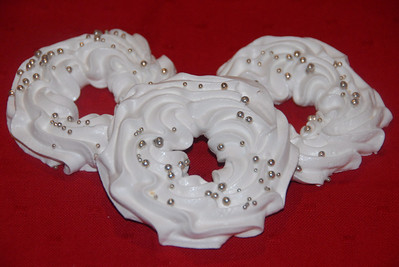
Beat egg whites with lemon juice or cream of tartar until frothy. Gradually add sugar and beat until stiff and glossy. Pipe into 12 nest shapes or drop by small spoonfuls in circles on brown paper on a baking sheet. Place tray in preheated 400-degree oven, close door and turn off the heat. (Don’t peak!) Let stand overnight in the oven. Meringues will be baked by morning.

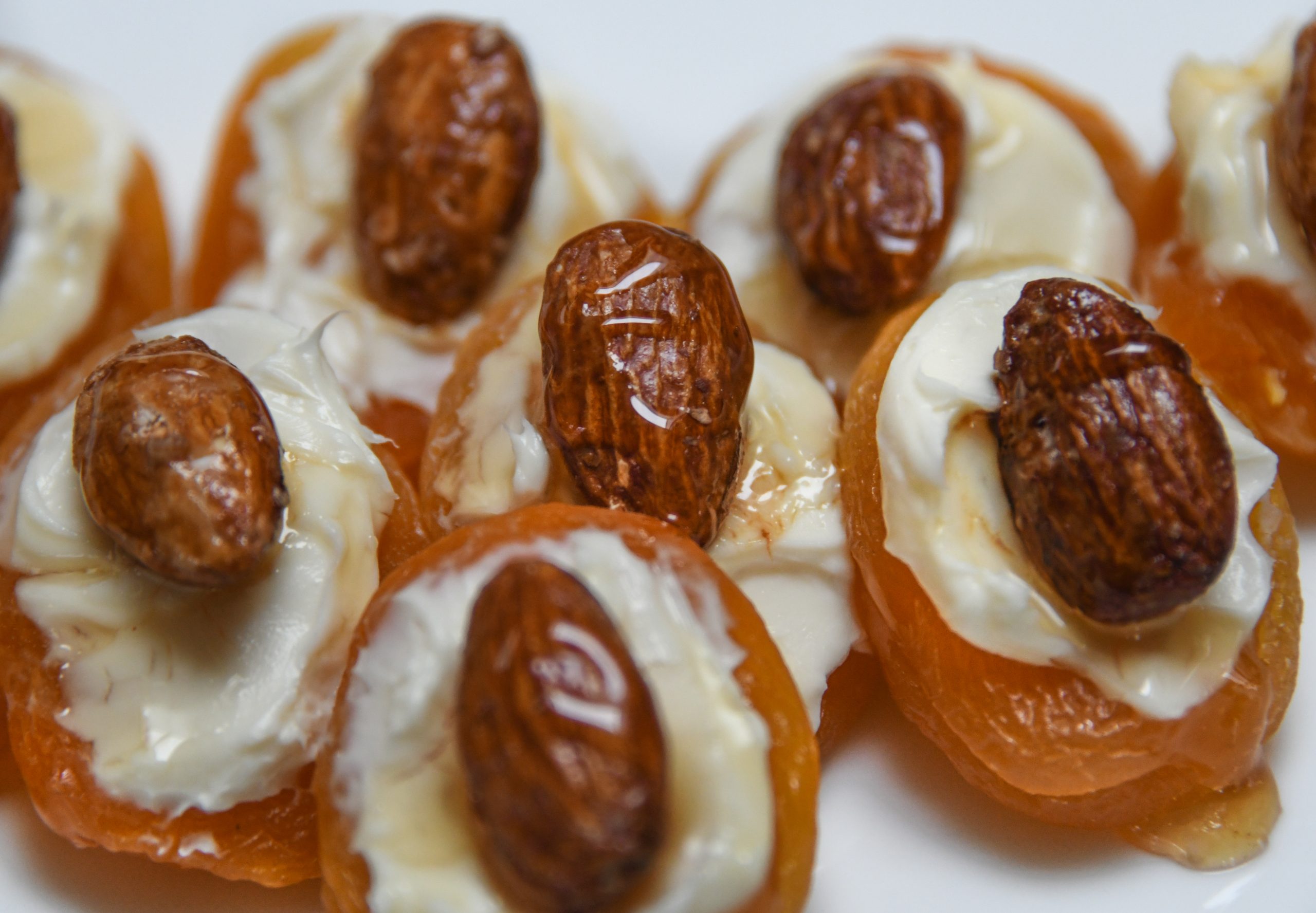
dried apricots, mascarpone, almonds, honey

Easy Holiday Eats – Apricot Medallions

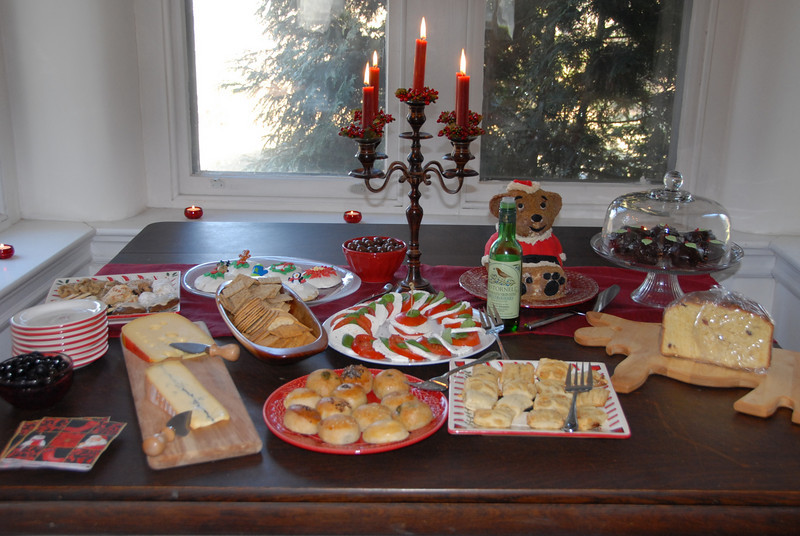
Holiday snacks table

As soon as Thanksgiving breezes by, I start obsessing over Christmas and all the celebrations — and preparations — that the holiday season brings. Each year I vow to make my life easier by hosting smaller parties and concocting simpler menus. Yet, each year I invariably end up sweating over a steaming stockpot of coq au vin for 16 or frantically whisking together 30 individual mocha pot de cremes on Christmas Eve. So much for easy.

In 2009 I swear to halve my stress level by following four basic rules: Keep the appetizers easy. Offer only one entree. Don’t turn down offers from guests of appetizers or side dishes. Lastly and perhaps most importantly, don’t go wild with new, complicated dishes.

dried apricots, mascarpone, almonds, honey

Platter of Apricot Medallions

Gone are the days of hot-out-of-the-oven mini red pepper quiches and two dozen other homemade hors d’ouevres. This year friends and family will nosh on quick, uncomplicated appetizers such as apricot medallions, smoked trout paté and spiced nuts. And, if time slips away from me, I will have no qualms about plunking wedges of cheese onto a wooden cutting board, spooning store-bought chutneys into small bowls and serving both alongside slices of apple and baguette. If anyone grumbles, I’ll claim that we’re celebrating Christmas the Spanish way with tapas.

That brings me to a beloved tapas-like appetizer, Apricot Medallions. Featuring dried apricots, mascarpone cheese, honey roasted nuts and honey, they’re a snap to make and a delight to eat. You can either roast your own almonds, walnuts or pecans or use store-bought. I would avoid topping your medallions with honey roasted peanuts, though. Peanuts and apricots do not go particularly well together. 

APRICOT MEDALLIONS

Apricot Medallions taste delicious any time of year but are especially nice during a season of rich, fatty and less than healthful snacks. If you observe any New Year’s traditions of eating something round and/or shiny to ensure prosperity in the coming months, Apricot Medallions are the appetizer for you.

Makes 35 medallions

4 ounces mascarpone cheese

1 tablespoon lemon juice

1 tablespoon honey, plus more for drizzling

35 large, dried Turkish apricots

35 honey roasted almonds, pecans or walnuts

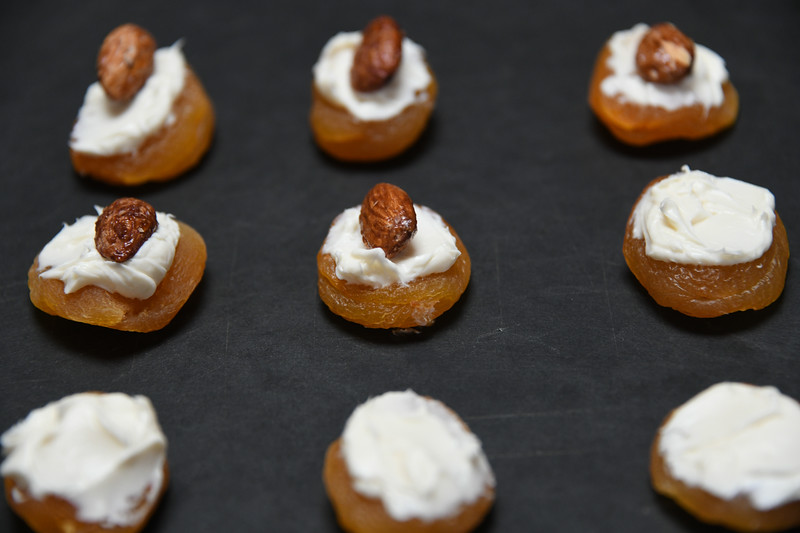
In a medium bowl mix the cheese, lemon juice and honey until smooth and spreadable. Using a knife, spread equal amounts of cheese on top of each apricot slice.

putting cheese and nuts on top of the apricots

Top each apricot with a honeyed nut and place on the platter or plate. Drizzle honey over each and serve.