Latest Posts

Tantalizing Tagines

Mention Morocco and visions of sweeping sand dunes, loping camels and bustling marketplaces spring to mind. Mention this exotic North African country to me, and I think of russet colored tagines. For me, Morocco is the land of succulent stews and the shallow, clay containers in which they simmer.
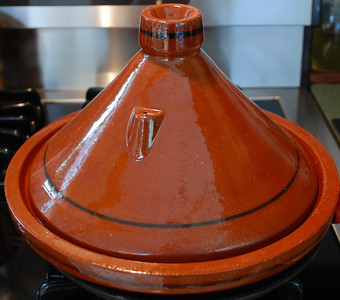
Once you spot a tagine in a bustling North African souk or Western cookware shop, you’ll never mistake it for another pot. It consists of two parts: a circular, shallow pan and the large, conical-topped cover that fits inside the base. The cone shape allows condensation to cascade back down to the casserole, creating a rich, reduced sauce. The lid has a small knob on the top, providing cooks with something to grasp when removing the cover to check on the bubbling contents within.

Thanks to its unique design, the tagine encourages low, slow simmering of its contents. Simmering allows diverse flavors to meld together and ensures a tender, juicy, aromatic meal. Cooks must be vigilant, though, and add water as needed. Otherwise, they will end up with a dinner as dry as the desert.

Traditionally comprised of glazed terra cotta, today’s tagines come in materials familiar to the modern cook. Combinations range from stainless steel and aluminum core, courtesy of All-Clad, to cast iron and earthenware from Le Creuset. Unlike the classic clay construction, the new, pricier versions can be placed directly on a burner without the use of a heat diffuser. I must slide a cast iron skillet of comparable size beneath my old-fashioned pot before firing up the stove top.

Note that if you acquire the terra cotta version, you should season it before its first use. To do this, I placed water, olive oil, onions, zucchini and carrots and a sprinkling of spices, including turmeric, cumin and garlic, in the bottom. After plunking on the lid, I slid the pot into a 300-degree oven for 40 minutes. I then removed it and allowed it to cool. After it had reached room temperature, I removed the contents and washed the tagine in preparation for its cooking premiere. Another option is to soak it in hot water overnight, then rub olive oil onto it and place it in a 200-degree oven for 20 minutes.

Properly seasoned and cleaned, tagines yield such succulent meals as chicken with olives and preserved lemons, red snapper with raisins and sweet onions, and a vegetarian fete of soft artichokes, potatoes and peas. Spiced with such ancient seasonings as pepper, ginger and cinnamon, the aroma simultaneously soothes and stimulates the senses. Most tagine recipes also include cumin, onion, garlic and saffron, common Moroccan flavorings.

TAGINE OF CHICKEN, PRESERVED LEMON AND OLIVES
Serves 6

While traditionally prepared in the conical tagine, the recipes that follow can also be made in a Dutch oven or large, shallow, lidded saute pan. The keys to success are in keeping the heat at a low simmer, covering the dish while cooking and making sure the sauce doesn’t bubble away completely.

6 boneless chicken breast halves
1-1/2 large white onions, grated
6 cloves garlic, peeled and crushed
2 teaspoons dried parsley flakes
1 teaspoon crushed coriander seeds
Juice of 1 lemon
5 tablespoons olive oil
2 teaspoons ground ginger
3/4 teaspoon saffron threads
1-1/2 teaspoons sea salt, or to taste
1-1/2 teaspoons ground black pepper, or to taste
Water
1 preserved lemon (see Note)
Handful of picholine olives
Cooked couscous, optional

Place chicken in a bowl. In another bowl, combine onion, garlic, parsley, coriander, lemon juice, olive oil, ginger and saffron, and whisk to mix. Pour marinade over chicken. Cover, refrigerate and allow chicken to marinate for 1 hour.

Place tagine on stove over medium heat. Arrange chicken so that it covers bottom of tagine. Pour marinade over and sprinkle with salt and pepper. Add enough water to cover chicken by two-thirds. Bring water to a boil, then reduce to simmer. Cover and cook about 1 hour, turning chicken over periodically so that it does not brown on one side or stick to pan.

Rinse preserved lemon, then cut into strips. Add lemon and olives to tagine. Cover and cook 10 minutes to reduce sauce and meld flavors. Remove tagine from heat and serve chicken solo, or with couscous on the side, if desired.

Note: Preserved lemons are available at specialty grocery stores and from online food suppliers, such as Faraway Foods (www.farawayfoods.com) and the gourmet food shop at www.amazon.com. Regular lemons have a sweeter flavor and are not recommended for this dish.
Salt of the Sea

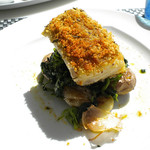
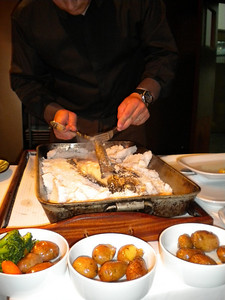
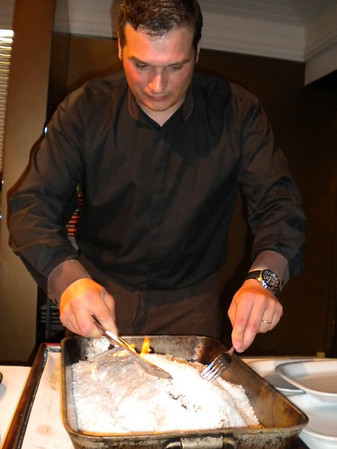
During a recent visit to Portugal I had the thrill of eating an impressive but quite simple-to-make Mediterranean dish – whole fish baked on a bed of salt. On that evening the server had wheeled a cart over to our table and, with a flourish, revealed a white dome of sea salt. After cracking open the top with a knife and peeling back the crust, he then skinned, filleted and doled out our bass table-side.

Seeing the mounds of coarse salt encasing the fish, I assumed that our entrees would taste as salty as the sea. One bite proved how wrong assumptions can be. The flesh had a subtle, almost meaty flavor and lacked any hint of saltiness. Soft and succulent, it was undoubtedly the most delectable and memorable meal on this journey. It was also one that I would feel compelled to replicate in my own kitchen.

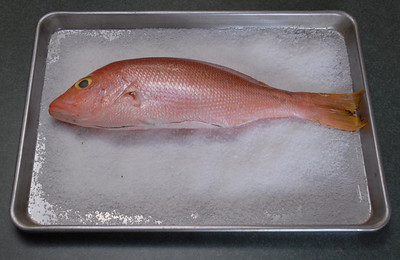
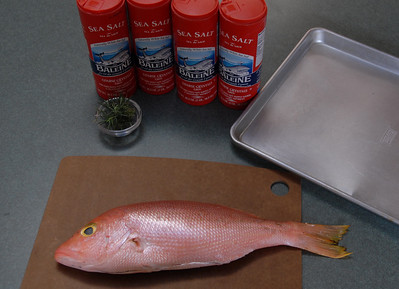
Back at home I amassed approximately 4 1/2 pounds of coarse sea salt and 2 pounds of whole lane snapper. I would have preferred to use a more sustainable fish such as croaker or porgy but, as they weren’t available, lane snapper would have to suffice. Note that any whole, firm, heavy-boned fish, including rockfish, tilefish, striped bass, trout and the over-fished sea bass, work well in this recipe. Keep in mind, though, that you will need roughly 1 pound of fish per person. As a result, cost may become a factor in what fish you choose to bake.

Thanks to my fishmonger, I didn’t have to gut or remove the fins on the snapper; he had already done this for me. Instead I just unwrapped the fish and, after forming a 2-inch layer of sea salt on a baking pan, lowered it onto its bed.

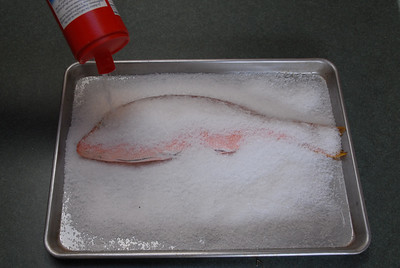
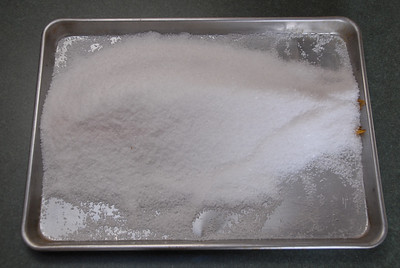
Snapper in place, I then poured and mounded more salt over it. My goal was to have a mountain of salt covering the fish. This would act as an insulator, keeping in moisture and producing a luscious, flavorful dish.

After 40 minutes in a 400-degree Fahrenheit oven this was exactly what I had – a delicious, melt-in-your-mouth dinner for two. Easy to make yet dramatic to view, salt-baked fish wowed me time after time. Hopefully, it will delight you, too.

SALT BAKED SNAPPER
Serves 2

2 pounds lane snapper or other firm fish
4+ pounds coarse sea salt
2 sprigs fresh rosemary

Preheat the oven to 400 degrees Fahrenheit.

On a standard baking sheet make a 2-inch bed of sea salt. Place your fish in the center of the bed and insert two sprigs of rosemary into its main cavity. Fish seasoned, pour enough salt over top to cover and form a thick mound over the fish. Bake for the fish for 40 minutes, checking the internal temperature with a meat thermometer to ensure that it has reached 140 degrees Fahrenheit.

Remove from the oven and, using a knife and fork, crack open and peel back the salt crust and skin. If the skin doesn’t not come off, use your fork and knife to remove it. Fillet the fish and serve immediately.

Dough!

Time to make the doughnuts or, at the very least, eat them. Yes, folks, today is National Doughnut Day.

We can thank one of my former employers, the Salvation Army, for creating this special holiday. Originating from a Salvation Army fundraiser in 1938, the event honored women volunteers who had handed out doughnuts to World War I soldiers in France.

Some may deem a day dedicated to rings of deep-fried dough silly. Yet, when you consider classic American foods, the doughnut invariably springs to mind. With its moist, yielding interior, delicate, sugary crust and ease of portability it has been dazzling and sustaining diners for centuries. Truthfully, it’s about time that the doughnut has its day.

In the 21st century National Doughnut Day means free treats for everyone. Krispy Kreme is giving away one doughnut per customer, no purchase necessary, while Dunkin’ Donuts is offering a free doughnut with any beverage bought.

While Dunkin Donuts and Krispy Kreme may have become somewhat synonymous with this delicious sweet, neither receives the credit for inventing it. Who does? Some historians point to an anecdote by Washington Irving concerning Dutch settlers in New York. Irving stated that these colonists always had fried, sweetened dough balls, called “dough nuts or oly koeks,” on hand. The Dutch, these scholars insist, brought the doughnut to our land. Yet others claim that it hailed from Germany or Central Europe.

No matter where it got its start, the doughnut – also spelled “donut” – remains one of the easiest and tastiest snacks to create. Mix together flour, eggs, milk and a leavening agent such as yeast or baking powder. After the ingredients are combined, roll and cut the resultant dough into orbs or rings.

From here drop the doughnuts in batches of two or three into oil heated to 370 degrees Fahrenheit. Using tongs, turn the doughnuts so that they fry evenly on both sides. When they become golden in color, they’re finished. It’s that simple!

With so many free doughnuts on offer today save the homemade ones for another time. Go out and indulge in a doughnut. After all, it is a national holiday.


BEIGNETS
From Rima and Richard Collin’s The New Orleans Cookbook (Knopf, 2004)
Makes roughly 5 dozen beignets

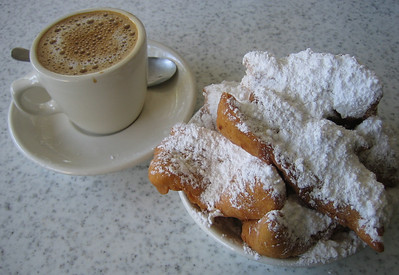
In France and regions such as Quebec and New Orleans where French cuisine reigns, the rectangular beignet supplants the traditional doughnut. Blanketed with powdered sugar, this pillow of dough is offered hot, around the clock, and with plenty of napkins. Beignet dough must be prepared in advance and chilled overnight. Covered, it will keep for about a week in the refrigerator.

1 1/2 cup warm water
1 package active dry yeast
1/2 cup sugar
1 teaspoon salt
2 large eggs
1 cup undiluted canned evaporated milk
7 cups flour
1/4 vegetable shortening
oil for deep frying
confectioner’s sugar

Put the warm water in a large bowl, add the dry yeast and stir until thoroughly dissolved. Add the sugar, salt, eggs and evaporated milk. Slowly stir in 4 cups of flour. Beat with a wooden spoon until smooth and well combined. Beat in the shortening then add the remaining flour, about 1/3 cup at a time. Stir until it becomes too stiff to do so and then work the dough with your fingers. Cover the bowl with plastic wrap and refrigerate overnight.

On a clean, floured surface roll out the dough to a thickness of 1/8-inch. Using a sharp knife, cut the dough into rectangles measuring 2 1/2 inches by 3 1/2 inches.
Preheat the oven to 200 degrees Fahrenheit. Preheat the oil in a deep fryer to 360 degrees Fahreheit.

Fry 3 or 4 beignets at a time until they are puffed and golden brown on both sides, about 2 to 3 minutes per batch. Using tongs, turn them over once or twice so that they are evenly browned. Drain each batch on a wire cooling rack. Place them on a platter covered with paper towels and put the platter in the oven to keep warm. Repeat with the remaining beignets.

Liberally cover the beignets with powdered sugar and serve hot. Yum!

Bundt It

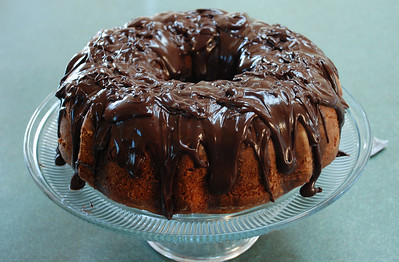
The Bundt cake. For some sweets lovers it’s the ultimate retro dessert. Still others write off this dense confection as pure kitsch. At times I’ve found myself in both camps. One look at that perfectly fluted ring and I flashback to elementary school and all the Bundt coffee cakes that my mother would bake. Iced with a mixture of confectioner’s sugar, milk and florescent yellow, orange or red food coloring, these day-glo treats were the psychedelic stars of her late 1970’s kitchen.

Chances are that Bundt cakes popped up my grandmothers’ kitchens, too. In 1949 the Minnesota-based cookware company Nordic Ware produced its first Bundt pan. Crafted from heavy cast aluminum, the 10-cup mold was derived from a ceramic, German cake pan. Unique to the Nordic Ware creation, the form’s fluted sides allowed for even, easy slicing.

Initially, consumers baked pound cakes in the pan. As the years passed, cooks discovered other uses. Quick breads, molded salads, Jello, steamed puddings and ice cream cakes could all be made in it. Although I’ve yet to shape a salad or layer ice cream in my Bundt pan, I nonetheless could thanks to “Bundt Cookbook” (Nordic Ware, 2004).

And just what do I do with my Bundt pan? Bake kitschy, retro Bundt cakes, of course.

ORANGE CHOCOLATE CHUNK CAKE
Adapted from Ina Garten’s “Barefoot Contessa Parties” (Clarkson Potter, 2001)

For the cake:
2 sticks unsalted butter, at room temperature
2 cups plus 1 tablespoon granulated sugar
4 large eggs, at room temperature
1/3 cup grated orange zest
3 cups plus 1 tablespoon all purpose flour
1/2 teaspoon baking soda
1/2 teaspoon baking powder
1 teaspoon kosher salt
1/4 cup fresh orange juice
3/4 cup buttermilk, at room temperature
1 teaspoon vanilla extract
2 cups semisweet chocolate chips

For the orange syrup:
1/4 cup sugar
1/4 cup fresh orange juice

For the ganache:
9 ounces semisweet chocolate chips
1/2 cup heavy cream
1 teaspoon instant coffee granules

Preheat the oven to 350 degrees Fahrenheit. Grease and flour a 10-cup Bundt pan.

Cream the butter and sugar in the bowl of an electric mixer until light and fluffy, about 5 minutes. With the beaters still running, add the eggs, one at a time, scraping down the sides of the bowl with each addition. Add the orange zest and beat again.

Sift together 3 cups flour, baking powder, baking soda and salt in a large bowl. In another bowl combine the orange juice, buttermilk and vanilla. With the mixer running, add the flour and buttermilk mixtures — alternating in thirds — to the creamed butter, beginning and ending with the flour.

Toss the chocolate chips together with the flour. Add the chips to the batter and stir to combine. Spoon the batter into the greased Bundt pan and smooth out the top. Bake for 45 minutes to 1 hour, until golden brown on top and a cake tester inserted in the cake comes out clean. Place the cake pan on a wire rack and allow it to cool for 15 minutes.

In the interim make the orange syrup. Place the sugar and orange juice in a small saucepan and cook over medium heat until the sugar dissolves. Remove from heat and set aside.

Remove the cake from its pan and place it back on the wire rack. Slide a baking sheet beneath the rack; this will collect the excess syrup. Evenly spoon the orange syrup over the cake. Allow the cake to cool completely before frosting.

To make the ganache, place the chocolate chips, cream and instant coffee in a glass, microwave-safe bowl. Microwave on high, stirring frequently, until the chocolate has melted completely. Drizzle the ganache over the top of the cake.

Let’s Talk Toffee

As a kid, I thought of toffee only as the dark, crunchy center found in those chocolaty Hershey’s treats, Heath bars. It wasn’t until adulthood, when I ventured into Scotland, the land of sweeties and sticky toffee pudding, that I realized how versatile and tasty this confection could be.

Although my toffee epiphany happened in the UK, the sweet itself comes not from Great Britain but from Canada. There a 16th century French educator, Marguerite Bourgeoys, created a molasses candy to attract, as she reputedly called students, the “little savages” to her French Canadian school.

While Bourgeoys’s toffee featured molasses as its main ingredient, British and American versions use a combination of sugar, butter and water or cream. The three are boiled together in a large saucepan until they reach a temperature of anywhere from 260 to 300 degrees Fahrenheit. The higher temperature produces a brittle, tawny candy while the lower yields a luscious, amber syrup.

If firm candy is the goal, the hot toffee is poured out to set. Once it has hardened, it is broken into pieces and either dipped in melted chocolate or doled out as is. In the case of a toffee sauce the liquid is cooled slightly and then drizzled over pudding, cake, ice cream, crepes or other desserts.

In Scotland I sampled several types of toffee. “Sweeties,” the generic term for toffee and other boiled sweets, could be hard, chewy, or almost fudge-like. Flavored with nuts, chocolate, cinnamon, ginger or whisky, these decadent confections bore little resemblance to the Heath bars of my youth.

The same could be said for sticky toffee pudding. This quintessentially British dessert featured a date-filled, cake-like pudding steeped in warm toffee sauce. Just one bite of this velvety last course and I was hooked. Who knew that something as simple as toffee could taste so good?

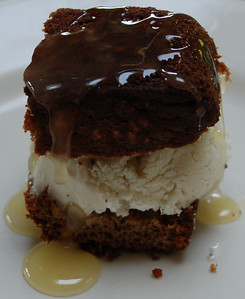
BANANA ICE CREAM WITH TOFFEE SAUCE
Serves 6 to 8

For the ice cream:
1 ½ cups whole milk
1 ½ cups heavy cream
¾ cup sugar
8 egg yolks, beaten
1 ½ ripe bananas, mashed

Place the milk, cream and sugar in a medium saucepan and bring to a boil. Remove from heat and slowly add half of the milk mixture to the eggs, whisking constantly. Once the hot liquid has been incorporated, pour the egg-milk mixture into the saucepan and return to the stove. Whisk the ingredients over medium heat until they begin to thicken, about 5 minutes. Pour through a fine mesh strainer and into a bowl and set in the refrigerator to cool. Once cooled, place in a blender with the 1 ½ ripe bananas and blend. Freeze in an ice cream maker and then follow the manufacturer’s instructions for making ice cream. When ready to serve, place several scoops into small bowls.

For the sauce:
1 2/3 cup sugar
½ cup unsalted butter
½ cup whole milk
¼ teaspoon vanilla

In a medium saucepan melt the butter and sugar, stirring to combine. Bring the mixture to a boil, add the milk and vanilla and cook until thickened, approximately 5 minutes. Cool slightly and then drizzle over the scooped ice cream.

Fabulous Falafel Burgers

I have an embarrassing confession. Although I spend my workdays researching and writing about exotic, far flung foods, I eat the same lunch pretty much every afternoon. And just what is my inevitable meal? It’s a black bean veggie burger with organic ketchup on a slice of high fiber wheat toast. Delicious? Not really. Quick and easy? Absolutely.

After months of dining on this not-so-tasty repast I finally caved in and started considering other fast, protein-rich, high fiber, low fat lunch options. Salads didn’t quite fit the protein criteria. Plus, a few hours after eating a salad, I felt hungry again. Tuna sandwiches proved more satisfying but they didn’t offer much in the fiber front.

What ultimately saved me from a lifetime of black beans was the slender “Meatless Burgers” cookbook. Written by Louise Hagler, “Meatless Burgers” (BPC, 1999) offers over 50 easy, international recipes for this quintessentially American dish. With nutritional values provided at the end of each recipe I had a wealth of healthful lunch options right at my fingertips.

As I love chickpeas, I rightly assumed that I would adore Hagler’s falafel burgers. A Middle Eastern street food that originated in Egypt, falafel are small fried patties or croquettes made from pureed chickpeas and/or fava beans. After being fried, they are stuffed into a pita or wrapped in flat bread and blanketed by such toppings as chopped lettuce, tomatoes, pickles, pickled vegetables and tahini.

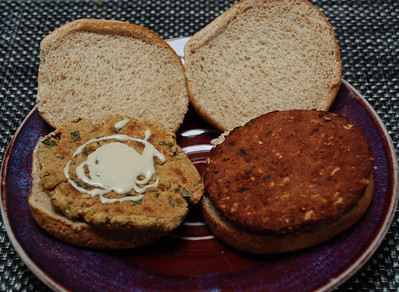
Pureed chickpeas likewise form the base for falafel burgers. Mixed together with chopped onions, parsley and bread crumbs, these burgers are light yet filling. As an added bonus, they can be oven-baked as well as pan-fried.

Falafel Burgers
From Louise Hagler’s “Meatless Burgers” (BPC, 1999)
Makes 6 to 8 burgers

2 cloves garlic
1 (15 ounce) can chickpeas, drained
1/4 cup water
1/2 teaspoon sea salt
1/4 teaspoon black pepper
2 cups bread crumbs (Note: I used whole wheat bread and lightly toasted the crumbs under the broiler)
1/2 cup onion, cut into chunks
1/4 cup Italian flat-leaf parsley, chopped

Preheat the oven to 350 degrees Fahrenheit. Oil a baking sheet and set aside.

In a food processor mince the garlic. Add the chickpeas, water, salt and black pepper and process until creamy. Add the onion chunks and pulse several times to chop and incorporate them into the chickpea mixture.

Place the breadcrumbs in a bowl. Spoon in the chickpea mixture and stir until well combined. Add the parsley, mix the falafel again and form it into burgers. To ensure thorough baking, flatten the burgers to about 1/4 to 1/2-inch thickness.

Arrange the burgers on the oiled baking sheet and bake for roughly 15 minutes on each side until browned. (Note that these also can be pan-fried in olive oil but they will be higher in fat. As is, the burgers contain only 1 gram of fat, 3 grams of fiber, 4 grams of protein and 101 calories.)

Serve on whole wheat buns with tahini, lettuce and sliced tomatoes.

Ramping up for a Zesty Meal

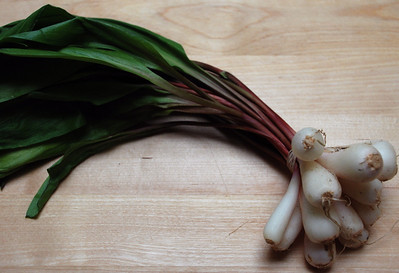
This year’s final tribute to spring produce brings me to a pungent little perennial that grows wild in eastern North America. Known as a wild leek or ramp, this delicate-looking vegetable possesses small, white bulbs, slender, pink stalks, and broad, green leaves.

While this petite plant may appear fragile, the flavor and aroma that it imparts pack powerful punches. Think of the combined bold scents of garlic and onion. Add to these an earthy, lingering aspect and you have the potent smell and taste of a ramp.

Wildly popular in the Appalachian region, ramps are heralded for their culinary as well as medicinal uses. In the latter case locals employ them as seasonal tonics to stimulate dormant appetites and open sinuses long blocked by winter’s chill.

Beyond their role in folk medicine, ramps star in a series of springtime food festivals held throughout West Virginia. At fairs such as the Feast of Ramson in Richwood, W.Va. they are cooked in bacon fat and served alongside ham, beans, potatoes and cornbread. At the International Ramp Cook-off and Festival in Elkins, W. Va. they crop up in everything from burgers and spaghetti to hard tack candy.

Usually, ramps appear in simpler offerings such as “ramps and taters.” A traditional Appalachian recipe, this dish consists of ramps and potatoes fried in bacon fat and served alongside slices of bacon. While potatoes are commonly viewed as the perfect partner, ramps also compliment peas, asparagus, new carrots, chicken and salmon.

When selecting ramps, choose ones that are firm with bright leaves, pink stalks and intact roots. Avoid any slimy or wilted ramps.

Refrigerated, ramps will keep for one week. To store, simply wrap the bulbs and roots in a damp paper towel, put them in a heavy plastic bag and refrigerate. The bag will help stop the odor from overtaking the refrigerator.

Before using, remove the roots, peel off the first layer of the bulb, and trim off the leaves. Wash the ramps thoroughly to dislodge any dirt and then start chopping.

RAMP CASSEROLE
Serves 6 to 8

This recipe comes from “Follow Your Nose . . . Ramp Festival Gourmet Ramp Recipes,” a compendium of the International Ramp Cook-off and Festival contestants’ recipes. The cookbook is published by and available at the Randolph County Convention and Visitors Bureau in Elkins, West Virginia.

8 medium bunches of ramps, diced into 1-inch pieces
2 garlic cloves, peeled and minced
3 tablespoons butter
½ cup freshly grated parmesan cheese
¼ cup heavy cream
2 cups fresh breadcrumbs
1 tablespoon oil

Pre-heat the oven to 350˚F. Butter a medium-sized baking dish.

Heat the 3 tablespoons butter in a large frying pan. Add the ramps and garlic and cook over moderate heat until tender, about five minutes.

Pour in the cream and ¼ cup of parmesan cheese. Stir the mixture together and pour into the prepared baking dish.

In the same frying pan heat the oil over medium until hot but not smoking. Add the breadcrumbs and sauté, stirring constantly until they reach a golden brown, about three minutes.

Top the casserole with the breadcrumbs and remaining cheese then bake uncovered for 20 minutes.

Their robust flavor compliments such foods as potatoes, peas, asparagus and salmon.

Spring Produce Redux


After an endless winter of eating root vegetables and dreaming of lighter cuisine I now am basking in the bounty of spring. So much color, crispness and flavor! So many different seasonal offerings. It’s no wonder that my kitchen counter overflows with the produce of the season.

While curved fiddlehead ferns, honeycombed morel mushrooms and ruby red rhubarb may catch my eye, several of the more traditional foods have stolen my heart. My main heartthrob? The plump, piquant lemon. Ever present in the produce aisle, it hits its prime in the springtime.

A relative of the lime and citron, the lemon performs multiple roles in the kitchen. Wedges serve as as a garnish for seafood and drinks while the zest acts as a flavor enhancer in stuffing and baked goods. Its juice pumps up the flavor in such fruits as peaches, nectarines, guava and papaya. It also balances out rich sauces and vinaigrettes and works as a preservative and anti-browning agent for fragile foods. Talk about a versatile fruit!

Lemons keep at room temperature for one week or in the refrigerator for one month. Choose plump, firm citrus that are heavy for their size. Avoid overly large ones as they will contain mostly peel and little juice.


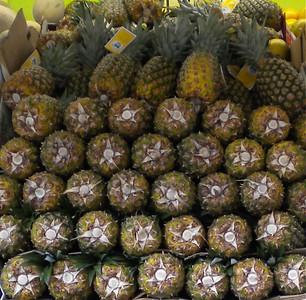
Named for its resemblance to a pinecone, the spiny, green-topped pineapple peaks from March to June. When ripe, its rind varies in color from dark green to orange-yellow. Deep green leaves, flat eyes and a pleasant aroma are also indicate freshness.

When sprinkled with brown sugar and rum and then grilled or broiled, fresh, juicy pineapple makes a decadent dessert. Slices of it compliment grilled lamb, seafood and stir fries and decorate the eponymous pineapple-upside down cake.

The trumpet-shaped chanterelle mushroom rears its wavy, apricot-orange head during the rainy Southeast spring. It possesses a scent similar to apricots and a flavor ranging from meaty to peppery.

A companionable ingredient, these mushrooms form pleasant partnerships with poultry, pork, fish and beef. Likewise, they serve as wonderful fillings for crepes, omelets, and tarts, as well as toppings for pizzas. They can easily be stewed or marinated. Sautéed in butter with a little minced garlic, salt and pepper, they make an irresistible side dish.

When buying this exquisite fungus, choose plump and spongy ones. Steer clear of those with broken or withered caps.

LIMONCELLO DROPS
Serves 6 to 8

Inspired by a recipe for lemon drops in Nigella Lawson’s Forever Summer (Hyperion, 2003), this cocktail turns the rainiest spring day into a warm, sunny afternoon.

6 organic lemons, skins removed
12 ounces limoncello
12 ounces Triple Sec
4 tablespoons granulated sugar
6 to 8 strips of lemon zest, curled

Place the ingredients in a blender and blend until well combined. Using a fine mesh strainer, strain the drink into a large glass pitcher. Cover and refrigerate until ready to serve. Before handing out the drinks, pour the lemon drops into cocktail/martini glasses and drape a strip of curled lemon zest over the rim of each.

Spring for the Season’s Stranger Produce


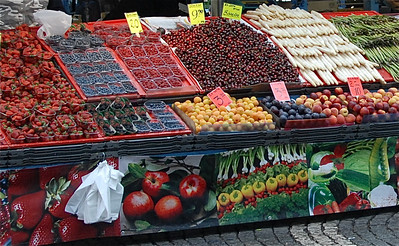
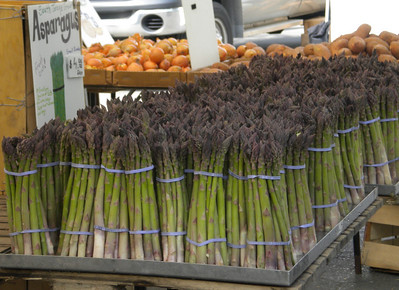
This Earth Day I’m hitting the farmers’ market. To me, nothing says “green living” or springtime like locally grown food. From familiar spring vegetables such as asparagus and leeks to the rare morel and rhubarb the market provides a wealth of vibrant, flavorful produce for my dinner plate.

Of all the vernal offerings the most unusual has to be the fiddlehead fern. Resembling the carved head of a violin, fiddleheads are the unfurled shoots of an ostrich fern. One of the last true wild, foraged foods, they grow in moist woods, floodplains and, in my case, in the damp soil bordering my 19th century farmhouse.


When told by a neighbor that the two-inch long, tightly coiled fern leaves tasted like a cross between asparagus, artichokes, and okra, I assumed that he was joking. Making fun of the city slicker, eh? What would he say next? That sautéed maple leaves reminded him of syrup?

Skepticism aside, I gave fiddlehead ferns a try. Boiled in lightly salted water for 10 minutes or steamed for 20, they do evoke this unusual combination of flavors.

Although traditionally topped with butter, salt and pepper, the vegetable’s distinct taste and firm texture make it a good match for stir fries as well as Hollandaise, cheese and tomato sauces. If stir-frying, remember to blanch the ferns in boiling water before tossing into your wok. Some food-borne illnesses have been attributed to raw or undercooked fiddleheads.

With a season of just two weeks fiddleheads fly out of markets. As they have a short shelf life, they should be consumed within two days.

Along with fiddleheads I stock up on stalky, red rhubarb. Although botanically a vegetable, rhubarb has masqueraded as a fruit since 1947. That year the United States Customs Court in Buffalo, New York deemed it a fruit because of the manner by which it is eaten. In the U.S. rhubarb is traditionally coupled with strawberries and baked in desserts, particularly pies. In fact, its popularity as a pie filling has garnered it the nickname “pie plant.”

Elsewhere rhubarb retains its vegetable identity and appears in savory dishes. In Poland it is cooked with potatoes and spices. It turns up in stews in Iran and with spinach in Afghanistan.

Because of rhubarb’s intense tartness and my lifelong preference for sweets, I invariably pair it with a generous amount of sugar. Once sweetened, it creates velvety jams, sauces and desserts such as rhubarb crumble, trifle, and pie.

When selecting rhubarb, look for moderately thin, pink or red stalks. Thicker, greenish stalks will be sour and stringy. Use non-aluminum cookware with this fruit. Otherwise, the rhubarb will react with the metal.

RHUBARB CRISP
Serves 6

4 cups of rhubarb, cut into 1” pieces
¾ cup granulated sugar
1 ½ teaspoons cinnamon
¼ teaspoon ginger
juice of half of a lemon
¾ cup of light brown sugar, firmly packed
½ cup of all purpose flour
¾ cup of rolled oats
¼ cup of unsalted butter at room temperature

Preheat the oven to 375˚. Grease a 9”x 9” baking dish then set aside.

In a bowl mix together the granulated sugar, ½ teaspoon of cinnamon, and ¼ teaspoon of ginger.

Place the rhubarb in the baking dish then sprinkle the sugar mixture and the juice of half of a lemon over the top.

In another bowl mix together the brown sugar, 1 teaspoon of cinnamon, flour, and rolled oats. Using your fingers, break up the butter into small pieces and add to the dry ingredients. With a fork mix the butter, oats, sugar and flour together until they are well combined. Sprinkle the topping evenly over the rhubarb.

Place the baking dish in the preheated oven. Bake until the crust has browned and the rhubarb is bubbling, about 25 minutes. Serve with a scoop of vanilla or strawberry ice cream.

Portuguese Idyll

Among all the places that I’ve visited Portugal may become one of my favorites. Along with an abundance of pleasant weather, charming people, beautiful sites, relaxed atmosphere and efficient infrastructure, the Iberian country boasted of some of the freshest cuisine that I’ve found.

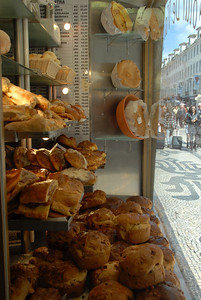
In Lisbon Sean and I roamed the cobblestone streets, nibbling on warm pasteis de natas, the custard cream tarts discussed in a previous entry. While bakeries have become a rarity in the States, in Lisbon they appeared on virtually every street corner. In addition to the luscious de natas these shops offered such delicacies as egg-topped Easter loaves, powdered sugar-dusted coconut puffs, almond cookies, honey cakes, crusty breads and small cups of strong coffee or uma bica. Needless to say, he and I both suffered from a major case of bakery envy.


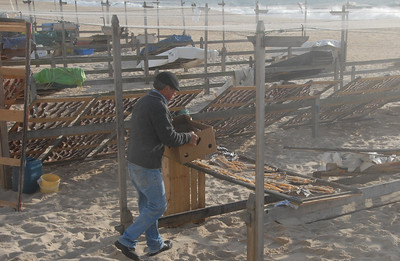
Since we spent much of our time along the coast, we often dined on simply prepared, local seafood such as tuna, mullet, clams, barnacles and bass. Sardines popped up not only in restaurants but also along the beaches, where they were split, placed on wire racks and dried in the sun. While dried sardines didn’t strike my fancy, I did appreciate having them grilled and served alongside a salad of chopped tomatoes, peppers and cucumbers or sauteed greens.


A dried fish that did intrigue me was bacalhau or dried, salted cod. A national favorite, bacalhau must be soaked in water for several days so that it plumps up and loses some of its intense saltiness. Not that this fish won’t seem salty to the uninitiated. Still, most will find it delicious.


In the northern coastal city of Porto Sean and I indulged in the drink for which Portugal and Porto are famous, port wine. Fortified with brandy, this sweet, rich red wine brought a pleasant conclusion to our evening meals. It was dessert with a soothing after effect.


As elsewhere in Portugal, we weren’t far from our food and beverage sources in Porto. Made in the Douro Valley, port wine is blended and aged directly across from Porto, in the lodges of Vila Nova de Gaia. These riverside lodges sample and sell their world-famous ports seven days per week. Needless to say, our visit to Porto included a stroll to and through the lodges.


The Portuguese specialties didn’t end here. Lively yet inexpensive wines, flavorful goat’s and ewe’s milk cheeses, vibrant soups, hearty breads and succulent salt-baked fish all enhanced our time in this lovely land. Great food. Great trip. I cannot wait to return and see — and eat — more of Portugal.