
Latest Posts

holiday cocktails

Holidays – Just Another Word for “Cocktails”

assortment of holiday cocktails

Maybe you’re like me, an only child who grew up in a small family that quietly celebrated the holidays. On the other hand, maybe you’re like me and you have 30 friends coming over on Christmas Eve to revel in the holidays. Then again maybe you’re like me and believe that the key to any small or large holiday gathering is a wickedly good cocktail.

As I mull over my drink offerings and make last minute adjustments to Friday night’s dinner menu, I thought that I’d share a few cocktail favorites. Easy and quick, they’ll add a little sparkle to any occasion. For the most part they’ll also relieve any stress associated with the holidays and/or two dozen loved ones crammed into your overheated kitchen. So . . . mix those cocktails, spread some cheer and enjoy the company of those near and dear! Happy holidays!

PROSECCO POMEGRANATE FIZZ
Serves 8 to 10

I love Prosecco and I love pomegranate. Hence the Prosecco Pomegranate Fizz.

1 bottle prosecco or champagne, chilled
8 ounces pomegranate juice
1 1/2 ounces pomegranate liqueur
seeds from 1 pomegranate

Pour the prosecco, pomegranate juice and pomegranate liqueur into a large, chilled pitcher. Stir together. Drop a handful of pomegranate seeds into the pitcher. Place the remaining seeds in the bottoms of champagne or cocktail glasses and pour in the drink. Serve immediately and frequently.

POMEGRANATE WINE ICE
from Francine Segan’s “The Opera Lover’s Cookbook” (Stewart, Tabori and Chang, 2006)
Serves 10 to 12

I had the pleasure of testing this festive recipe for food historian and cookbook author Francine Segan. Taken from her 2007 James Beard and IACP Awards-nominated “The Opera Lover’s Cookbook,” it’s a delightful drink from an equally delightful book.

1 1/4 cups sugar
16 ounces pomegranate juice
2 cups white wine
pomegranate seeds, for garnish
16 ounces pomegranate juice

In a medium saucepan over high heat bring the sugar and 1/4 cup water to a boil. Reduce the heat to medium, add the juice and let simmer for about 10 minutes. Remove from the heat and stir in the wine. Allow to cool to room temperature.

Pour the mixture into a shallow baking pan and freeze for at least 12 hours. Before serving, mash the mixture with a fork until it resembles a slushy. To serve, spoon the ice into martini glasses or champagne flutes and top with pomegranate seeds.

CRANBERRY CRUSH
Serves many

For those who prefer an alcohol-free drink, cranberry crush will be a refreshing treat. Serve this in a punch bowl with the frozen cranberries as a garnish. Remember to keep a bottle of vodka and a shot glass nearby for those who crave a stronger beverage. These folks can spike their cranberry crush separately.

1 (64-ounce) bottle of cranberry juice, chilled
1 (32-ounce) bottle of plain seltzer, chilled
2 ounces non-alcoholic grenadine
splash of Rose’s sweetened lime juice
2 cups frozen cranberries

Pour the cranberry juice, seltzer, grenadine and lime juice into the punch bowl and stir together. Add 1/2 cup of the frozen cranberries to the bowl, reserving the rest for when the cranberry supply in the punch bowl diminishes.

MOOSE MILK
Depending upon glass size, this serves at least a dozen.

Years ago my friend Elizabeth shared her family’s secret recipe for moose milk. Since then I’ve tinkered with it a bit and made moose milk a staple of all holiday celebrations. As it’s a rather stiff drink, I’d advise serving it early in the evening, alongside some appetizers.

2 quarts eggnog
1 cup vanilla or dark rum, adding more if desired
⅓ cup brandy, adding more if desired
1 1/2 teaspoons vanilla extract (Note: If using vanilla rum, you can omit the vanilla extract.)
1/2 gallon vanilla ice cream
ground nutmeg, to taste
ground cinnamon, to taste

Place the eggnog, rum, brandy and vanilla extract in a large punch bowl and stir to combine. Add the ice cream. As I’m always rushing to make this drink, I plunk in the ice cream as a solid block. However, if you do have the time, place individual scoops of ice cream in the bowl. Sprinkle ground nutmeg and cinnamon over the top. Allow the ice cream to melt slightly before serving in punch cups or small cocktail glasses.

Something’s Fishy

With Christmas Eve and the Italian-American “Feast of the Seven Fishes” a week away I’m in the mood to chat about fish. Truthfully, at times selecting seafood seems about as baffling as choosing a new car. There are so many questions to be answered. Should I buy farm-raised or wild? If I opt for wild-caught, is it at risk of being over-fished? If I go with farmed, how do I know which countries practice safe aquaculture techniques? And shouldn’t I be stocking up on local rather than imported seafood?

Once I tease out the correct answers, I have to determine which fish possesses the greatest health benefits and fewest health risks. Add in concerns about oil-contaminated Gulf Coast catches and I’m tempted to skip cooking and order a pizza instead.

Thankfully, healthful and eco-friendly seafood does exist. The wild European anchovy sits at the top of the Environmental Defense Fund’s “eco-best” seafood list. Although this small, omega-3-rich fish swims in all warm oceans, the most prized come from the Mediterranean Sea. Here the supply is plentiful and the risks of contaminants and unintentionally caught marine life, known as bycatch, are low.

Fresh anchovies impart a rich, buttery flavor that goes well with capers, garlic, lemon, olives, tomatoes and white wine. Oily and soft, they are perfect for baking, broiling, grilling and pan-frying.

Unlike their fresh counterparts, canned anchovies taste quite salty. As a result, they cannot replace fresh ones in recipes. Use canned to garnish pizzas and spice up salads, sandwiches and sauces.

While the over-fished Atlantic cod tops the list of seafood to avoid, the abundant, long-lived “black cod” or sablefish falls firmly into the safe category. Caught wild in Alaska and British Columbia, this firm, oily fish also serves as a good source for omega-3 fatty acids.

Sablefish has pearly white meat and a deep creaminess that favors such seasonings as honey, miso, mustard, sake, sesame oil, soy sauce and sugar. Juicy when cooked, it can be grilled, sautéed, pan-fried, steamed, poached, braised or roasted. Additionally, sablefish’s high fat content makes it excellent for smoking. In fact Jewish delis often sell it under the label “smoked black cod.”

Anchovies and sablefish are just two of many safe, healthful seafood selections. In a few weeks I’ll explore more. Until then, here’s a little something to serve at your feast of seven fishes or at any other holiday fete.

JANSSON’S TEMPTATION
Serves 4
From “Very Swedish” by Triberg, Ranung and Hagman (Bokforlaget Max Strom, 2007)

8 medium potatoes
2 small onions
15-20 anchovies, juices reserved
6 to 7 ounces heavy cream
2 tablespoons breadcrumbs
2 tablespoons butter plus butter for the dish

Preheat the oven to 400 degrees F. Grease an ovenproof dish. Peel potatoes and cut into matchsticks. Peel and slice the onion and fry golden brown in 1 tablespoon of butter.

Spread half the potato matchsticks on the bottom of the oven dish and then the onion and anchovies, pressing down. Pour in the anchovy juices and cream. Sprinkle generously with breadcrumbs and dot with the tablespoon of butter. Bake for 45-50 minutes until the potato is soft and appealingly golden brown.

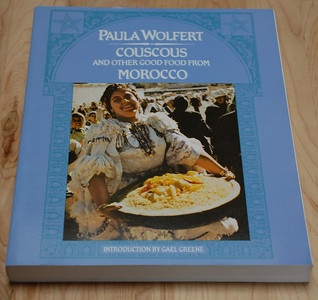
Couscous and Other Good Food from Morocco

Conveniently enough, I fell in love with Moroccan cuisine while visiting Morocco. All those succulent tagines flavored with tart and tangy preserved lemons and dusky olives. Accompanied by platters of fluffy couscous, these rich, aromatic stews bowled over my taste buds. Then there were the flaky, nut-filled pastries and delicate, filigreed glasses of hot, sweet, minty tea. Utterly enchanting! As soon as I returned home, I set out to recreate those fabulous meals. And what better to aid me in the kitchen than Paula Wolfert’s comprehensive guide to Moroccan cooking, “Couscous and Other Good Food from Morocco” (William Morrow, 1987).

First published in 1973, “Couscous and Other Good Food from Morocco” is the book that not only I but also most other cooks reach for when contemplating an authentic Moroccan meal. No other cookbook has come close to capturing the essence, culture and history of this cuisine. Similarly, no food writer has possessed as much knowledge or has written as beautifully about Moroccan cooking as Paula Wolfert.

In “Couscous . . .” Wolfert explores such quintessential North African dishes as the aforementioned tagines and couscous as well as meatball-like kefta and the coiled “snake cake” m’hanncha. She devotes separate chapters to breads, soups, savory pastries and those tiny grains of semolina that we know as couscous. The latter chapter is particularly beneficial to anyone like me who made the deranged decision to purchase, drag across the country and then lug back home a couscoussiere, the traditional, two-tiered pot that steams couscous. In that chapter Wolfert takes readers step-by-step through the process of rolling, steaming and raking thousands of semolina grains until they become light, airy and, well, couscous.

Wolfert also shares how to make such classic Moroccan seasonings as chermoula, ras el hanout and preserved lemons. Thanks to her, I can whip up my own fish marinade or spice blend and have a cool activity for my dinner guests. Just grab some unwaxed, organic lemons, sea salt and jars and start preserving!

Although it’s written as a cookbook, I tend to use “Couscous . . .” as a guide for my dinners. I’ve never followed the recipes to the letter. In fact, I’ve tinkered with them quite a bit. Yet they’ve served as the basis for many fabulous dishes. Take, for instance, my version of the meat pie bisteeya. Truthfully, I have no hankering for pigeon-stuffed bisteeya or pigeon-stuffed anything. Instead I, like most modern cooks, substitute shredded chicken, sans giblets, for the filling and phyllo for the tissue-thin warka leaves. I also alter some of her seasonings. Likewise, I cut the ingredient amounts as I rarely cook for 12.

Whether you carry out the recipes verbatim or play around with them as I do, you’re bound to learn quite a bit from this comprehensive cookbook. If you love Moroccan food, you’ll love “Couscous and Other Good Food from Morocco.” It’s an undisputed classic and an essential tome for anyone craving authentic Moroccan cooking.

Holiday Gifts for the Cook: Kitchen Gadgets!

If you cook, write about food or just enjoy a good meal, chances are that you own a kitchen tool or two. If you fall into all three categories, then you may be like me — swamped with cooking gadgets. Over the years I’ve compiled a mental list of what’s fun, what’s functional and what’s foolish for the home cook. Below are some of the best that I’ve collected. Relatively inexpensive and easy to find, they’re bound to delight you and/or the food lovers in your life.

I love a little kitsch in the kitchen. Hence my delight over these quirky kitchen timers. Functional and fun, no one will mind owning more than one. Along with lady bugs and cats, chickens, cows, frogs, dogs, ducks and portly chefs all can keep track of your cooking times. How could you not enjoy cooking with these cheerful guys taking care of your casserole count down?

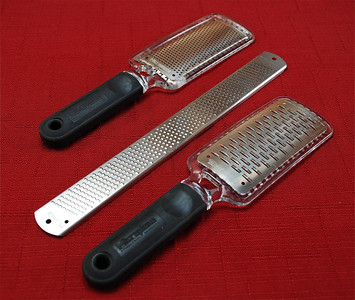
I can’t help it — graters are great! Although you truly only need one all-purpose, hand-held grater, I’ve ended up with five. (Needless to say, they’re excellent stocking stuffers.) While cookware shops promote graters for soft cheeses, hard cheeses, chocolate, citrus, nutmeg and, oh yes, coconut, I generally use the “Parmesan, zest, coconut” tool (pictured above at center and left) for all my grating and zesting jobs.

My first experience with an immersion blender was disastrous. Steaming potato leek soup in my hair, on the wall, my face, my shirt . … And then I received one as a gift. Much to my shock, I fell in love with this handy, hand-held blender. No more spilling soup as I transferred it from stockpot to traditional blender or cleaning up leaks from my food processor. No extra cleaning, period. Fast and easy, it’s a one of this cook’s best kitchen friends.

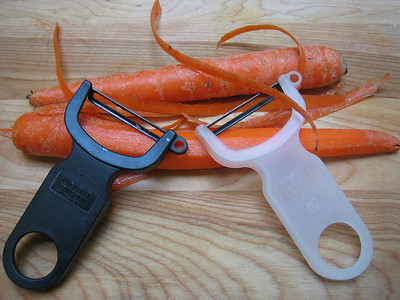
Normally I avoid plugging a particular brand but, as I’m so smitten with this tool, I’ll forgo that usual rule. Cheap, sharp, fast and efficient, Kuhn Rikon peelers make peeling vegetables a breeze. They’re so sturdy that I’ve even used them to shave chocolate and cheese. Available in a rainbow of colors, they’re the best $3.50 that you’ll ever spend.

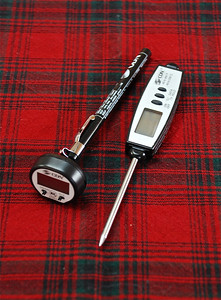
Since I’m discussing inexpensive but useful tools, I can’t overlook digital thermometers. Ideal for fish, poultry and thin cuts of meat, these slender thermometers provide quick, accurate temperature reads. Plus, their plastic sheaths provide not only protection but also cooking temperature guides. So much essential information in such a simple tool.

A bit more costly but no less useful, insulated pitchers hold a special place in my heart and on my work desk. After brewing my morning coffee and heating the accompanying milk, I pour the steaming liquids into these carafes and enjoy hot cafe au lait all day. Ideal for dinner parties or just long, cold days, the thermoses keep coffee and tea hot for almost 24 hours.

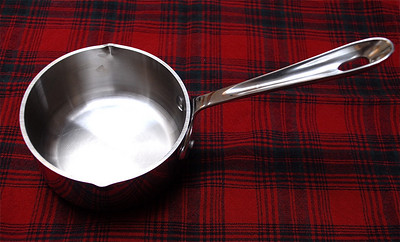
Whether you’re messy, always in a rush, or like me and a bit clumsy, you’ll appreciate owning a saucepan with spouts. Pouring gravy, melted butter, warmed milk or stock becomes a snap with this type of pan. Everyone from Emeril to All-Clad offers a version of this saucepan. Prices and sizes will vary.

It goes without saying that a good quality, forged, eight-inch chef’s knife, sharp paring knife or serrated bread knife can’t be beat. Likewise, a decent kitchen scale, an electric hand or stand mixer, or food processor will always be appreciated. Mixing bowls, whisks, spatulas and the like, these are only a few of the fantastic gifts that you could give or receive this holiday season.

The Perfect Holiday Gift? Edible Treats!

Sometimes it feels as though I’ve spent a lifetime rooting around jam-packed stores, searching for, but never finding, the perfect holiday gift. That’s why I’ve started giving edible presents. Who can resist a basket filled with tea, coffee, candies, cakes and breads or bottles of local wine, liqueurs and infused oils? In my case, no one. Whether homemade or store-bought, gourmet edibles satisfy everyone on my shopping list.

Giving food is not a novel idea. During the Viking Age the Norse god Odin traveled across the cold winter landscape with his reindeer to deliver fruit and corn. Centuries later Saint Nicholas took over Odin’s route and filled European children’s shoes with sweets. In Colonial times old Saint Nick brought American youth cakes and fruits while they in turn left out hay and carrots for his faithful white horse.

As a little girl, I often heard tales of how my uncle and mother would bound down the stairs on Christmas morning to find their stockings bulging with oranges, whole walnuts and penny candy. The oranges were a particular thrill as many children of the 1940’s encountered fresh citrus only at Christmas. While I don’t stuff stockings with fruit, I do now send crates of Bartlett pears, clementines and pomegranates to faraway friends.

With any edible present I try to keep the item personal as well as locally produced. For savory foods fans I toast almonds, hazelnuts, cashews and pecans and then season them with dark brown sugar, cayenne pepper and a pinch of sea salt. Spooned into sleek, rectangular, silver tins, the spicy nuts make a sexy stocking stuffer or gift basket ingredient.

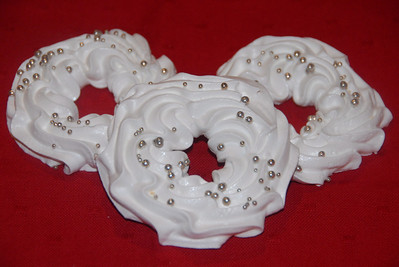
With candy consumers I share my maternal family’s customary Christmas sweets: hand-rolled chocolate truffles, which are a traditional yuletide confection in France, and walnut-topped divinity. Since we all consume pounds of cookies during this season, I tend not to dole them out as gifts. However, I will sometimes slip in a box of homemade kourambiedes, tuiles or meringue wreaths, confections that you usually don’t encounter on a Christmas cookie tray.

For loved ones who dislike cooking or don’t have time to make much beyond spaghetti, I offer jars of vegetarian chili, black bean soup and minestrone. Easy to make, these hearty soups are even simpler to re-create. To enjoy a hot, homemade meal, just twist off the container’s top, pour the contents into a pan, heat and eat. Perfect present for time-pressed or kitchen-phobic family and friends. (Note: If you opt to give homemade soups, consult a canning cookbook, such as “Ball Complete Book of Home Preserving,” first. The last thing that you want to give is food poisoning.)

Have wine and spirits enthusiasts on your list? The oenophiles in my life get local wines or my husband’s home-brewed Cabernet Sauvignon. Liqueur fans receive my raspberry-infused vodka or limoncello. Guaranteed to please, these gifts keep on giving throughout the year.

DIVINITY CANDY
Makes 16 pieces

2 cups firmly packed light brown sugar
1 cup granulated sugar
1 cup water
1/2 teaspoon salt
2 egg whites
3/4 teaspoon vanilla extract
1/4 cup chopped walnuts
Special equipment – candy thermometer

Grease an 8 x 8-inch pan then set aside.

Place the sugars, water and salt in a large, non-stick saucepan and cook on medium-high, stirring periodically, until the sugar has dissolved. Reduce the heat to medium and continue cooking until the syrup reaches 265 degrees Fahrenheit on a candy thermometer and has thickened.

Meanwhile, beat the egg whites until stiff peaks form. With the beaters running, slowly add the syrup to the egg whites. Beat on high until creamy. Add the vanilla and continue beating until the mixture holds its shape when dropped from a spoon.

Spread the candy into the prepared pan. Sprinkle nuts over the top and allow the divinity to cool. When it has cooled completely, cut the divinity into small squares and wrap the squares individually in waxed paper.

CHOCOLATE RASPBERRY TRUFFLES
Makes 25-30 truffles

1/2 cup heavy whipping cream
9 ounces semi-sweet chocolate chips
1 tablespoon plus 1/2 teaspoon raspberry liqueur
1/3 cup almonds, without shells or skins
1/2 teaspoon granulated sugar

Place the cream in a small saucepan and bring to a boil. Meanwhile, put the chocolate chips in a medium-sized bowl.

Once the cream has begun to boil, pour it over the chips. Stir the two together until the chips have melted and the ganache is smooth and creamy in texture. Add the raspberry liqueur to the ganache and stir until well combined. Cover the bowl with plastic wrap and refrigerate for 3 hours.

In a frying pan, toast the almonds until they become a light, golden brown. Place the almonds and sugar in the bowl of a food processor and pulse until the almonds are finely chopped. Pour the almonds into a small bowl and set aside.

Remove the bowl of ganache from the refrigerator and uncover. Using a melon baller, scoop out a portion of the chocolate. Roll it between the palms of your hands, forming a well-shaped ball. Drop the truffle into the bowl of chopped almonds and roll it around until it is completely covered with nuts. Place the truffle on a baking sheet or in a container lined with waxed or parchment paper. Repeat the ball forming and coating steps until all the truffles have been made. Refrigerate the batch until ready to use.

Note: Placed in an air-tight container and refrigerated, truffles can keep between 2 to 3 weeks. Frozen, they last for around 2 months.

KOURAMBIEDES
Recipe courtesy of Vasiliki Kolovos
Makes 4 dozen

Whenever I see these powdered sugar-blanketed, crescent-shaped cookies, I think of Christmas in my hometown and all the wonderful kourambiedes that my friend Nickie’s mom would bake. Lucky for me (and you), Mrs. Kolovos has shared her recipe for these heavenly Greek sweets.

½ pound unsalted butter, room temperature, plus more for greasing baking sheets
¼ cup sugar
1 egg yolk
½ teaspoon vanilla
2½ tablespoons ouzo (anise-flavored liqueur)
About 2 cups flour, sifted, divided
½ teaspoon baking powder
Confectioners’ sugar

Grease two baking sheets and set aside.

Using an electric mixer, beat ½ pound butter until light and fluffy. Add sugar and egg yolk and continue beating until well blended. Add vanilla and ouzo and beat until combined.

Mix 1 cup flour with baking powder and add to butter mixture. Add about another 1 cup flour, a little at a time. (Depending on temperature conditions, you may need a little more or less flour to make a dough that is supple but not sticky.)

Place dough on a flat, flour-dusted work surface and roll out ½-inch thick. To make crescent shaped cookies, use either a crescent-shaped cookie cutter or the lip of a water glass. If using a glass, place roughly half of lip onto dough and press downward. Repeat to create the crescent shape. Alternatively, use the glass to make circles or with your hands roll dough into small balls.

Put cookies 1 inch apart on greased baking sheets and bake in preheated 350-degree oven for 15 to 20 minutes, or until tops are light brown. Cool for 5 minutes, then remove from sheets, place on cooling rack and generously sift confectioners’ sugar over.

RASPBERRY VODKA
Adapted from Marcus Samuelsson’s “Aquavit” (Houghton Mifflin Harcourt, 2003)
Makes 1 quart

For the liqueur:
1 cup organic raspberries, washed
1 1-liter bottle of vodka
2 to 3 tablespoons simple syrup

For the simple syrup:
1/2 cup water
1/2 cup sugar

Place the raspberries in a large, wide-mouthed, lidded jar. Pour in the vodka and seal the jar. Let the ingredients stand at room temperature for 4 to 8 weeks. When ready, the vodka will have turned ruby red and possess a deep, raspberry taste.

To make the simple syrup, place 1/2 cup water and 1/2 cup sugar in a saucepan and bring to a boil. Lower the heat to a simmer and, stirring, cook until the sugar has evaporated. Remove the pan from the heat and cool to room temperature. You will end up with roughly 1/2 cup simple syrup. This can be stored, covered, in the refrigerator for about 1 month and can be used to flavor cold and hot drinks, among other things.

Strain the vodka into a pitcher or bowl and stir in the simple syrup. Transfer the infused vodka to a 1-liter bottle and seal it. Store in the freezer or refrigerator until ready to use.

A Collection of Christmas Cookbooks

We probably all would agree that you don’t need a fancy, Christmas-themed cookbook to create a memorable holiday meal. Neither my mother nor grandmothers relied upon books to help them whip up their Christmas dinners, dinners that I remember to this day. Instead they served the foods that their mothers and grandmothers before them had made. Yet, sometimes it’s nice to have a little break from tradition and the decades of green bean casseroles, herb stuffings and mince pies. That’s when I turn to the following cookbooks to spice up my yuletide offerings.

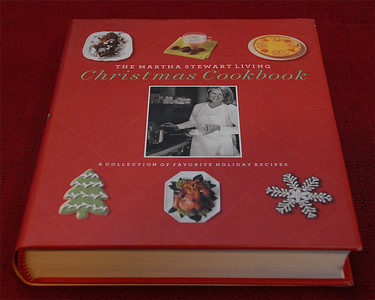
Packed with color photographs, menus and backgrounds on such holiday favorites as eggnog, fruitcake and gingerbread, “The Martha Stewart Living Christmas Cookbook” (Clarkson Potter, 2003) provides home cooks with all the tips and recipes needed for a spectacular seasonal feast. Don’t let the title deceive you, though. You can use “The Martha Stewart Living Christmas Cookbook” long after December 25th. I make Stewart’s porcini-stuffed mushrooms and roasted beets with feta and pecans, among other dishes, throughout the year.

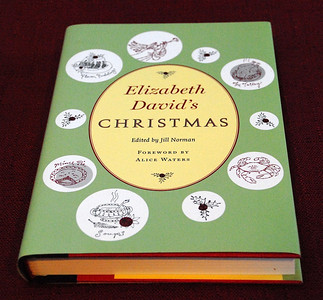
In some respects Elizabeth David’s Christmas (David R. Godine, 2003) reads more like a good novel or wonderful culinary memoir/history than a cookbook. Although it offers 150 recipes, it also provides witty anecdotes, fascinating yuletide traditions and detailed histories for countless dishes. While David does present such customary Christmas specialties as roast turkey, pork and mushroom stuffing and cranberry sauce, she additionally serves up carrot soup, baked duck and iced apricot souffle, foods that can be enjoyed in any season. Read it like a novel. Use it as a multi-season cookbook.

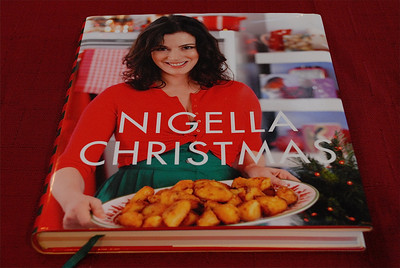
In “Nigella Christmas” (Chatto & Windus, 2008) Nigella Lawson takes on the holidays with such updated classics as spiced roast turkey with allspice gravy and new faves such as panettone and Italian sausage stuffing and chestnut chocolate pots. She likewise covers cocktails, breakfast goodies and edible gifts such as chutneys, infused vodkas and vinegars and marinated cheese. As always, Lawson peppers her book with clever prose, accessible recipes, glamorous photos and a smidgen of kitchen kitsch.

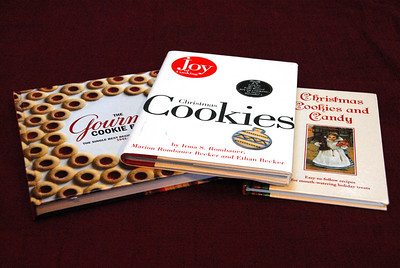
When searching for a new, festive sweet, I flip open “Joy of Cooking Christmas Cookies” (Scribner, 1996), “Christmas Cookies and Candy” (Gramercy Books, 1995) and the newly released “The Gourmet Cookie Book” (Houghton Mifflin Harcourt, 2010). From springerle cookies, rugelach and stollen bread to candied fruit peels, tuiles and chocolate truffles I have an endless assortment of treats from which to choose. Some, such as divinity, gingerbread men and plum pudding, are timeless classics. Others, such as chocolate mocha biscotti, raspberry brownies cockaigne and coconut macadamia shortbread, are destined to become holiday darlings. All possess storage and packaging tips, which come in quite handy during this season. As with the previous titles, I’ve used “Christmas Cookies and Candy” and “Joy of Cooking Christmas Cookies” year-round. I suspect the same will hold true for “The Gourmet Cookie Book.”

Give the Gift of Cookbooks

With the holidays right around the corner and Black Friday looming on the horizon I’m serving an assortment of new cookbooks in this week’s review. Whether shopping for the culinary novice or expert, you’ll find something for any and every cook here. However, if none match your gift recipient’s exact interests, check out my past suggestions under “Cookbooks.”

NIGELLA KITCHEN by Nigella Lawson (Hyperion, 2010)
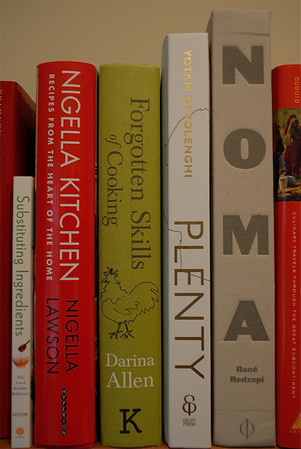
I kicked off Tuesday’s cookbook treasures with Nigella Lawson’s first book. Now I’m celebrating her latest, “Nigella Kitchen.” Filled with the cleverness and wit that made “How to Eat” so enjoyable, “Nigella Kitchen” is likewise loaded with Lawson’s homey recipes. Take, for instance, the cheerfully named sunshine soup, date steak or jumbleberry jam. With roughly 190 dishes at their fingertips home cooks will consult this fun, approachable book for years to come.

SUBSTITUTING INGREDIENTS by Becky Sue Epstein (Source Books, 2010)
Ever get halfway through cooking a meal before you realize that you’ve run out of a crucial ingredient? Take heart. Thanks to Becky Sue Epstein’s “Substituting Ingredients,” you’ll know all the tricks for successful substitution. From splashing lime juice over strawberries to stand in for missing kiwis to replacing ground cloves with allspice, mace or nutmeg, “Substituting Ingredients” shares a wealth of useful culinary information. It’s the perfect stocking stuffer and the ideal book for any cook.

FORGOTTEN SKILLS OF COOKING by Darina Allen (Kyle Books, 2010)
Dubbed the ‘Julia Child of Ireland,’ Darina Allen offers over 700 wholesome recipes in her latest cookbook. While emphasizing seasonal cooking and “forgotten skills,” Allen leads readers of “Forgotten Skills of Cooking” through countless traditional techniques. She provides, among other things, sections on foraging for wild nuts, fruits and mushrooms, preparing fresh fish and game, smoking foods, and making jams, chutneys, butters and cordials. An invaluable tome, “Forgotten Skills of Cooking” will delight both serious foodies and cooks.

THE ESSENTIAL NEW YORK TIMES COOKBOOK by Amada Hesser (W.W. Norton & Co., 2010)
Few cooks could resist 150 years-worth of celebrated recipes from The New York Times. In Amanda Hesser’s compilation, “The Essential New York Times Cookbook,” that’s exactly what they’ll get — over 1,400 recipes from a century and a half of the venerated newspaper. Hesser packs this hefty book with fascinating histories, cooking tips, reader feedback and, of course, beloved recipes. Destined to become a classic, “The Essential New York Times Cookbook” is a wonderful gift for any cook or culinary history buff.

NOMA: TIME AND PLACE IN NORDIC CUISINE by Rene Redzepi (Phaidon Press, 2010)
Called “the most important cookbook of 2010” by the Wall Street Journal, Rene Redzepi’s “Noma: Time and Place in Nordic Cuisine” is unquestionably the most beautiful cookbook that I’ve seen in ages. Enhanced by 200 gorgeous color photographs of ingredients and finished dishes, the renowned Danish chef’s book showcases fresh, seasonal, sustainable cooking. With 90 modern Nordic recipes and several essays by and about Redzepi “Noma” will charm serious cooks and food lovers.

PLENTY by Yotam Ottolenghi (Ebury Press, 2010)
Searching for a stunning and inspiring vegetarian cookbook? Yotam Ottolenghi‘s “Plenty” is the one to buy. The Israeli-British chef’s second book draws from his “New Vegetarian” column in The Guardian newspaper and features Mediterranean-inspired, vegetarian cuisine. With creative yet easy-to-follow recipes and vibrant photographs Ottolenghi breathes new life into vegetarian meals. An import from the UK, this book is available in the States through Amazon and specialty booksellers such as New York’s Kitchen Arts and Letters.

Talkin’ Sides for Turkey Day

Since virtually every food writer in America is talking about Thanksgiving this week, I’ve decided to jump on the bandwagon and share a bit about turkey day. As you’ll see, the history lesson is short. The recipes, however, are plentiful.

As most may know, Thanksgiving didn’t become a national holiday until President Lincoln declared it so in 1863. Even so, early 19th century Americans still gave thanks for successful harvests and other welcomed events with sumptuous meals. These celebrations featured an array of meats such as pork, venison, duck, goose, chicken and turkey. They also included sweets such as dried fruit, plum puddings, fruit pies and tarts. Missing, though, were many of the delicious side dishes that I so enjoy.

While these dinners lacked my garlic-chestnut Brussels sprouts and three cranberry conserve, they offered something that the present holiday doesn’t – a strong religious tone. This was particularly the case in New England where colonists spent their days of thanks in church rather than at the table.

By the late 19th century the religious aspect of Thanksgiving had all but disappeared, replaced by a collective obsession with food. Turkey became the mainstay of the feast. And all those wonderful sides? That’s what I’m offering today. Below are a few of my favorites. Easy to prepare and quick to cook, they’re a great addition to any dinner. Have a happy turkey day and enjoy!

FRENCH GREEN BEANS WITH SHALLOTS
Serves 4 to 8

2 pounds French green beans, washed & stems removed
1 large shallot, minced
2 tablespoons unsalted butter
chicken stock, enough to half-cover the beans
ground white pepper, optional
salt, optional

Melt the butter in a saute pan. Add the minced shallot and cook until softened. Add the beans. Pour in enough chicken stock so that the beans are half-covered. Raise the heat to high and cook until tender. Remove from heat, taste to see if salt and pepper are needed and then serve immediately.

ROASTED GARLIC-CHESTNUT BRUSSELS SPROUTS
Serves 8

I’ve shared this recipe before and I’ll share it again. It’s so good that even avid Brussels sprouts detractors will gobble up this dish.

2 pounds fresh or frozen Brussels sprouts, halved from top to bottom
2 cloves garlic, minced
½ cup roasted chestnuts, roughly chopped
2 tablespoons olive oil
½ teaspoon salt
¼ teaspoon freshly ground black pepper

Preheat the oven to 425 degrees Fahrenheit.

Place the Brussels sprouts, garlic, olive oil, chestnuts, salt and pepper in a large baking dish. Toss the ingredients together, spread them in a single layer and bake until tender, about 25 minutes. Serve immediately.

GARLIC MASHED POTATOES
From Julia Child’s seminal “Mastering the Art of French Cooking Volume One” (Alfred A. Knopf, 2001). Note that the garlic can be omitted to make traditional mashed potatoes.
Serves 6 to 8

2 heads (about 30 cloves) of garlic
4 tablespoons butter
1 cup boiling milk
¼ teaspoon salt
pinch of pepper
2½ lbs. baking potatoes, peeled and quartered
4 tablespoons softened butter
salt and white pepper
3 to 4 tablespoons milk

Boil a pot of water and then drop in garlic cloves and allow them to boil for 2 minutes. Remove the cloves and place them in a saucepan with 4 tablespoons of butter. Cover and cook slowly for about 20 minutes until the cloves are very tender but not browned.

Blend in the flour and stir over low heat until the mixture froths but doesn’t brown, about 2 minutes. Off heat, beat in the boiling milk, ¼ teaspoon salt and pinch of pepper. Boil, stirring, for 1 minute. Puree the mixture in a food processor or blender then simmer 2 minutes more.

Meanwhile, boil the potatoes until tender. Drain and then put them through a potato ricer and place them in a Dutch Oven. Add the garlic sauce, 4 tablespoons butter, salt and white pepper and milk to the hot potatoes. Stir until well blended. Tumble the garlic mashed potatoes into a warmed vegetable dish and serve.

THREE-CRANBERRY CONSERVE
Recipe courtesy of the November 2004 Thanksgiving issue of “Food & Wine”
Makes about 3 cups

I love that you can make this recipe ahead of time and that, refrigerated, it keeps for up to 2 weeks.

1 cup cranberry juice
1 cup sugar
zest of 1 orange, removed in large strips
4 cups frozen cranberries
1 cup dried cranberries

In a medium saucepan combine the cranberry juice with the sugar and orange zest and bring to a boil, stirring until the sugar dissolves.
Add the frozen and dried cranberries and cook over moderate heat, gently crushing the fresh berries against the side of the pan until the conserve is thick and jam-like, about 10 minutes. Let cool and then discard the zest.

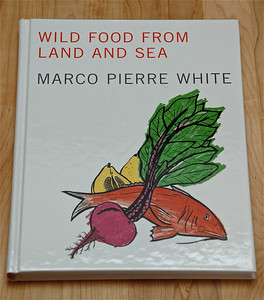
Wild Food from Land and Sea

Long before Gordon Ramsay bellowed expletives at his kitchen staff or Anthony Bourdain snarked his way around the globe there was Marco Pierre White. Dubbed the original enfant terrible of the culinary world, White became the youngest and first British chef to earn three Michelin stars. He was also the first ever to give them all back. Now a renowned restaurateur as well as an occasional cooking show host, White is the author of this week’s cookbook pick, “Wild Food from Land and Sea” (Melville House Publishing, 2010).

In his second cookbook White shares not only his iconic recipes but also the techniques that turn these dishes into extraordinary foods. With “Wild Food from Land and Sea” I’m able to take a simple sea scallop, whole chicken or brisket and, using White’s tips, transform it into a gustatory delight. My family and friends may think that I’ve had their gourmet dinner catered but in fact they owe their repast of poached oysters, guinea fowl with morels and lemon tart to me and Marco Pierre White.

As White explains in his introduction, most restaurant meals aren’t difficult to prepare. Rather it’s the presentation that makes them seem so daunting and awe-inspiring. To help home cooks recreate a confit of salmon with tian of eggplant or daube de boeuf bourguigonne, he provides 78 basic recipes in the latter half of his book. These guide readers through constructing sauces, stocks, dressings and garnishes such as parsnip puree, sun-dried tomatoes and creamed parsley. They also show how to craft homemade pastas, puff pastry and flavored butters and whip up the perfect risotto or souffle.

Along with these invaluable instructions, White offers alternate sides for his foods. In the “Fish Dishes” section he suggests partnering red mullet fillets with ratatouille but points out that they likewise go well with potato fondant or confit of fennel. Similarly, in “Puddings” he uses poached strawberries, pineapples and mangoes with creme vanille. Yet, he adds that a variety of fruits, including pears, kiwis and apricots, could appear in this dessert. Since ratatouille or poached pineapple won’t always delight my dining companions, I appreciate this flexibility with ingredients and pairings. I also like that White lists recipes for all of the accompaniments.

What I adore most about this book is how uncomplicated White makes cooking. Clear, step-by-step directions ease me through the trickiest-sounding dishes. If I can steam fish and cook mushrooms and potatoes, then I can prepare a cappuccino of mushrooms with crayfish tails and chervil. Know how to stuff and roast a chicken? Then I’ve got the skills needed for roast herbed chicken with chanterelles. It’s that easy.

The next time I want to wow my dinner guests or just jazz up the evening meal, I’ll reach for Marco Pierre White’s “Wild Food from Land and Sea.” It’s the perfect cookbook for fine, at-home dining.

Salty Like the Sea

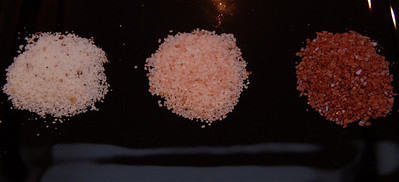
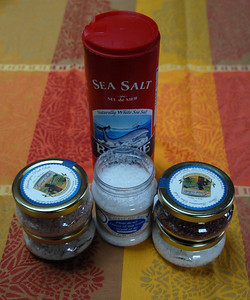
One of the essential minerals and oldest seasonings has gone gourmet. Forget about the white, fine-grain, mass-produced salt crystals of the past. Chunky sea salts in hues of beige, pink, red and black have taken over kitchens, tabletops and gourmet grocery aisles around the globe. Prized by chefs, connoisseurs and home cooks, they come from France and the Mediterranean coast, from salt pans in Tunisia and Majorca and from countless other sites, including Hawaii, Australia and Bali.

In the Mediterranean sea salt is produced by an age-old technique. Here sea water is collected in shallow basins and allowed to evaporate in the sun. As it dries up, salt forms at the base of the pans. There it takes on the color of the clay or other natural materials found on the bottom. The salt at the top remains pure white. In France this delicate salt is known as fleur de sel. Light tasting and quick dissolving, it’s primarily used to finish dishes but it occasionally appears in baked goods.

What do cooks do with all these different salts? As with fleur de sel, many use them to finish off a dish, enhancing the flavors and appearance of the prepared food. Himalayan pink, Hawaiian black lava, smoked and flavored salts all perform this role. When used sparingly, the salts pump up the taste profiles and add a dash of color and texture to vegetables, fruit, fish, meat and poultry. Spread with a heavy hand, they will overwhelm the natural flavors and leave diners with a briny aftertaste. That no cook wants to do.

In my home sea salt has replaced the usual iodized salt. Need to salt boiling water? I reach for my container of coarse sea salt. Want to bring out the sweetness of a particular fruit? I shake a little fleur de sel over the top. Looking to spice up broiled cod filets or grilled tuna steaks? I sprinkle on a smidgen of black truffle or lime smoked salt. As with any seasoning, a little goes a long way.

Because I don’t live in a particularly damp climate and use a salt mill rather than a shaker, I’m not too concerned about my stash of sea salt clumping. This was one of the original selling points of mass-produced table salt. As one company slogan put it, “When it rains, it pours.” Likewise, I already receive an adequate amount of iodine in my diet. Why add more? I do, however, want to add a little excitement to my dishes and keep my foods as natural as possible. That’s why I’ve joined the masses and opted for sea salts.

CRAB CEVICHE
Recipe courtesy of the gourmet salt purveyor Great Salts

10 oz. fresh crab meat
2 large fresh chopped tomatoes
4 tablespoons finely chopped cilantro
1 garlic clove finely chopped
1 diced green bell pepper
1 diced green chili (optional if you like spicy food)
1.5 oz. fresh squeezed lemon juice
1.5 oz. fresh squeezed lime juice
Great Salts Bali Coconut and Lime Salt

Carefully mix all the ingredients in a large bowl (preferably glass) and allow to marinate in the refrigerator for at least one hour. Remove from the refrigerator and salt to taste using Great Salts Bali Coconut and Lime Salt before serving.