Latest Posts

Taking a Stab at Kebabs

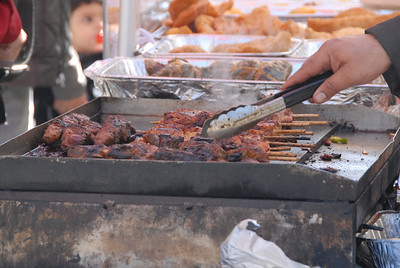
In a rare move for this night owl I was up early this morning, testing recipes. While I can’t say much for marinating swordfish at dawn, the act did get me thinking about the origins of my subject, kebabs. This meal of skewered, grilled meat is attributed to medieval Turkish soldiers who used their swords to cook over campfires. As the Ottoman Empire grew, the popularity of this technique spread across the Mediterranean and Middle East. Eventually it caught on around the world.

Almost every country seems to have its own kebab. In India folks eat tikka, chunks of chicken soaked in yogurt, coriander, garam masala and other spices and then cooked on rods. The French dine on brochettes while diners in Russia and Armenia consume shashlik. In Greece kebabs come in the form of souvlaki, large lamb or chicken cubes marinated in oil, lemon juice and oregano before being lanced alongside onions or green peppers and grilled. Across Southeast Asia satay, small pieces of chicken, pork, goat, beef or fish macerated in fish and soy sauces, sugar, lime juice and spices, remain all the rage.
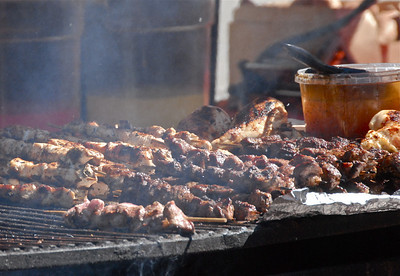
It doesn’t take much effort to make a kebab. Cut a piece of beef, chicken, lamb or firm-fleshed fish into one-inch cubes. Allow the cubes to steep in a marinade for at least 30 minutes. Once they’ve finished marinating, skewer the cubes, along with optional chunks of onions, eggplant, peppers or mushrooms, on metal or bamboo sticks and grill them over hot charcoal. If using bamboo sticks, remember to soak them in water first. Otherwise, they’ll catch on fire, providing you with an inedible, albeit memorable, meal.

Kebabs finished, I drizzle a little lemon or lime juice, olive oil or sauce over them. Paired with fresh pita, lettuce, tomato and a yogurt dressing, they become a filling sandwich. Laid across a bed of rice or mixed greens, they make a beautiful entree.

CHICKEN SOUVLAKI
Serves 4

1 ½ pounds boneless, skinless chicken breasts, cut into 1-inch cubes
¼ cup olive oil
2 tablespoons lemon juice
½ teaspoon salt
¼ teaspoon ground black pepper
2 teaspoons oregano
tzatziki, for serving
4 individual pitas, optional
2 tomatoes, sliced, optional

For the tzatziki
8 ounces plain yogurt, excess water drained
½ cucumber, peeled, seeded and diced
1 clove garlic, grated
¼ teaspoon dried mint
dash of salt

Mix together the olive oil, lemon juice, salt, pepper and oregano in a small bowl. Place the chicken cubes in a medium-sized bowl and pour the marinade over top. Cover the bowl, place it in the refrigerator and allow the chicken to marinate for 30 minutes to 1 hour.

Meanwhile, in a small bowl whisk together the yogurt, cucumber, garlic, dried mint and salt and refrigerate the tzatziki.

Preheat the grill.

Using metal skewers, insert the cubes of chicken lengthwise on each skewer, leaving a little room between each chunk of meat. Place the skewers on the hot grill and cook for approximately 5 to 10 minutes or until chicken is completely cooked. Remove the skewers from the grill and place on a platter. Serve immediately with a side of tzatziki sauce and optional pita and tomato.
As Easy As . . .

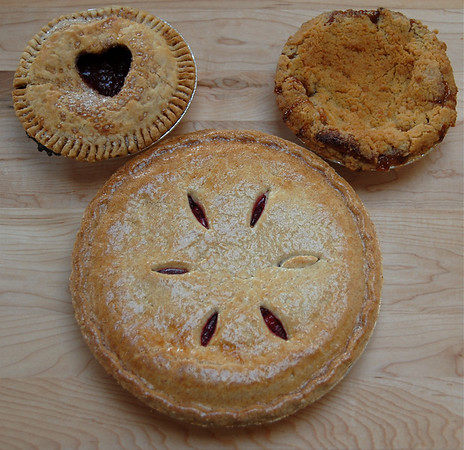
If you think back to early last winter, you may remember all the fuss about how 2011 would be the year of the pie. Rachel Ray predicted it. Newspapers and cooking magazines touted it. Even I wrote an article about how pie would usurp the cupcake and steal the title of ‘America’s favorite sweet.’

Although the hype over pie has subsided, my interest in it hasn’t. This summer I just keep baking it and baking it. In fact, as I type this, I have a homemade lemon meringue pie cooling on the counter behind me. It may not be the year of the pie but it’s definitely my summer of pie.

While my obsession is relatively new, the dish itself is quite old. Historians believe that the ancient Egyptians created the first pie. However, they give the ancient Romans credit for the first published recipe. This was for a rye-crusted goat cheese and honey pie.

In his weighty and invaluable encyclopedia, The Oxford Companion to Food (Oxford University Press, 2006), the late writer Alan Davidson stated that the name pie may have come from magpie. The latter is a member of the crow family and known for collecting an array of things. Pies also contain an assortment of ingredients, such as fruits and custards, meats and vegetables, or, as in the case of the ancient Romans, rye, cheese and honey. Perhaps it’s a stretch but you can see how the one came to signify the other.

Early pies tended to feature meats and savory fillings. Mine, however, epitomize the traditional, sweet, American repast. Like millions before me, I load up my pie crusts with berries, cherries, apples, peaches or custards as well as with such late 20th century favorites as chocolate, peanut butter and yogurt. I blanket the fillings with a crumble, meringue, or dough or just leave leave them topless.

At one time, where I lived would have determined what type of pie I made. Southerners were known for their sweet potato, pecan, mud and chess pies while New Englanders were famed for their pumpkin and blueberry. In Florida folks ate tart key lime pies. In Pennsylvania, Dutch country molasses-rich shoofly pie reigned supreme.

Since I don’t live in a region renowned for a specific pie, I’ve been making whatever sounds tasty. This week I’m stuck on chocolate-peanut butter and lemon meringue pies. Last week it was all about chocolate cream pie from the previously reviewed Martha Stewart’s Pies & Tarts.

CHOCOLATE CREAM PIE
Adapted from Martha Stewart’s Pies & Tarts (Clarkson Potter, 2011)
Serves 6 to 8

1 store-bought chocolate cookie crust
2 1/2 cups skim milk
2 ounces bittersweet chocolate, roughly chopped
2 1/2 ounces semi-sweet chocolate, roughly chopped
1/2 cup granulated sugar
1/4 cup cornstarch
1/4 teaspoon salt
4 large egg yolks
1 teaspoon pure vanilla extract
1 cup heavy cream
1/3 cup confectioner’s sugar
2 ounces semi-sweet chocolate chunks, shaved with a vegetable peeler

In a medium saucepan heat the milk and chocolate over medium heat, whisking together until the chocolate is melted and blended.

In a small bowl mix together the granulated sugar, cornstarch and salt. Add 1 cup of the milk-chocolate to the dry ingredients and whisk until well-combined. Pour back into the saucepan, whisk to combine and cook over medium heat, stirring constantly, until bubbling and thick, about 5 minutes.

In a medium bowl whisk the egg yolks. Add 1 tablespoon of the hot chocolate mixture to the eggs and whisk to combine. Add another tablespoon or two to the eggs and whisk. Repeat until you’ve added about 1/2 cup of hot chocolate to the eggs and then pour the egg-chocolate mixture into the saucepan. Cook over medium heat, stirring constantly, until the custard is thick and bubbles, about 2 minutes. Add the vanilla and stir to combine. Allow to cool for 10 minutes.

Pour the custard into the crust. Place a sheet of plastic wrap directly onto the surface of the custard. Refrigerate for 4 hours or up to 1 day.

To make the topping, whip the cream on medium-high until soft peaks form. Add the confectioner’s sugar and whip until stiff peaks form. Spread the whipped cream over the custard and then sprinkle the shaved chocolate on top.

Jansson’s Surprising Temptation

As of late I’ve been up to my whisk in work. That won’t stop me, though, from passing along a good recipe. This time it’s for a Swedish specialty known as Jansson’s Temptation. Featuring anchovies fillets and sliced potatoes, this casserole has become a surprise hit in my household. Usually anchovies are a hard sell but, when paired with potatoes, sautéed onions and a bit of cream, they’re an absolute delight to eat.

Jansson’s Temptation’s exact origins remain a mystery. Some historians attribute the dish to a 19th century Swedish religious reformer who loved anchovies, onions and spuds. Others point to an early 20th century Stockholm hostess who created the entrée for a dinner party. She reputedly dubbed the invention “Jansson’s Temptation” in honor of a 1928 film of the same name. No matter how it got its start, it continues to be a beloved staple of Swedish cuisine.

In Sweden the casserole often pops up at smorgasbords, those buffet-style meals featuring hot and cold foods. In my house it serves as a warm and satisfying meal on rainy, summer evenings and dark, fall days. Pair Jansson’s Temptation with a mixed greens salad or enjoy it on its own with cup of strong coffee or shot of chilled aquavit.

JANSSON’S TEMPTATION
Serves 6

¼ teaspoon ground white pepper
1/4 cup breadcrumbs
2 tablespoons grated Pecorino Romano cheese
2 tablespoons unsalted butter
2 small white onions, thinly sliced
1 ½ pounds potatoes, washed, peeled, halved and sliced into 1/4-inch crescents
2 (2-ounce) cans of anchovy fillets, drained
¾ cup heavy cream
½ cup milk
1 tablespoon unsalted butter, melted

Preheat the oven to 400 degrees Fahrenheit. Grease a 2-quart baking dish. In a small bowl mix together the ground white pepper, breadcrumbs and Parmesan cheese and set aside.

Melt two tablespoons of butter in a medium-sized frying or sauté pan on medium heat. Add the onions and sauté until golden in color, about 7 minutes.

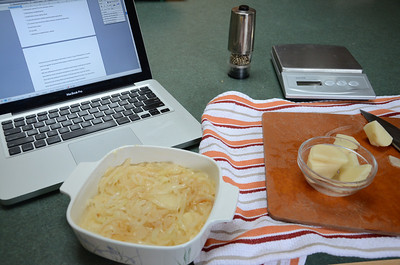
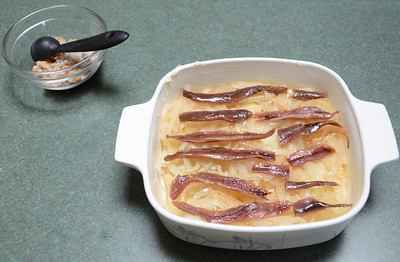
Place half of the potatoes in the bottom of the greased dish. Layer the onions, followed by the anchovy fillets and remaining potatoes over them. You may need to press down on the layers so that everything fits snugly in the dish.

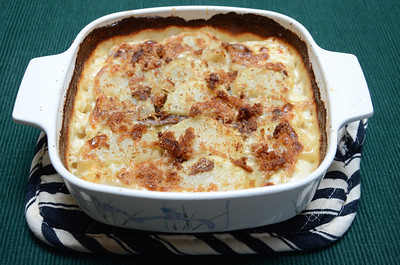
Whisk together the cream and milk and pour it into the baking dish. Sprinkle the breadcrumb mixture over the potatoes and then drizzle the melted butter over the top. Bake for 45 to 50 minutes, until the potatoes are soft and golden brown. Serve warm.

Martha Stewart’s Pies & Tarts

I grew up with a parent who loathed Martha Stewart. Mention her name and my dad would become apoplectic. “That woman! She’s . . .!”

I never understood it. After all, it was my mother, not he, who cooked the family meals and did our decorating. Who knows? Maybe he envied folks who ate bouillabaisse and coq au vin at a table adorned with homemade pine cone centerpieces and dried wild flower napkin rings. Whatever the cause, I knew that bringing a Martha Stewart cookbook or magazine into the house was tantamount to treason. That I’m a fan of one of her cookbooks, well, I can imagine what he’d say – Judas! Yet, I have to admit that I like her latest offering, Martha Stewart’s Pies & Tarts.

Compiled by the editors of Martha Stewart Living, Martha Stewart’s Pies & Tarts provides 150 simple to mildly difficult recipes for pies and tarts. Whether I’m pressed for time or able to spend a few hours in the kitchen, this book has an array of sweet and savory treats to suit my needs. Need a quick, seasonal or chocked-full-of-chocolate dessert? I’ll whip together a phyllo tart with sugared pluots or chocolate cream pie. Want something different for dinner? I’ll make the leek and olive tart or Alsatian potato pie. All are easy and utterly delicious.

Divided into 10 chapters, the cookbook begins with “Classic,” 10 recipes for such perennial favorites as lemon meringue, pumpkin and lattice-top blueberry pie. It then moves on to one of my preferred pie types, “Free Form,” unstructured creations that need neither pie pans nor fussy adornments. Galettes, crostatas and phyllo tarts fall into this category as do, oddly enough, hand-held pies. As these must be formed with cookie or biscuit cutters, hand-held pies seem better suited to the “Rustic” rather than “Free Form” chapter. It’s a small complaint in an otherwise solid baking book.

For newcomers or those requiring a refresher in pie baking, Martha Stewart’s Pies & Tarts goes over the basics in a section entitled, sensibly enough, “The Basics.” Here readers learn how to poach fruit, make a meringue as well as a variety of doughs and craft fancy pie crusts. All of the techniques needed to create a good pie can be found at the back of the book.

As much as it would drive my late father crazy, I’ve found Martha Stewart’s Pies & Tarts to be a big crowd pleaser. It’s a welcomed addition to my cookbook collection. No doubt it will be the same for you, too.

It’s Tomato Time Again!

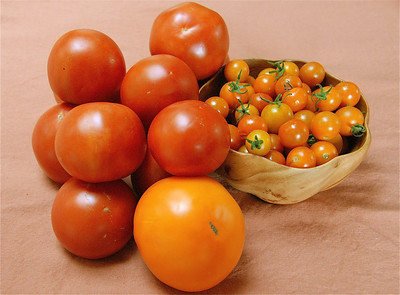
As tomato season rolls around again, I thought that I’d share some wisdom about tomatoes from last summer. Yes, in case you haven’t noticed, it’s tomato time, the period from July to October where locally grown, vine-ripened tomatoes hit their prime. For those who’d happily chomp on this produce day in and day out, it’s a highly anticipated event. For those like me who don’t share this passion, it means confronting the quandary of what to do with all those tomatoes.

A well-meaning friend once suggested that I try canning them. After all, who doesn’t love home preserving? Apparently me. After one steamy, day-long canning class I learned that, like oil and water, canning and Kathy do not mix.

After ruling out canning, I considered other options, including drying tomatoes in a food dehydrator. While pleasant tasting, dried tomatoes lacked the spark of their fresh, juicy brethren. With that in mind I scratched dehydrating from my list.

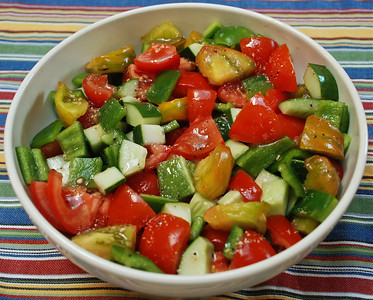
In the end I’ve chosen either to cook or serve tomatoes raw in an endless parade of recipes. Lucky for me, they pair well with almost everything. They possess a special affinity for such fruits and vegetables as arugula, bell and chili peppers, cucumbers, fennel, garlic, lemon, onions, shallots and watermelon but also partner nicely with avocado, green beans, broccoli, cauliflower, eggplant, mango, mushrooms, peas, raspberries, squash and zucchini. Their sweetly sour flavor compliments bay leaves, cilantro, marjoram, mint, flat-leaf parsley, black and white pepper, and thyme.

Along with countless flavor affinities, tomatoes offer a great degree of cooking versatility. They’re wonderful when baked, broiled, fried, grilled, sauteed, stewed, turned into a sauce or served raw. With the exception of plum tomatoes, which have a fairly tough skin, they don’t require peeling or de-seeding. Just slice and serve them with a dash of salt and black pepper. Easy!

When faced with a huge mound of these veggies, I dig out my stack of tomato-oriented recipes and get to work. On days when I don’t make gazpacho, tomato sandwiches, sauces, salads and tarts, I may pull together this simplistic take on the Telepan appetizer ‘sunny side egg with fried green tomato.’

“ET” (POACHED EGG & FRIED GREEN TOMATO)
Serves 2 as an appetizer

1/4 cup cornmeal
1 tablespoon all-purpose flour
1/8 teaspoon salt
pinch of ground black pepper
2 (1/2-inch thick) slices of green tomato
1/4 cup milk
1 tablespoon olive oil
2 tablespoons grated cheddar cheese
2 teaspoons grated Parmesan cheese
2 large eggs, poached

On a small plate mix together the cornmeal, flour, salt and black pepper.

Pour the milk onto another small plate. After dipping each tomato slice into the milk, dredge it through the cornmeal mixture so that both sides are coated.

Pour the olive oil into a frying pan and heat on medium-high. Add the tomato and fry on one side until golden, about 2 to 4 minutes. Flip them over and cook on the other side until golden. Remove and place them on two salad plates. Sprinkle 1 tablespoon of grated cheddar cheese and 1 teaspoon Parmesan cheese over each. Top the cheese with a poached egg and serve immediately.

Telepan – NY, NY

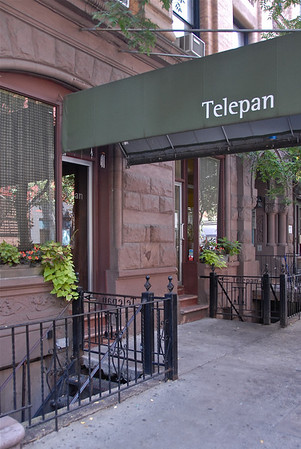
I usually don’t ransack my bank account in order to eat well in NY. However, on nights when I want a meal that will knock socks off, I dig out my debit card and head on over to Chef Bill Telepan’s eponymous restaurant, Telepan. Located on Manhattan’s Upper West Side and, happily, a short walk from my apartment, Telepan serves exceptional seasonal, New American cuisine in a low key but smart former townhouse.

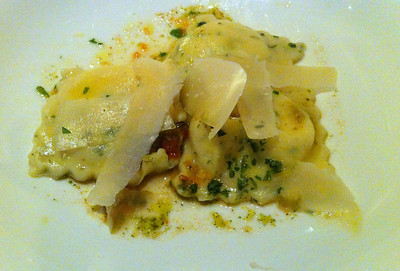
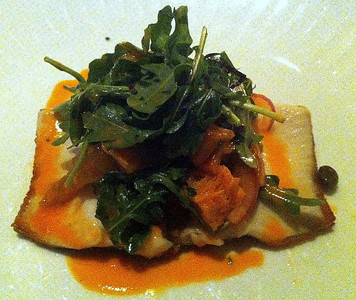
Much has been made of Telepan’s dedication to Greenmarket cooking. Granted, it’s not a new concept but it is one of which he is a master. Each dish shines with its own well-paired, fresh, seasonal ingredients. Take, for instance, my favorite Telepan appetizer — sunny-side egg with fried green tomato, cloth bound cheddar and spring onion. Just typing that description makes me crave this summery starter. Then there are the ricotta and herb ravioli with roasted tomato, gazpacho salad, and house-smoked brook trout with corn blini. All showcase seasonal ingredients. All are delicious.

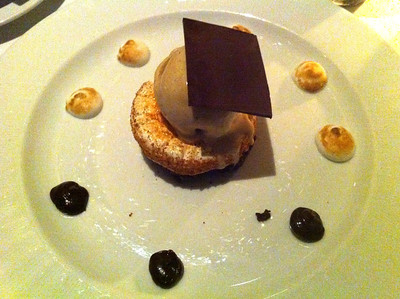
The gastronomical delights don’t end with hors d’oeuvres. An ardent seafood eater, I adore the roasted trout panzanella and wild sockeye salmon with olive oil potato gratin. The chicken with wild mushrooms, spinach and gnocchi likewise gets rave reviews as do the desserts. While I’m a sucker for the Telepan S’more – a crisp brownie topped with a toasted homemade marshmallow, generous scoop of graham cracker ice cream and square of dark chocolate – fruit fans may prefer the blueberry cheesecake sundae or peach granita parfait. If you can’t decide on one, order two or three. They’re quite lovely.

Along with great food and exemplary service, I appreciate the physical presence of the chef in his own restaurant. When I had dinner there on a recent Saturday night, Chef Telepan emerged from the kitchen in his apron and checkered pants and chatted with diners. Not once have I seen Mario Batali or Jose Garces pop out from behind the stove – or even step through the front door – and check in with the patrons of their restaurants. That I could find a high caliber chef cooking on a Saturday night in the dead of summer . . . just amazing.

And that’s how I’d describe my dining experiences at Telepan — just amazing.

Floundering


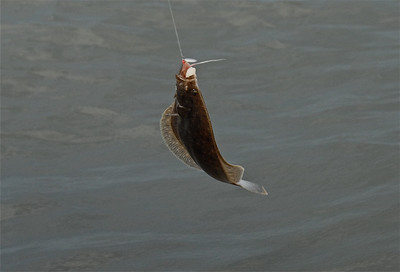
In the name of research I went flounder fishing this week. Prior to this trip, the only fish that I had ever caught was an Allegheny River suckerfish. Since I’m working on a book about seafood, it seemed like the ideal time to hit the water and land a far more delectable fish.

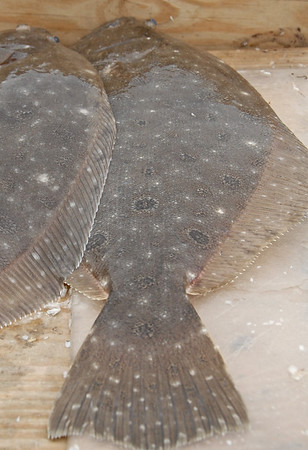
Found in the Atlantic Ocean, flounder is, as you probably can tell from the above photo, a flatfish. It’s related to sole, dab and plaice. Like all flatfish, it swims on its side and has eyes situated on one side of its head.

Camouflaged by its coloring, flounder buries itself in the sand to hide from predators. Unfortunately, this trick doesn’t thwart commercial fishermen who catch great numbers of it with bottom trawls. As a result of this fishing practice, the flounder population has dwindled, leaving novices like me as well as skilled amateurs with meager catches. In 7 1/2 hours I caught three flounder, two of which were undersized and had to be tossed back into the ocean. I couldn’t chalk this up to skill for my seasoned fishing buddies had the same bad luck.

With its mild flavor and delicate flesh, flounder wins over many reluctant seafood eaters. Sold filleted, it responds well to such simple techniques as baking, broiling, poaching, steaming and sautéing. Because it is such a thin fish, you should cook flounder for only a few minutes. To ensure that it doesn’t dry out and fall apart, many chefs advise cooking it for less than 5 minutes.

Flounder partners nicely with a variety of foods including bell peppers, Gruyere and Parmesan cheeses, mushrooms, spinach, tomatoes and zucchini. Its subtle flavor is also complimented by butter, chives, cream, dill, fennel, lemon, mint, parsley, shallots, tarragon and white wine.

Refrigerated, whole flounder will keep for 2 days. Fillets will keep for 1 day. Due to the high level of PCBs found in flounder, the Environmental Defense Fund recommends eating this fish no more than once/month.

BAKED FLOUNDER
This recipe comes courtesy of friend and far more experienced fisherwoman, Lisa Hancock.
Serves 4

4 tablespoons unsalted butter
4 flounder fillets
1 lemon, halved
salt, to taste
ground black pepper, to taste

Place a Pyrex baking dish on the upper oven rack and preheat the oven to 475 degrees Fahrenheit.

Drop the butter into the hot baking dish, being careful not to burn yourself. Swirl the butter around the dish and then add the flounder fillets, spooning melted butter over the tops to coat.

Bake for 2 to 3 minutes. Remove the fish from the oven, squeeze lemon juice over the fillets and return to the oven. Bake until the fillets are opaque in color, about 1 to 2 minutes. Remove and season with salt and ground black pepper. Serve with grilled zucchini, sauteed spinach or a salad featuring tomatoes and bell peppers.

Care for a Mocktail?

As much as I enjoy a good cocktail, I realize that not every occasion calls for a sweet, intoxicating drink. Take, for instance, hot summer days when everyone craves more thirst-quenching beverages. Likewise, the nights when we’re all counting calories — a common activity for food journalists — and we need something kinder to our waistlines. Let’s not forget the times when we’re juggling the demands of work, playing host or serving as designated driver; we want to be refreshed, fit into the party but keep clear heads.

Enter the mocktail. Perfect for quenching thirsts and staying alert yet festive enough for any celebratory event, faux cocktails can replace even the most beloved alcoholic drink.

MANGO-PAPAYA SPRITZER
Serves many

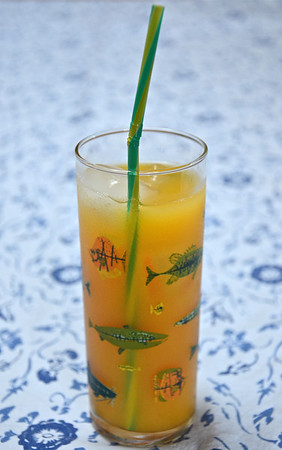
1/2 part mango juice
1/4 part papaya juice
1/8 part orange juice
1/8 part seltzer

Fill a large pitcher halfway with mango juice. Add papaya juice, orange juice and seltzer and stir to combine. Refrigerate until ready to consume. Pour into cocktail glasses or into ice cube-filled tumblers.

BANANA COLADA
Adapted from Ben Reed’s The Art of the Cocktail (Ryland, Peters and Small, 2004)
Serves 2

2 ripe bananas
1 1/4 ounces coconut cream
1 tablespoon whipping/light cream
10 ounces pineapple juice
handful of ice cubes

Put all the ingredients into a blender and blend until smooth. Pour into a hurricane glass and serve.

ICED BLACK ‘N’ WHITE
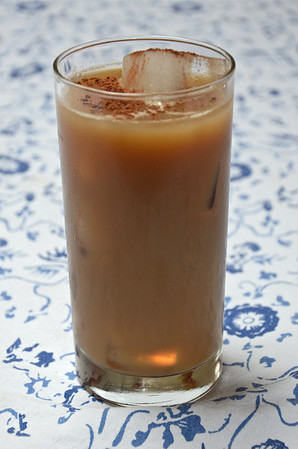
With a nod to the ubiquitous black ‘n’ white cookie of NYC, I’ve dubbed this blend of coffee, ground chocolate, milk and vanilla an iced black ‘n’ white coffee.
Serves 2

ice cubes, enough to fill two glasses
8 ounces (1 cup) strongly brewed coffee, at room temperature
2 ounces (1/4 cup) milk
1 teaspoons granulated sugar
1/4 teaspoon vanilla extract
dash of sweetened ground chocolate

Fill two tall glasses with ice cubes. Mix together the coffee, milk, sugar and vanilla extract and pour into the glasses. Sprinkle sweetened ground chocolate over top and serve.

HORSE’S FALL
from Stuart Walton’s The Ultimate Book of Cocktails (Hermes House, 2003)
Serves 1

1 lemon or a paper cocktail umbrella
3 tablespoons raspberry, orange pekoe or Assam tea, chilled
1 1/2 tablespoons unsweetened apple juice
4 ounces ginger ale or lemonade, chilled

Cut the rind from the lemon in one continuous strip and use it to line and decorate a long cocktail glass or decorate with a paper cocktail umbrella.

Measure the tea and apple juice into a cocktail shaker and shake for 20 seconds. Strain into the prepared glass. Finish with ginger ale or lemonade.

ICED CARDAMOM COFFEE
Adapted from Matthew Tekulsky’s Making Your Own Gourmet Coffee Drinks (Crown Publishers, Inc., 1993)
Serves 2

3 cardamom pods, crushed
8 ounces water
4 tablespoons ground coffee
sugar, to taste
ice cubes, enough to fill two glasses

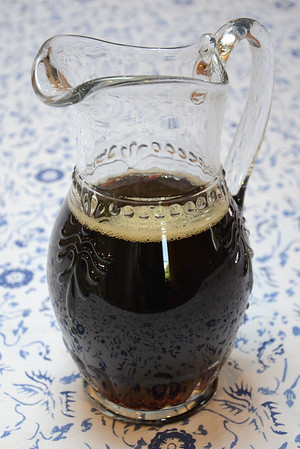
Boil the cardamom pods in 8 ounces water for about 5 minutes. Strain, cool and use this water to brew your coffee. Brew the coffee and cool to room temperature. Add sugar, to taste. Pour the coffee into two, ice cube-filled glasses and enjoy.

Classically Cool Cocktails

As the temperature soars to 100 degrees today, it feels far too hot to discuss, much less think about, cooking. Rather, it seems like the ideal time to talk about cold drinks. Although I’ve been swilling chilled seltzer all week, I’ll skip the fizzy, non-alcoholic beverages and instead hone in on some timeless cocktails.

Thanks to a story in David Schickler’s Kissing in Manhattan that mentions this gem as well as a friend’s unwavering passion for it, I will forever remember the sidecar. Its name supposedly comes from the transportation habits of its creator, a French army officer who always traveled in a motorcycle sidecar. Nom de plume aside, the sidecar consists of a few simple ingredients — brandy, orange-flavored liqueur such as Triple Sec or Cointreau, lemon juice and ice. Shake it all together, strain it into a cocktail glass and you have a cool Parisian classic for summer.

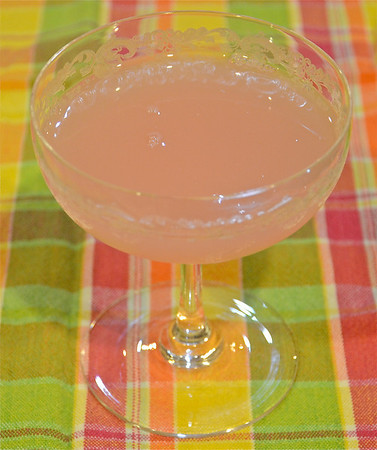
Sometimes it’s the look and not the taste of a drink that dazzles me. That’s the case with the Pink Lady. Invented before World War I to honor a stage play, the Pink Lady derives its color from the ruby red pomegranate syrup known as grenadine. Its sister drink, the White Lady, replaces grenadine with creme de menthe. Hence the whiteness in White Lady.

Whenever the Angophile in me kicks into full swing, I pull out my bottle of Pimm’s No. 1 and throw together a Pimm’s Cup. Long associated with English summers, the gin-based Pimm’s originated in London in the 1820’s. It was then that oyster bar owner James Pimm created his eponymous beverage as a way to distinguish his pub from all the others in town. Requiring only Pimm’s No. 1, a little lemonade or lemon-lime soda and ice, it’s an uncomplicated and refreshing drink.

SIDECAR
Makes 1 drink

ice
1 1/2 ounce brandy
1/2 ounce Triple Sec
freshly squeezed lemon juice
plastic green monkey, optional

Fill a cocktail shaker with ice and then add the brandy and Triple Sec. Top off with freshly squeezed lemon juice. Shake, strain into a chilled, shallow cocktail glass, dangle the optional green monkey from the side of the glass and serve.

PINK LADY
Makes 1 drink

ice
1 1/2 ounces gin
1 1/2 ounces heavy cream
1 teaspoon lemon juice
1 teaspoon grenadine

Place the ingredients in a cocktail shaker, shake together, strain and serve.

PIMM’S CUP
This recipe is taken directly from the back of my bottle of Pimm’s No. 1
Serves 1

ice
1.5 ounces Pimm’s No. 1
ginger ale or lemon-lime soda
lemon slice

Fill a tall glass with ice. Add Pimm’s and then top off with ginger ale or lemon-lime soda. Garnish with a lemon slice.

Happy Bastille Day!

In honor of Bastille Day here’s an excerpt from the article “Viva la France” published in Chester County Town and Country Living. Grab a glass of champagne and enjoy!

Break out the flags and fireworks. Chill that bottle of champagne. Don’t forget to dig out your old, souvenir beret. It’s time to celebrate freedom and equality the French way!

This year marks the 222nd anniversary of the storming of the infamous prison, the Bastille, and freeing of its seven prisoners. On July 14, 1789 the Bastille stood for everything that the people of Paris and France despised – a government of despotic monarchs such as King Louis XVI. Just as the signing of the Declaration of Independence did in America in 1776, the takeover of the Bastille kicked off the start of a revolution in France. It likewise went on to symbolize the birth of the Republic and a new way of governing.

On my first trip to France I mistakenly thought that I would visit this famous, 14th century fortification. No such luck. The Bastille was demolished a few months after the assault. At the Place de la Bastille there now exists a traffic circle. The prison is, as my Lonely Planet guidebook indicated, the “most famous monument in Paris that doesn’t exist.”

Bricks and mortar may have disappeared but the significance of the structure perseveres. The 14th of July, or le quatorze juillet as it is called in France, is the country’s largest national holiday with festivities occurring throughout the land.

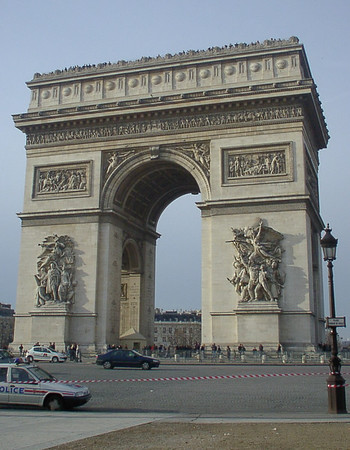
In Paris the celebration kicks off on the evening of July 13. On that night revelers dance in Bastille Square and at various balls throughout the city. On the morning of July 14 the fetes adopt a more patriotic but no less joyful tone. In Paris the President leads a military parade from the Arc de Triomphe down the Champs Elysées to the Place de la Concorde. Jets fly in formation overhead while the throngs look on from the parade route along Paris’s most prestigious avenue. The events continue throughout the day with special luncheons and picnics. At night fireworks fill the sky across the country, capping off 24 hours of festivities.

Americans aren’t exempt from Bastille Day mania. In New York mimes, cancan dancers, picnic tables, food vendors and wine tasting stands line three blocks of 60th Street at the event know as Bastille Day on 60th Street. For me, though, the party doesn’t start until I’ve had my first bite of French food. This means noshing on such quintessential French offerings as buttery, flaky croissants, fruit-filled crepes, Brie and Camembert cheese-stuffed baguettes, chocolate-topped éclairs and powdered sugar-dusted cream puffs. Trés magnifique!

A hundred miles away in Philadelphia Francophiles come out in droves for Fairmount French Fling Weekend. There restaurants pull out all the stops and showcase such specialties as ratatouille, escargot, croque monsieur and coq au vin. Bottles of champagne, Kronenbourg 1664 beer, and créme de cassis, a black currant liqueur from Burgundy, flow freely through the weekend.

The highpoint of Philadelphia’s bash is the reenactment of the storming of the Bastille. Portrayed by members of the Old Fort Mifflin Historical Society, costumed revolutionaries rush the Eastern State Penitentiary. There Marie Antoinette shouts “Let them eat Tastykake!” while hurling 2,000 Butterscotch Krimpets from the prison tower.

And speaking of butterscotch . . .

BUTTERSCOTCH OATMEAL COOKIES
Makes 2 dozen

1/4 pound unsalted butter, at room temperature
1/2 cup brown sugar, firmly packed
1/2 cup granulated sugar
1 large egg
1/2 teaspoon vanilla
1 1/8 cup flour
1/2 teaspoon salt
1/2 teaspoon baking soda
1/2 cup rolled oats
1 cup butterscotch chips

Preheat the oven to 375 degrees Fahrenheit. Grease two cookie sheets.

In a large bowl and using an electric mixer, beat the butter until light and fluffy, about 5 minutes. Slowly add the two sugars, beating until the mixture is creamy and well-combined. Add the egg and vanilla and beat again.

Mix the flour, salt and baking soda together and then add it to the butter-sugar mixture, beating until well-combined. Add the rolled oats and butterscotch chips and, using a spatula or wooden spoon, stir until blended. Spoon out 1 teaspoon of the batter onto a cookie sheet. Leaving one inch between the cookies, continue to drop spoonfuls of batter onto the sheets until all the batter is gone. Bake until the cookies are slightly brown around the edges, about 8 to 10 minutes.