All posts filed under: Food Musings

Red Eye Chocolate Cake

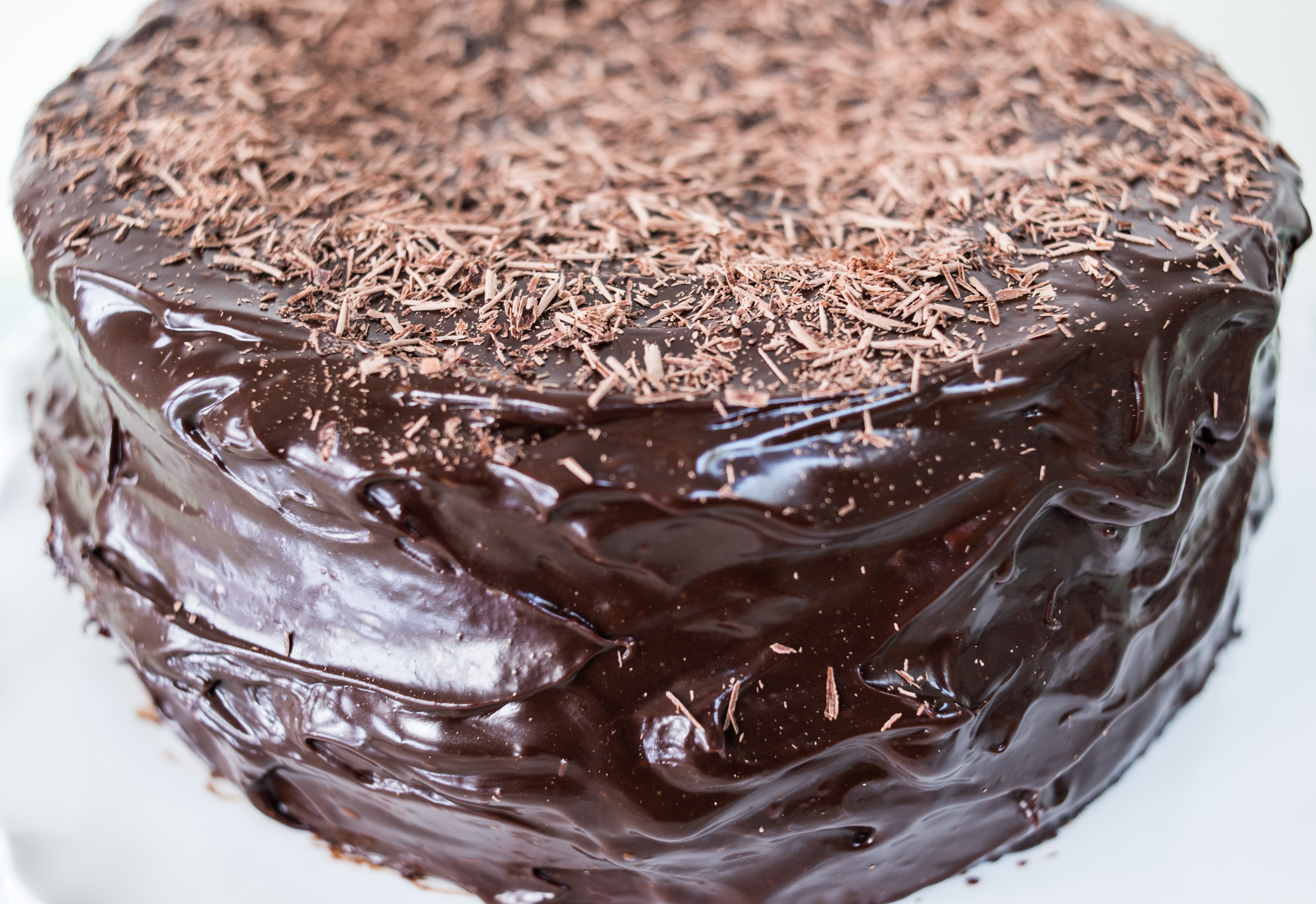
Coffee and chocolate. Two things that I love brought together in one cake, the red eye chocolate cake. For those unaccustomed to hearing “red eye” associated with anything other than an overnight flight, this red eye refers to regular coffee with a shot of espresso added to it. As you might expect, espresso boosts the coffee’s flavor. It also increases the amount of caffeine in the drink. It’s a perfect pick-me-up after a late night flight or simply a late night. In keeping with its namesake’s bold reputation, Red Eye Chocolate Cake boasts of four layers of cocoa- and coffee-infused cake slathered with thick, rich chocolate ganache. This is a dessert that is both decadent and delicious. I can’t think of a more fitting way to celebrate a holiday known for an arrow-slinging god, a sainted martyr, love and chocolate than with a slice of this lavish sweet. Because people often balk at the thought of icing a cake, particularly a layer cake, I’ve made a short, instructional video on how to frost a cake. …
Here’s to Apple Frankie

When I started Kitchen Kat in 2007, I wasn’t thinking about social media followers, book contracts or sundry other motivators that drive bloggers today. My intention was, and remains, to share favorite food stories, photographs and recipes. Frequently the posts have been inspired by travel. Equally often they have originated from conversations and experiences with my old neighbor and friend Frank P. Wilmer Jr., also known as Apple Frankie. As is the case with many of our encounters, my earliest memory of Frank involves food. In my early 20s, newly married and new to Southeastern Pennsylvania, I was surprised when a cherubic-faced, stout man with a shock of white hair on his head and a plastic grocery bag in his hand showed up on our doorstep one spring evening. Introducing himself as our next-door neighbor, Frank handed over the bag and prompted me to open it. Peeking inside, I saw a jumble of long, beige, honeycombed mushrooms. Wild morels, Frank explained, plucked from the woods behind his farmhouse. A product of the suburbs, I had …

sweet and nutty couscous

Honeyed Fruit and Whole Wheat Couscous

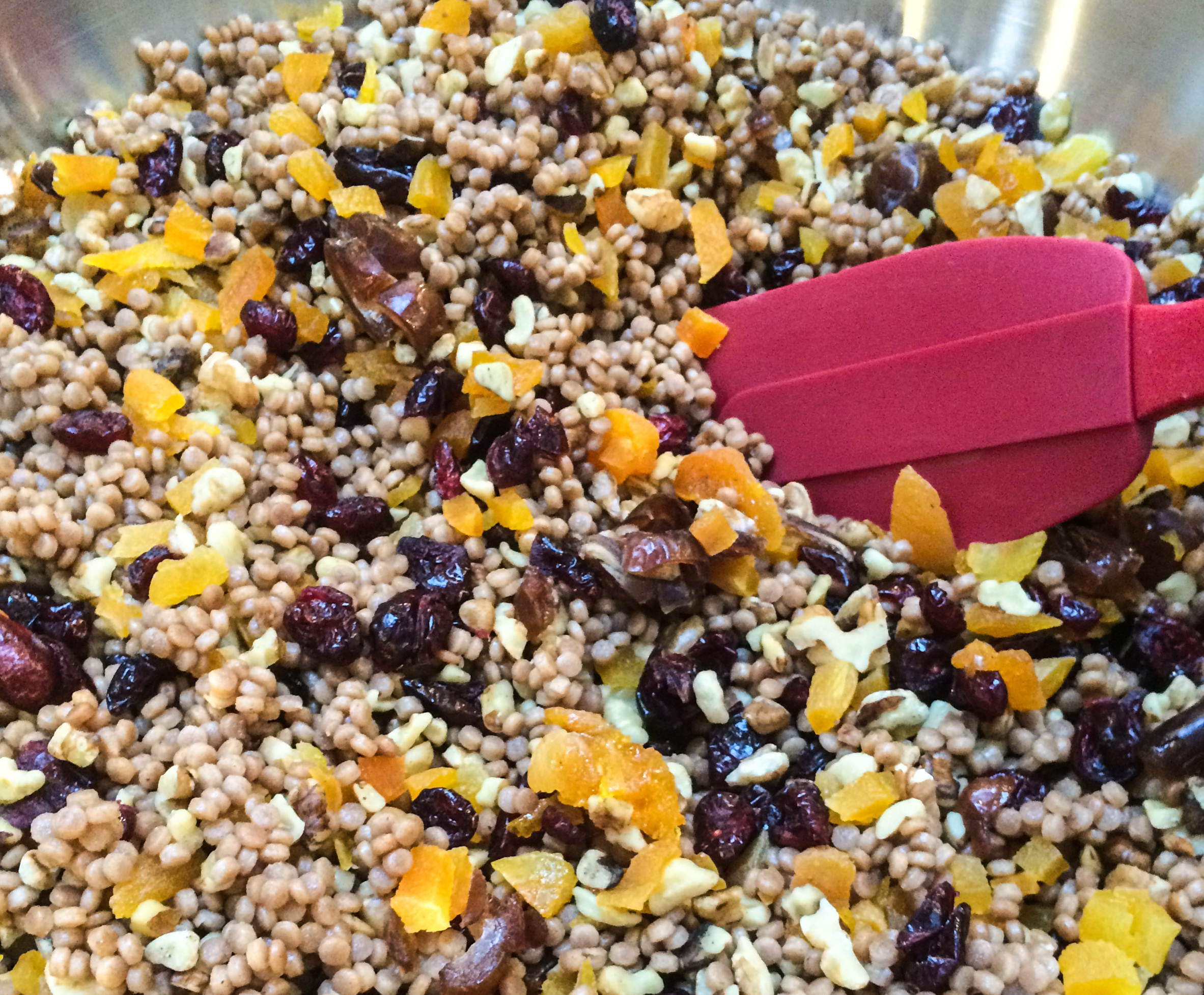
Over the years I’ve prattled on about my fascination with couscous, my unwise decision to drag a couscousiere across North Africa and my ongoing dabbling with these granules of semolina. Light yet hearty, savory yet sweet and toothsome whether hot, room temperature or chilled, couscous’s almost incongruous nature is what keeps me hooked. I’d like to see spaghetti pair as smoothly with such disparate ingredients as cinnamon, cumin, cilantro, dill, cucumbers, dried cherries, balsamic vinegar or almond milk. Yeah, it’s a versatile food. Before the holidays I started tinkering with an old favorite, Sweet & Nutty Couscous, transforming it into the following dish. To some, the name “Honeyed Fruit and Whole Wheat Couscous” might sound redundant. After all, couscous comes from durum wheat so all couscous could be considered wheat couscous. However, this recipe works best when you use the mildly nutty whole wheat, pearl couscous. If you have a couscousiere collecting dust on your kitchen shelf, by all means wipe it off and put it to work. Otherwise, instant or quick cooking whole wheat …

The Dessert Table: Cranberry Torte

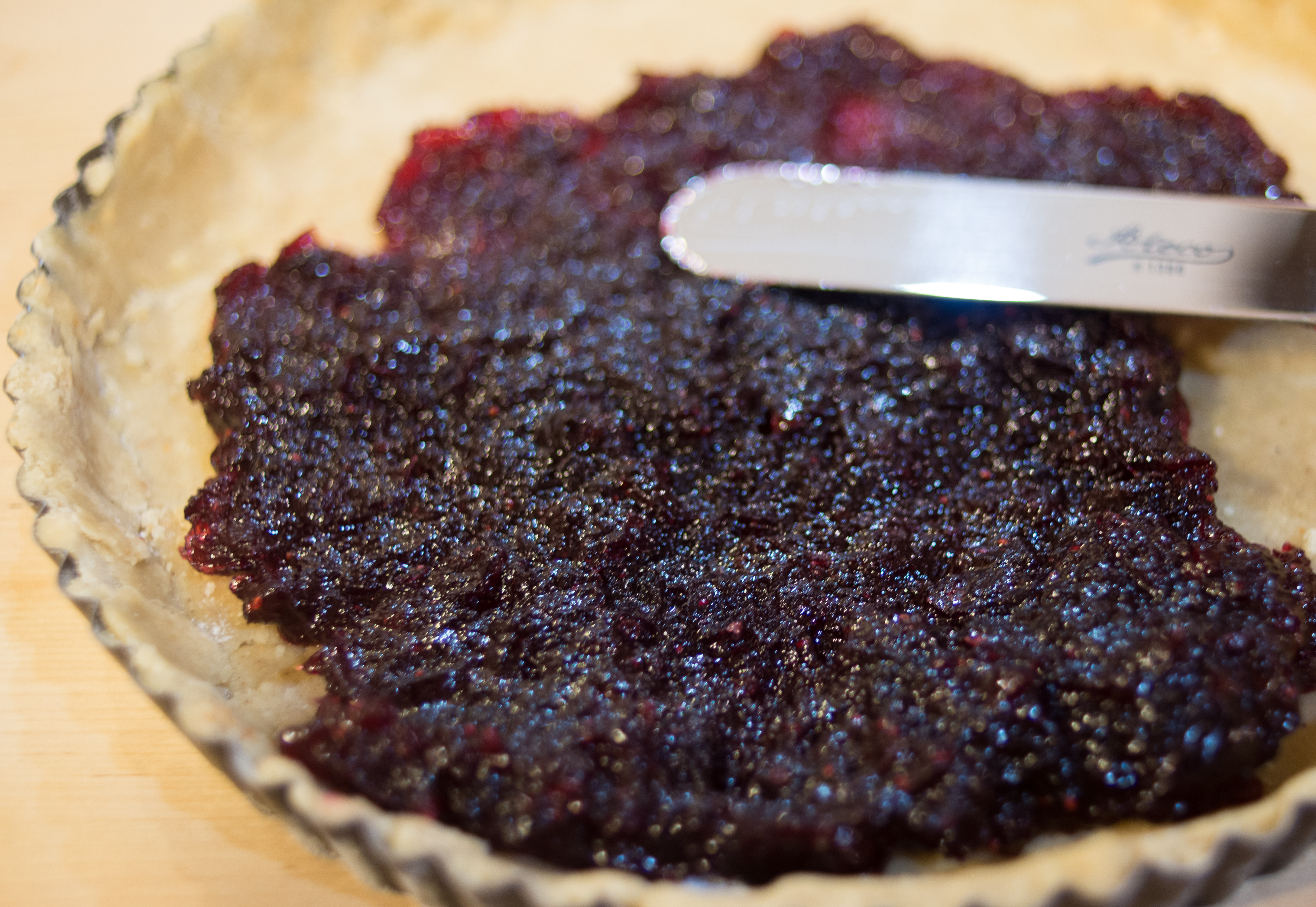
Growing up outside of Pittsburgh, I assumed that all wedding receptions featured those decadent displays known as cookie tables. Weighted down by platters of cream-filled lady locks, lemon bars, nut horns, Mexican wedding cookies, spritz cookies and anise-laced pizzelles, these linen-covered tables attracted guests in droves. Introduced as a low-cost alternative to an expensive wedding cake, the cookie table eventually became a companion to cake. Custom dictated that family members make the cookies but, if you didn’t have gifted bakers at home, you could do as my mother did and enlist the help of a local bakery and family friends. At parties it was the dessert table around which people clustered. Here the cookies were less ostentatious — think chocolate chip, oatmeal raisin, peanut butter blossoms, pecan sandies and butterscotch — but just as plentiful. So too were the brownies, fruit and custard pies, marshmallow-studded ambrosia and heavenly angel food cakes. What didn’t make it to the dessert table? For obvious reasons I never saw ice cream, make-your-own-sundae bars or chocolate fondue pots. Generally, anything …

Fruits of the Forest Tartlets

It’s time, once again, to talk about elderberries. Back in season and growing with a vengeance on an old friend’s farm, they present me with the annual challenge of what to do with quarts and quarts of bold, earthy fruit. Last year I featured these tiny, bluish-black berries in a colorful sweet that I’d dubbed “Elderberries and Cream.” Consisting of stewed elderberries layered between white bands of homemade, vanilla-laced whipped cream, this uncomplicated dish was perfect for elderberry fans. Unfortunately, those preferring a milder last course were better off just skipping dessert for Elderberries and Cream was a heady, strong-flavored confection. This year I’ve opted for a treat that will satisfy a variety of tastes. Rather than only showcase elderberries, I’ve gone for all of summer’s fabulous foraged fruit—or at least all that I can pick at my friends’ farm—and made a dessert with the “fruits of the forest.” Years ago a family friend introduced me to fruits of the forest pie at the Tavern in New Wilmington, Pa. The memory of that deliciously complex …

Danish raspberry slice

Danish Raspberry Slice or Hindbærsnitte

Hindbærsnitte is the latest addition to my ever-growing list of international dessert crushes. Some people liken it to homemade Pop Tarts. Others equate it to thumbprint cookies. Neither comparison comes close to the sweet splendor of this lovely Danish cookie. Inspired by Viennese confections, hindbærsnitte was born in Copenhagen in the late 1800s. The legend goes that in 1850 Danish bakers went on a long-term strike over unfair wages. To keep the country in breads and sweets, bakers from Austria were hired to fill the vacancies. Their time in Denmark and the culinary traditions that they shared would influence the creation of many Danish baked goods, including hindbærsnitte. With its flour- and almond-based dough and thick, fruity filling this cookie does remind me of such Austrian specialties as Linzer tortes and augens. The literal translation of hindbærsnitte is raspberry slice. Its name more or less explains the treat — baked cookie dough blanketed by raspberry preserves, topped with another sheet of baked dough and then sliced and iced or iced and sliced. The order of …

Pickle That Herring!

Over the years of cooking, eating and writing about seafood I’ve developed a fascination with herring. Rich in flavor and high in omega-3 fatty acids, this ancient creature has sustained mankind for thousands of years. Small but mighty, it has been the foundation of such major cities as Amsterdam and also the root of such battles as the Anglo-Dutch Wars. Yet, in America most people don’t give this silvery fish a second glance. However, if you’re in Denmark, where I recently spent the past few weeks, you’ll get to know herring quite well.   It’s been said that the Danes have more pickling cures for herring than they do days of the year. I can believe this for, during three trips that I’ve made to Denmark, I’ve sampled at least two dozen types of tart and velvety pickled herring. Curried herring. Herring with dill and capers. Herring in cream sauce. Herring marinated in wine. Herring marinated in sherry. The list goes on and on. With so much pickled herring being commercially produced, people tend to …

Spicy Shrimp Scampi

Shrimp. It’s America’s favorite shellfish and, by some accounts, the country’s best selling seafood. Most Americans can rattle off at least one beloved shrimp recipe. Along with shrimp cocktail, the dish most often mentioned to me is shrimp scampi. By definition scampi is not a culinary preparation but instead a small lobster—about 10 inches in length—found from Iceland to Morocco. In French it’s known as langoustine. The Italians refer to it as scampi. Others call it a Norway lobster or Dublin prawn. Yet, in North America, scampi has come to mean sautéing medium- to large-sized shrimp alongside garlic, butter and white wine and then serving the resulting dish over pasta. Go figure! I’ve mentioned previously how you should purchase frozen shrimp and defrost the shellfish shortly before cooking. That way, you’re not buying already-defrosted-and-languishing-in-a-supermarket-seafood-case shrimp that you’re forced to cook right away. To defrost the shrimp, place the frozen bag in your refrigerator and allow the contents to thaw overnight. If you’re pressed for time, you can place the shrimp in a bowl filled with …

Toasted Almond Aquavit

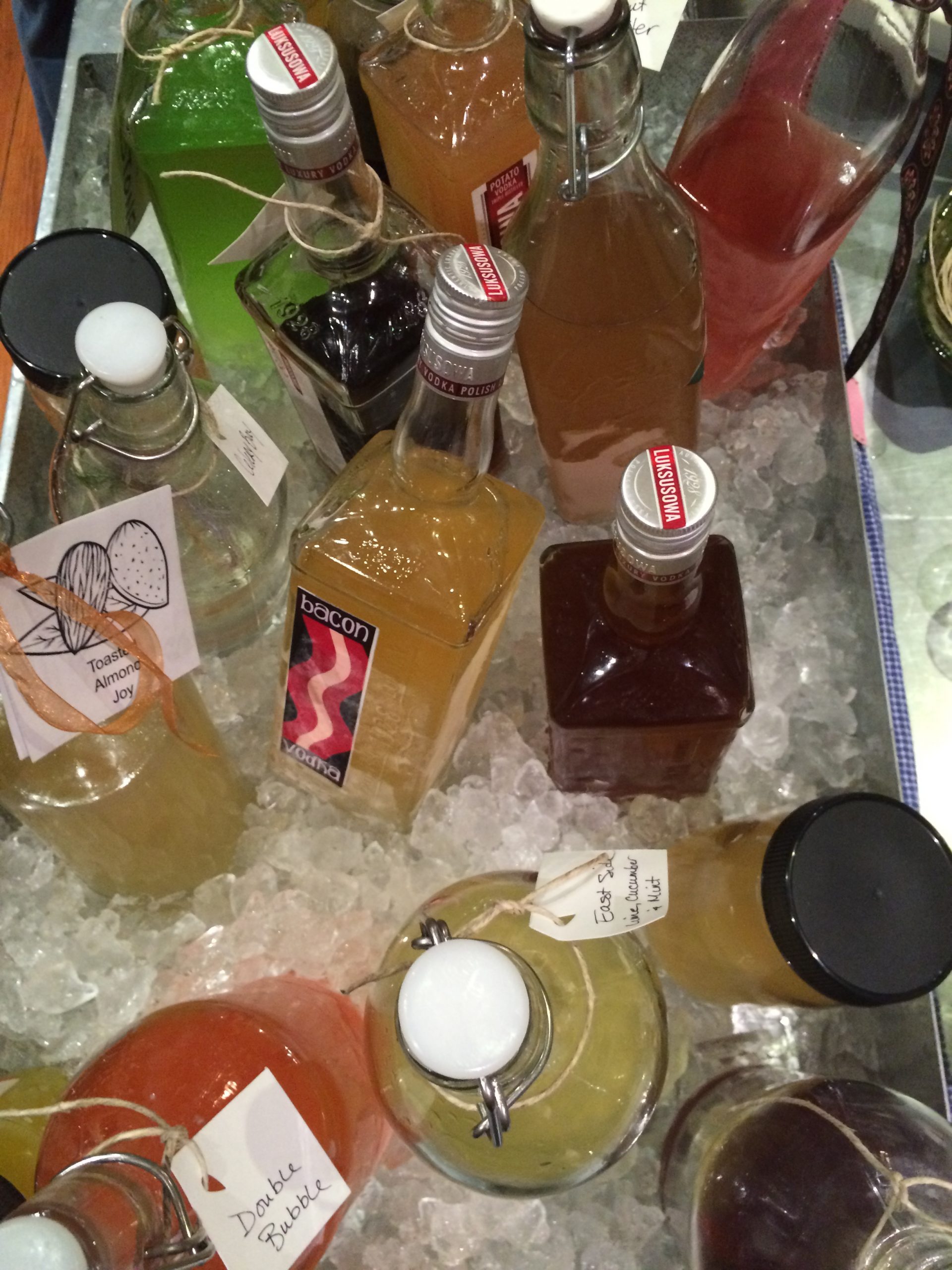
It has become a beloved, albeit unusual, Easter tradition. For the past few years on Easter eve my husband and I have gathered together with friends to nosh on such Scandinavian specialities as gravlax, pickled herring, rye crisps and pickled beets and sample each other’s take on infused vodka or, as we like to call our creations, homemade aquavit. In the past I’ve made sweet concoctions such as raspberry and apple pie aquavits. This time around I decided to take a savory approach and steep bouquets garnis of chopped sun-dried tomatoes, marjoram and crushed red peppercorns. I assumed that the resulting liquor would go well in Bloody Marys or on its own as a Mediterranean-inspired libation. Unfortunately, my pairing resulted in a decent drain cleaner but an atrocious smelling and tasting drink. Luckily, we had a Plan B and Plan C in place. A few weekends before the fete my husband drove to our old neighbors Frank and Jane’s farm and dug up some roots from a sassafras tree. Ever hear of sassafras? It’s the …

unbaked loaf of sugar bread

Frisian Sugar Bread for Easter & Beyond!

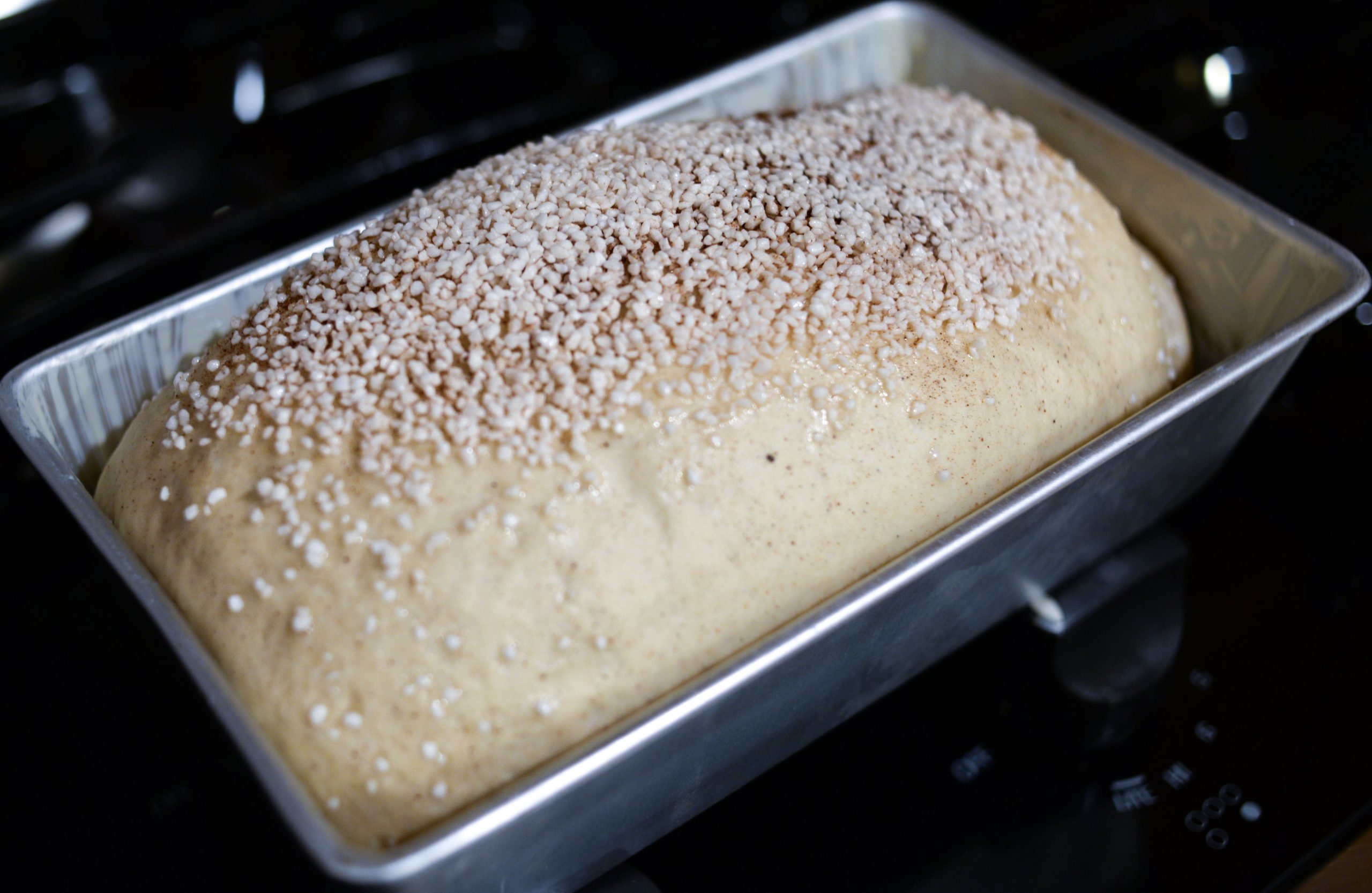
I may have visited the Netherlands twice, roamed around the Dutch-influenced areas of Belgium as many times and even have Dutch friends but, until recently, I’d never tried Dutch Frisian sugar bread. A specialty of the northern Dutch province of Friesland, suikerbrood or sugarbread features spices and a generous amount of the large, coarse, stark white sugar known as pearl sugar. As you might expect from a food with “sugar” in its name, this is a sweet bread. Yet, I wouldn’t call it overly saccharine. Eaten at breakfast in the Netherlands, it has a warm, honeyed flavor on par with Danish pastries and cinnamon rolls. When I compare it to such cloying breakfast staples as syrup-soaked pancakes, waffles and French toast, I find this bread to be mild and pleasantly sweet. Although not part of the pantheon of European Easter breads, Frisian sugar bread would be a fitting addition to any Easter brunch. For those abstaining from sweets or baked goods during Lent, it will be a delicious way to break these fasts. For everyone …