Author: Kathy Hunt

Sizzling Shrimp Spring Rolls

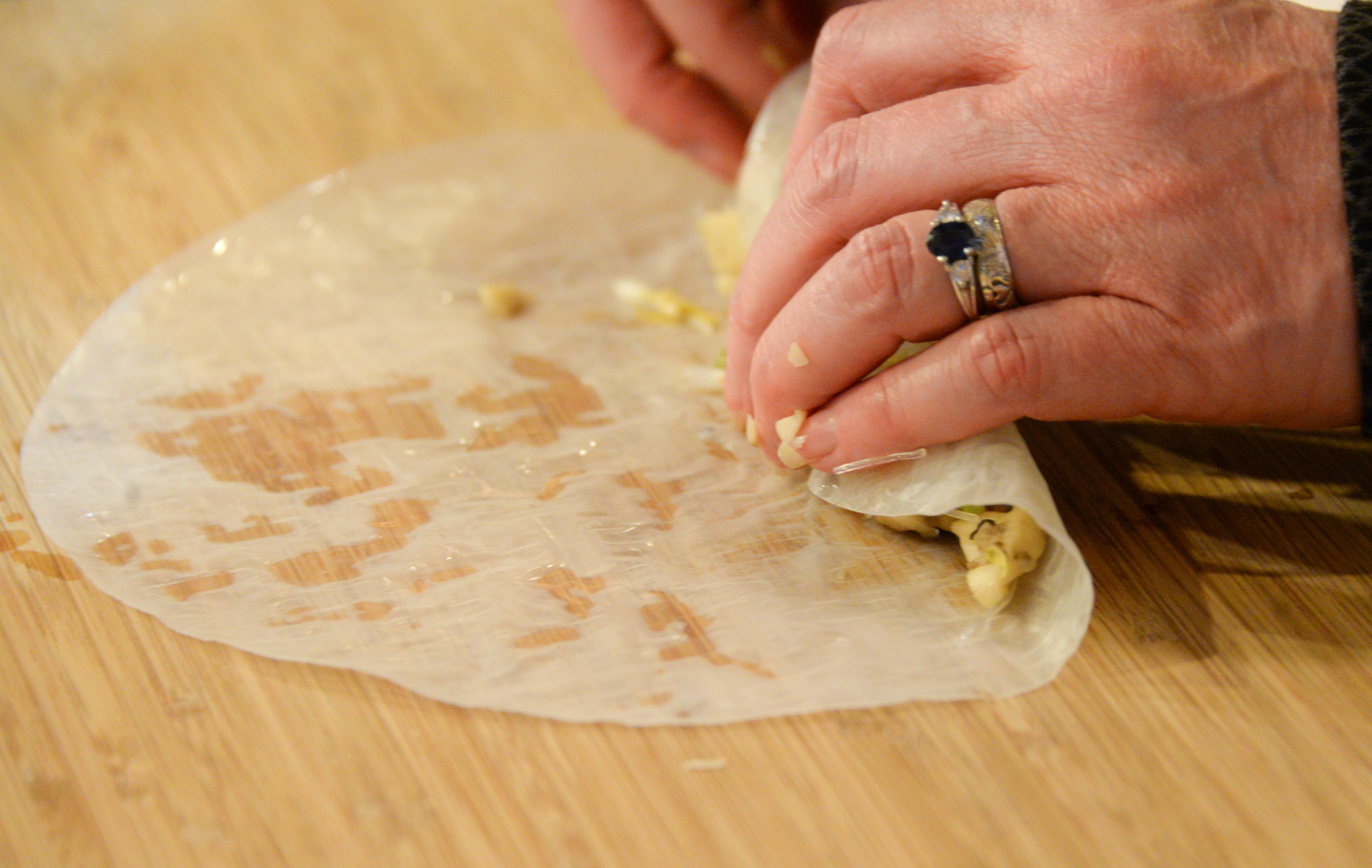
Thanks to my step-father-in-law, travel and Asian cooking classes, I’ve unintentionally become a master at making fried shrimp spring rolls or cha giò tôm. Accident or not, I’m thankful for this skill for spring rolls have turned out to be a fun group activity, popular cooking lesson and intriguing hot appetizer at parties. Just imagine your — or my — friends’ faces when offered a warm, crunchy, golden hors d’oeuvre and hearing the words, “Want to try some crunchy shrimp spring rolls? Nope, they’re not from the Chinese restaurant down the street. I made them myself!” Talk about impressing guests! Although I came to shrimp spring rolls through Vietnamese cuisine, these snacks have their origins in China. During the Tang Dynasty, between the 7th and 10th century, people began serving spring rolls to celebrate the Chinese New Year and the planting of the new season’s crops. The early version of this finger food featured sliced spring vegetables rolled up in a delicate pastry or pancake. Thus how it got the name “spring roll.” Once sealed, …
Czech Strawberry Dumplings

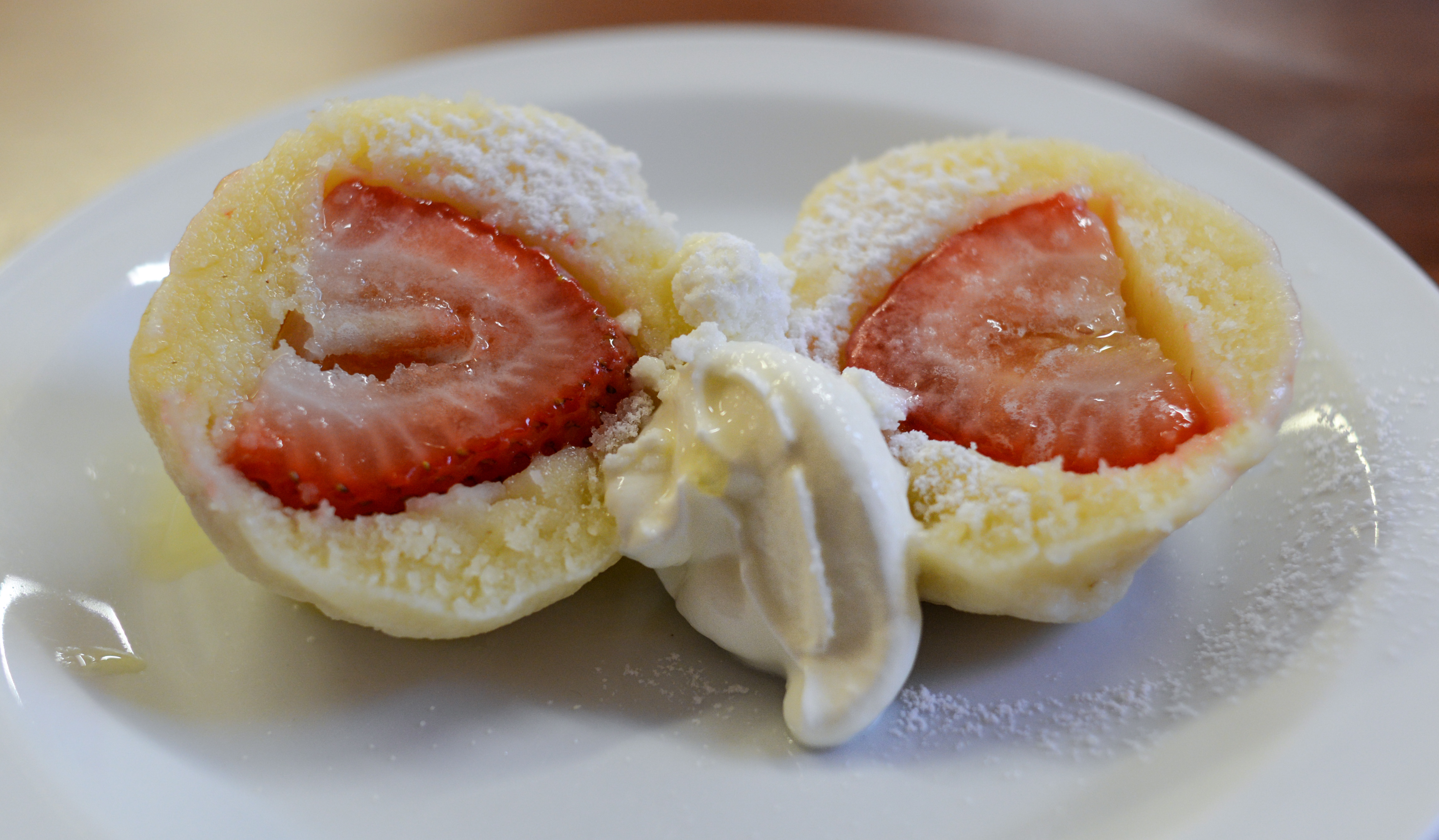
With strawberry season right around the corner, it seems like a good time to talk about Czech strawberry dumplings. Until two years ago, whenever I heard the phrase “dessert dumpling,” I imagined a cinnamon- and sugar-dusted apple bundled into a buttery pastry and baked until golden brown. The thought of a whole strawberry boiled inside a casing of cheese-laced dough never occurred to me. Then I made several trips to the Czech Republic and learned how to make jahoda knedlíky or strawberry dumplings. After that I forgot all about those apple pie-like treats. It’s been said that no traditional Czech dinner is complete without the inclusion of a dumpling or two. A staple since the Middle Ages, the plump, round dumpling can be either sweet or savory. The latter tends to use potatoes and potato flour as its base while the former features flour and/or breadcrumbs and a filling of whole, locally grown fruit such as strawberries, plums or cherries. Shaped into balls, both types of dumpling are boiled, drained, sliced in half with a …

Pad Thai in Thailand

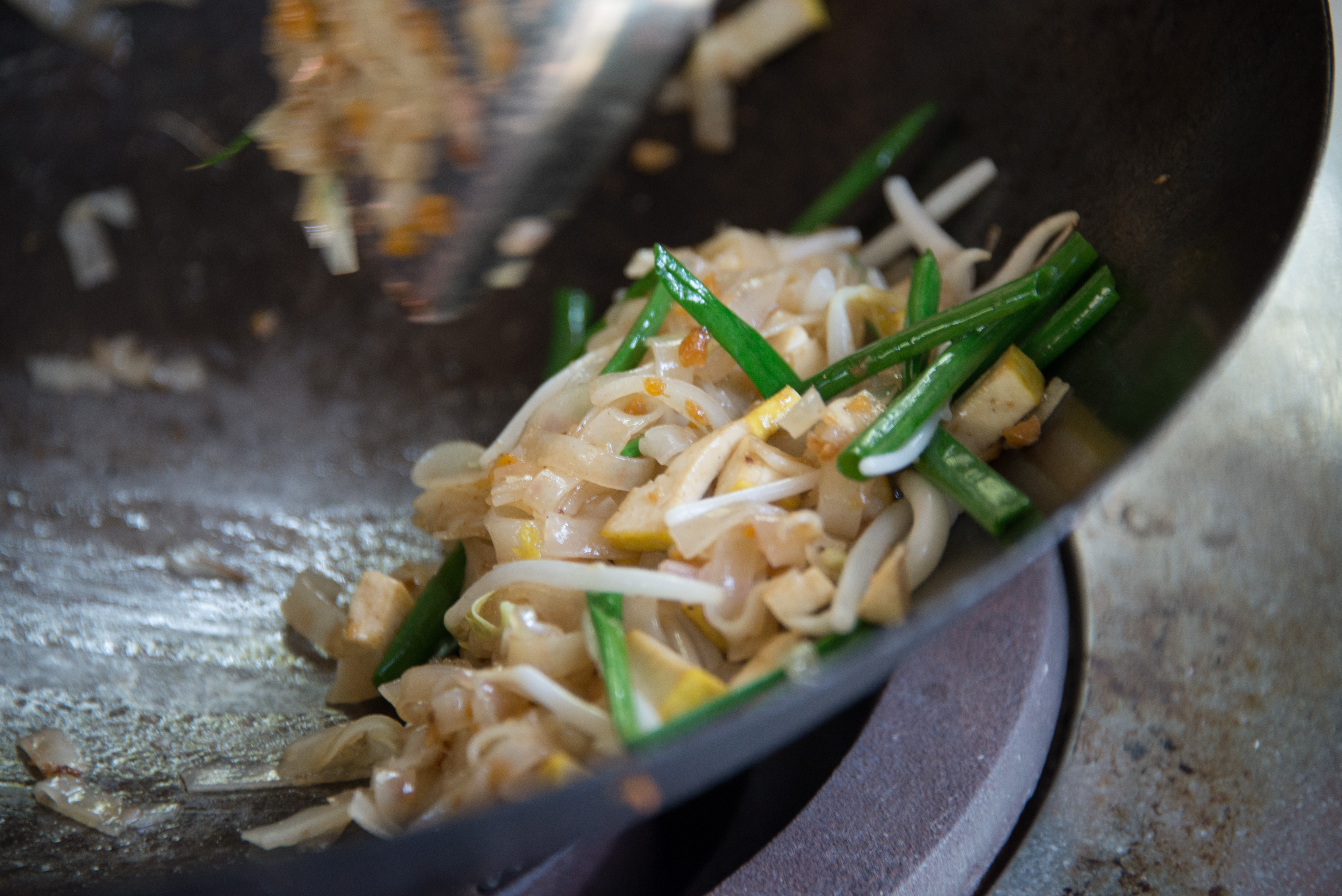
Pad Thai was my gateway into Thai cuisine. In my early 20s and unsure of what to order at a new, neighborhood, Southeast Asian restaurant, I opted for a simple noodle dish that promised complex flavors, interesting textures and a touch of the exotic. With hints of piquant tamarind, crunchy peanuts and salty fish sauce pad Thai delivered on its word. After that first satisfying encounter it became my go-to meal when dining or ordering out. After 15 years of sampling this specialty on American soil, I wanted it to be the first thing that I ate in Thailand. I’d tried countless Western interpretations of this stir fry. It was time to experience the real deal. This proved surprisingly easy for you can find noodle carts, shops and restaurants serving phàt Thai on almost every street in Bangkok. The same holds true in Northern Thailand. Popular with locals as well as food-obsessed tourists, this dish has a lot going for it. For starters, it’s inexpensive. Depending on where you buy it in Thailand, you can …

Sweet Steamed Banana Cakes

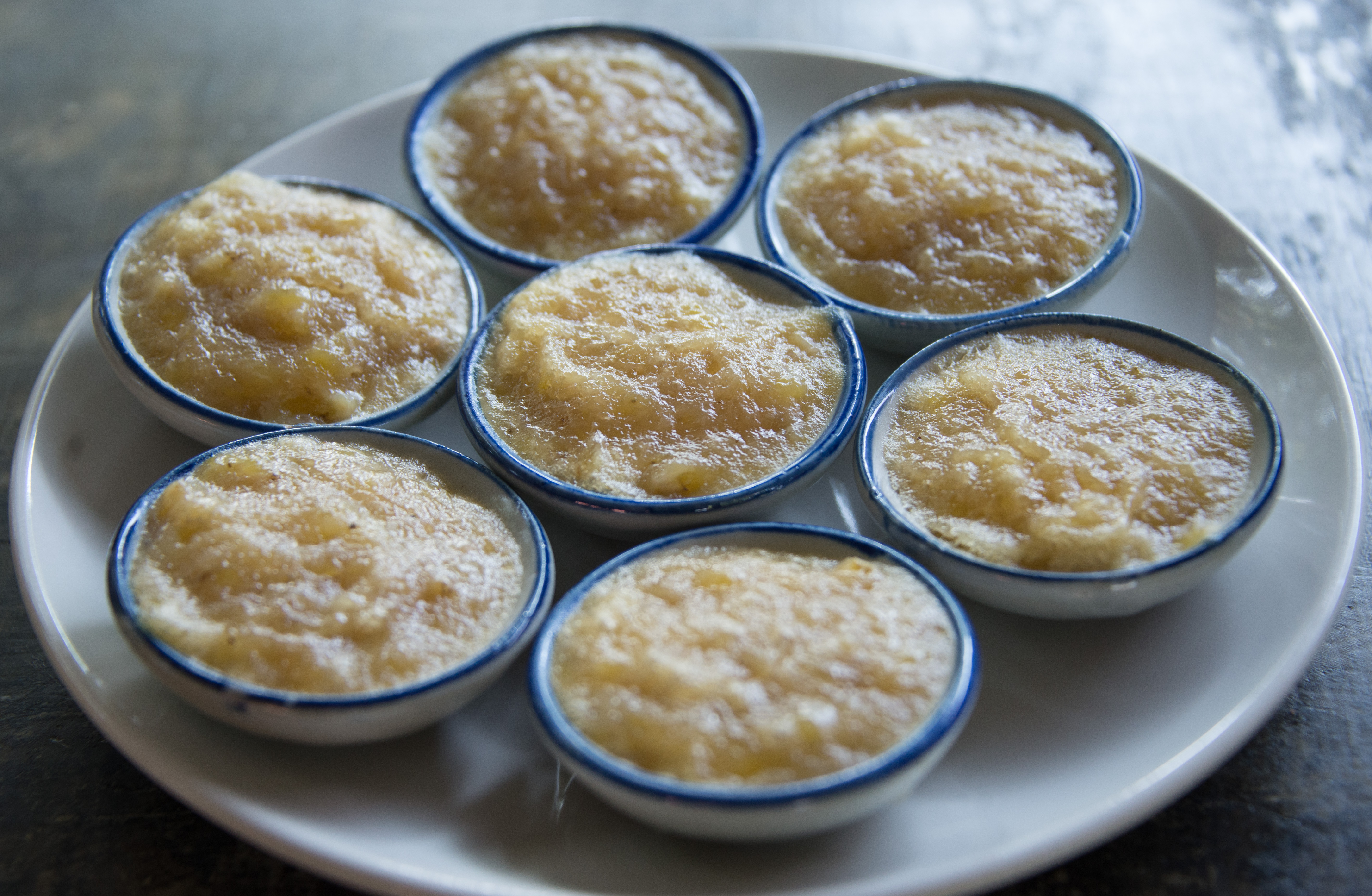
Still enamored with the foods that I made and ate in Southeast Asia, I want to share another recipe from Thailand. This time it is a dessert featuring my favorite fruit, bananas. When I say “dessert,” you might imagine a thick slice of Red Eye Chocolate Cake, a bowl of velvety Pumpkin Ginger Trifle or plate of the elegant, jam-filled cookie hindbærsnitte. In the U.S. we tend to like our desserts bursting with flavor, textures, sugar and fat. However, in terms of dessert, Asia resembles the Mediterranean; both regions end their meals on a lighter note with fruit-based sweets. In Thailand you may cap off the night with pieces of fresh mango or jack fruit, poached custard apples or, as is the case in this post, steamed banana cakes. This dish is a straightforward as its name indicates. To make sweet steamed banana cakes, you mash together bananas, flour, sugar and coconut milk until a smooth batter forms. You then spoon the batter into small bowls, place the bowls in a steamer basket, cover and …

Eating Like the Locals with the Vietnamese Fish Dish Cha Ca

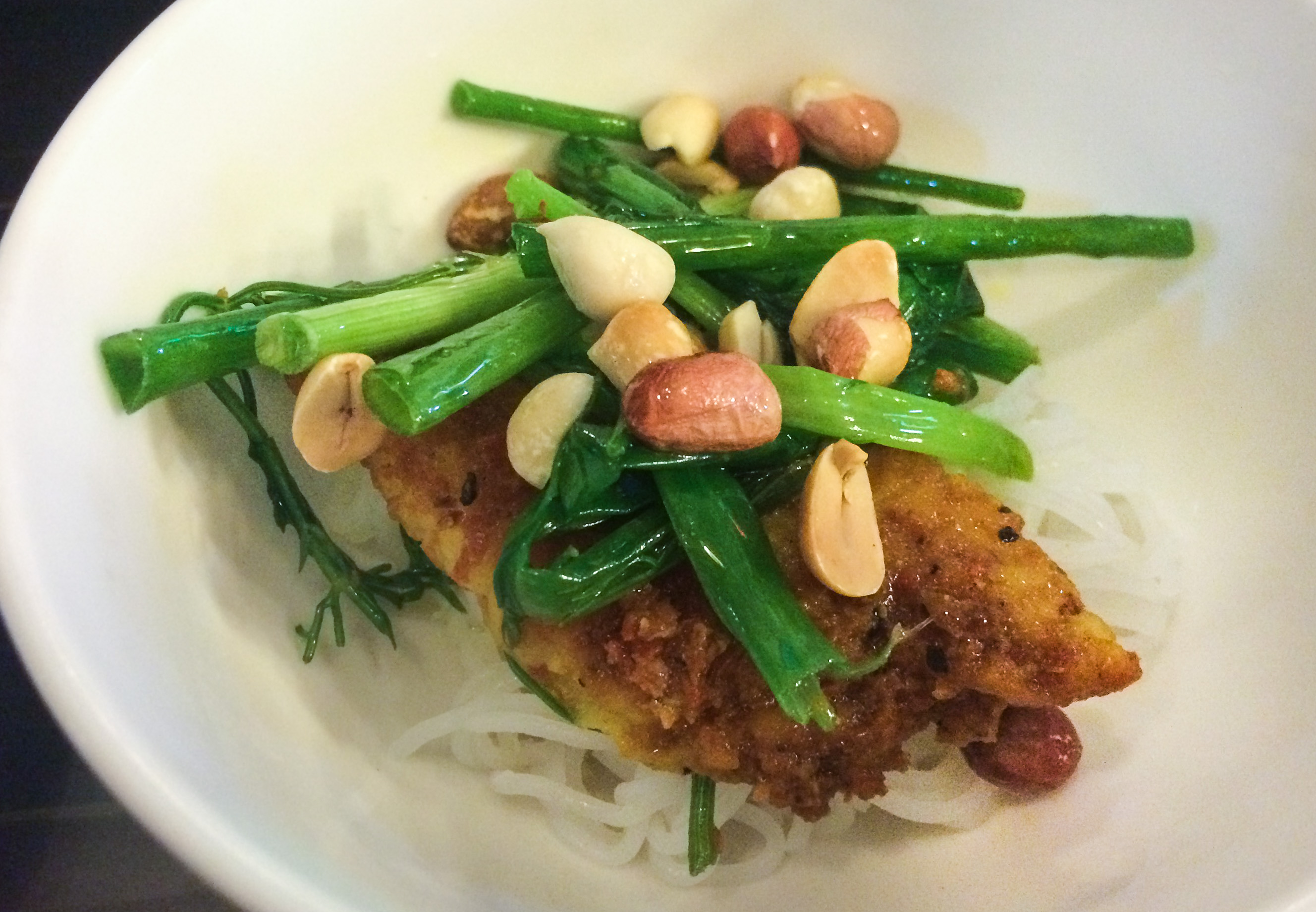
Thanks to my husband’s stepfather Luong, who was born and raised in Saigon (now Ho Chi Minh City), I know a bit more than the average red-haired, American food writer about Vietnamese home cooking. For starters, in the country you might make your meals on a stove fueled by coconut husks while in the city you probably cook over a gas flame. Your meals may be as simple as noodles, rice or steamed fish or as complicated as spring rolls, hot and sour soups or meat-filled crepes. Whatever you make, it invariably is fresh, seasonal and local. While I understand Vietnamese home cooking, until last month, I didn’t have a good sense of what constituted a traditional restaurant meal. By this I mean something generally eaten outside the home or that bears the signature of one chef or restaurant. That all changed when I traveled to North Vietnam and ate cha ca. At the beginning of the 20th century, in Hanoi’s old quarter, a shop owned by the Doan family began selling a fish dish …

Shrimp Khao Soi in Chiang Mai, Thailand

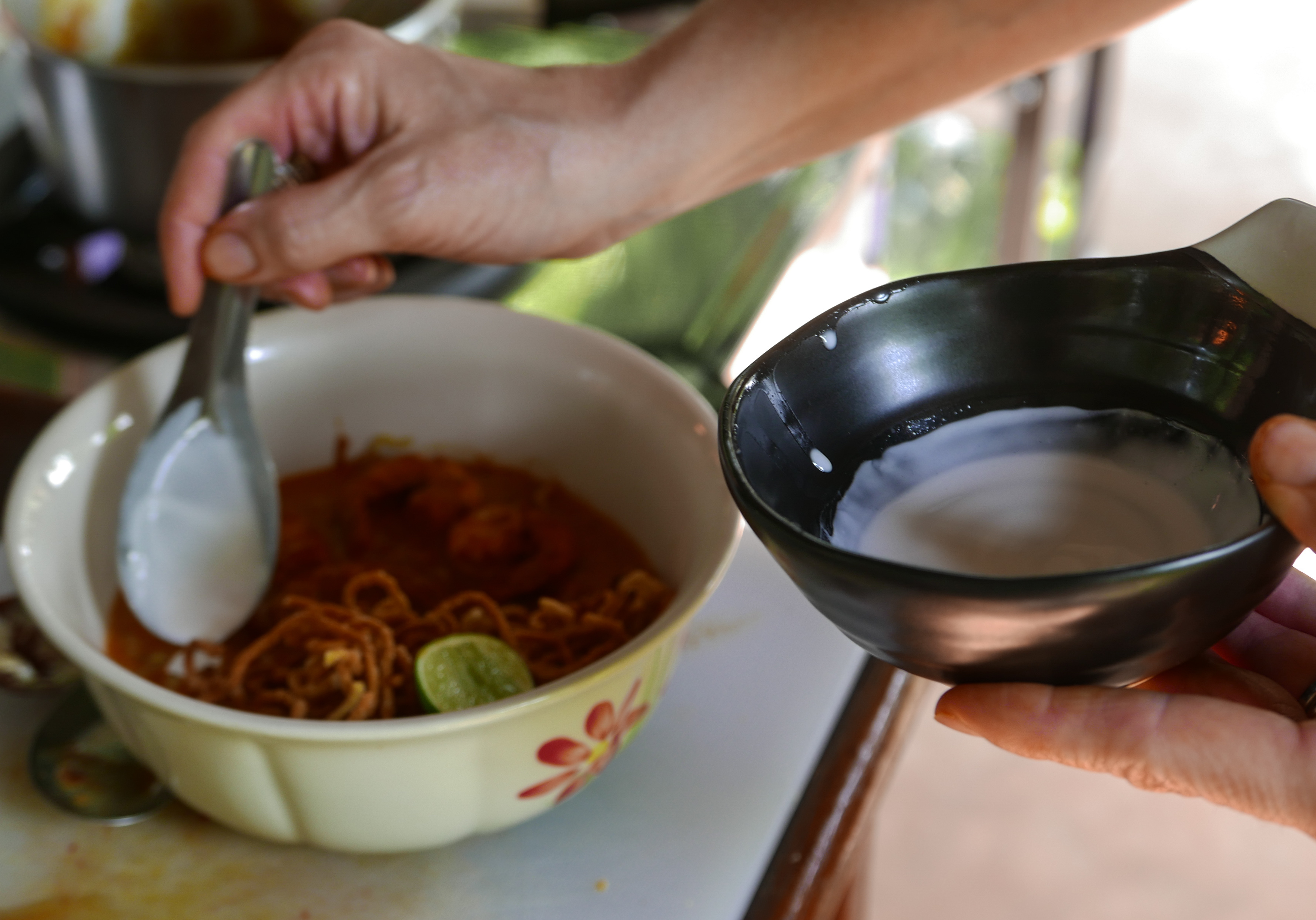
Along with talking to locals, visiting historical sites and browsing museums and shops, eating—and cooking—the regional cuisine always helps me to understand a new place. When I don’t have friends to show me the culinary ropes, I turn to hands-on cooking classes. That’s how I ended up at the Green Mango Thai Cookery School in Chiang Mai,Thailand. Situated on a lush, bamboo- and coconut-tree lined property about 20 minutes from the center of Chiang Mai, Green Mango provided a lovely setting, well-stocked cook stations and delicious, classic recipes. Better still, it gave me a chance to learn from a native chef, shop for fresh ingredients and cook like Northern Thais do. Among the traditional dishes made at Green Mango was khao soi (also spelled “kôw soy”). A specialty of Chiang Mai, this spicy curry features red curry paste, wheat- and egg-noodles and beef or chicken. Since I was the lone pescetarian in attendance, I was allowed to make an untraditional version of this culinary icon, shrimp khao soi. To begin, I pummeled together such Thai …

Red Eye Chocolate Cake

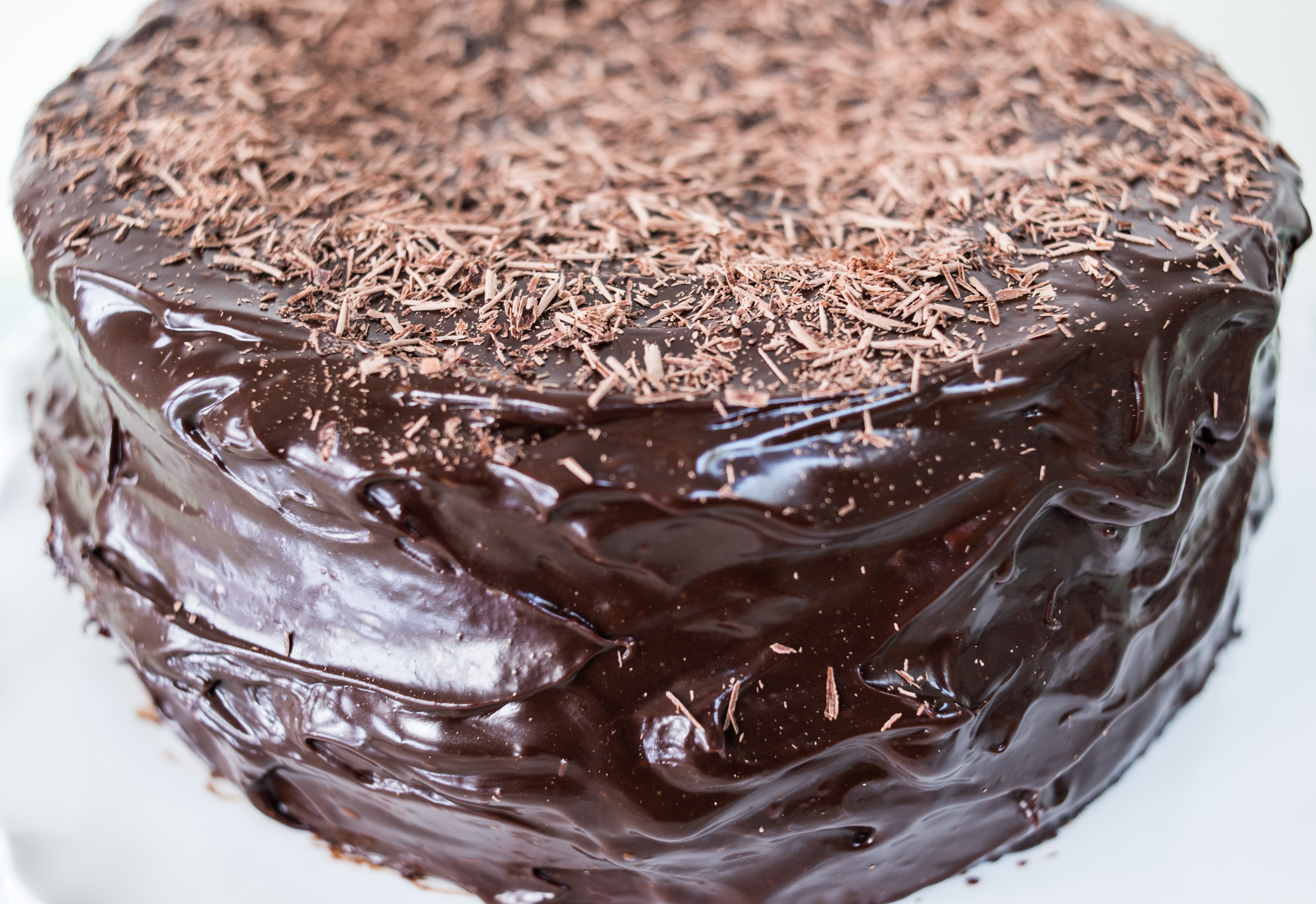
Coffee and chocolate. Two things that I love brought together in one cake, the red eye chocolate cake. For those unaccustomed to hearing “red eye” associated with anything other than an overnight flight, this red eye refers to regular coffee with a shot of espresso added to it. As you might expect, espresso boosts the coffee’s flavor. It also increases the amount of caffeine in the drink. It’s a perfect pick-me-up after a late night flight or simply a late night. In keeping with its namesake’s bold reputation, Red Eye Chocolate Cake boasts of four layers of cocoa- and coffee-infused cake slathered with thick, rich chocolate ganache. This is a dessert that is both decadent and delicious. I can’t think of a more fitting way to celebrate a holiday known for an arrow-slinging god, a sainted martyr, love and chocolate than with a slice of this lavish sweet. Because people often balk at the thought of icing a cake, particularly a layer cake, I’ve made a short, instructional video on how to frost a cake. …

Here’s to Apple Frankie

When I started Kitchen Kat in 2007, I wasn’t thinking about social media followers, book contracts or sundry other motivators that drive bloggers today. My intention was, and remains, to share favorite food stories, photographs and recipes. Frequently the posts have been inspired by travel. Equally often they have originated from conversations and experiences with my old neighbor and friend Frank P. Wilmer Jr., also known as Apple Frankie. As is the case with many of our encounters, my earliest memory of Frank involves food. In my early 20s, newly married and new to Southeastern Pennsylvania, I was surprised when a cherubic-faced, stout man with a shock of white hair on his head and a plastic grocery bag in his hand showed up on our doorstep one spring evening. Introducing himself as our next-door neighbor, Frank handed over the bag and prompted me to open it. Peeking inside, I saw a jumble of long, beige, honeycombed mushrooms. Wild morels, Frank explained, plucked from the woods behind his farmhouse. A product of the suburbs, I had …

sweet and nutty couscous

Honeyed Fruit and Whole Wheat Couscous

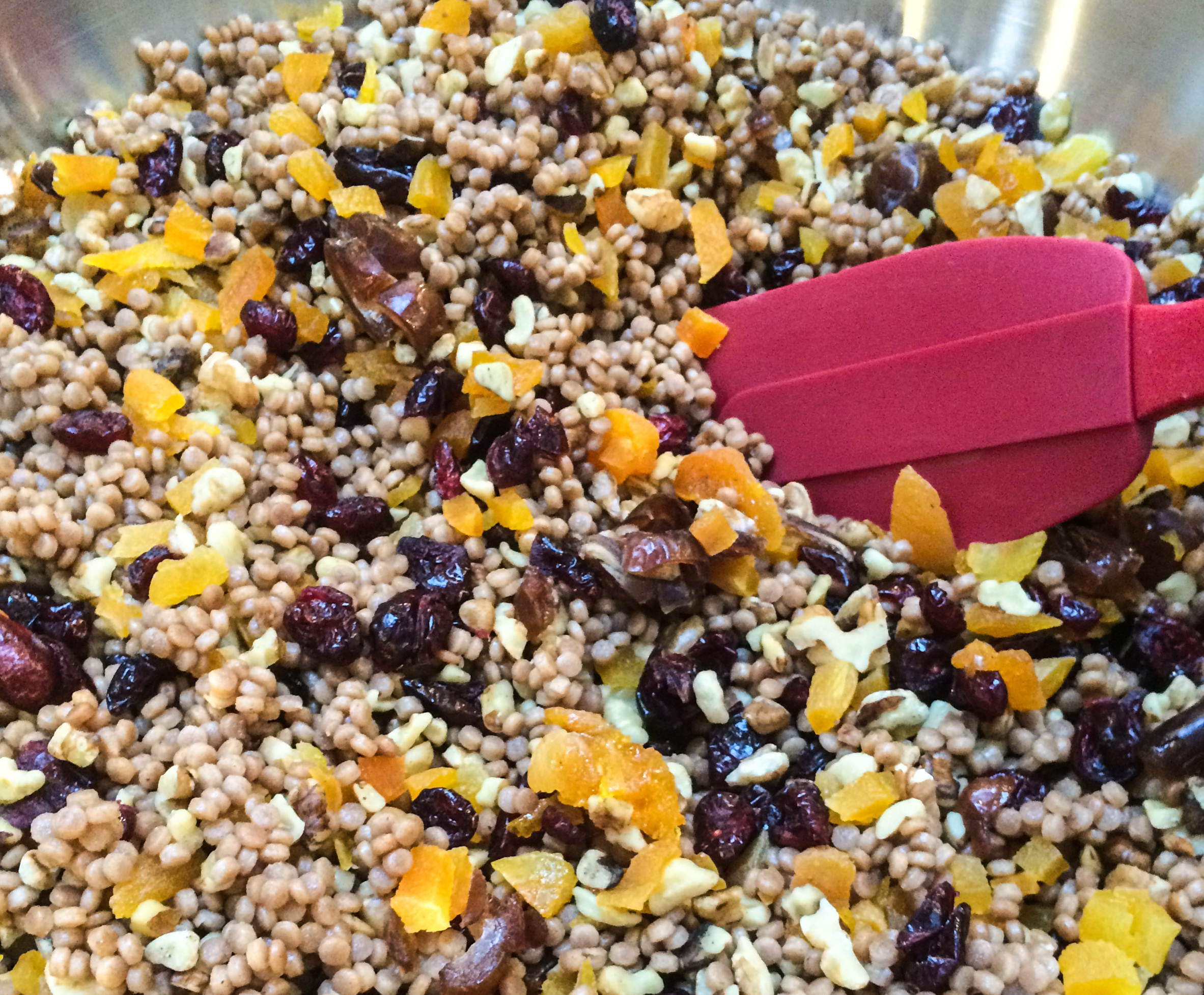
Over the years I’ve prattled on about my fascination with couscous, my unwise decision to drag a couscousiere across North Africa and my ongoing dabbling with these granules of semolina. Light yet hearty, savory yet sweet and toothsome whether hot, room temperature or chilled, couscous’s almost incongruous nature is what keeps me hooked. I’d like to see spaghetti pair as smoothly with such disparate ingredients as cinnamon, cumin, cilantro, dill, cucumbers, dried cherries, balsamic vinegar or almond milk. Yeah, it’s a versatile food. Before the holidays I started tinkering with an old favorite, Sweet & Nutty Couscous, transforming it into the following dish. To some, the name “Honeyed Fruit and Whole Wheat Couscous” might sound redundant. After all, couscous comes from durum wheat so all couscous could be considered wheat couscous. However, this recipe works best when you use the mildly nutty whole wheat, pearl couscous. If you have a couscousiere collecting dust on your kitchen shelf, by all means wipe it off and put it to work. Otherwise, instant or quick cooking whole wheat …

The Dessert Table: Cranberry Torte

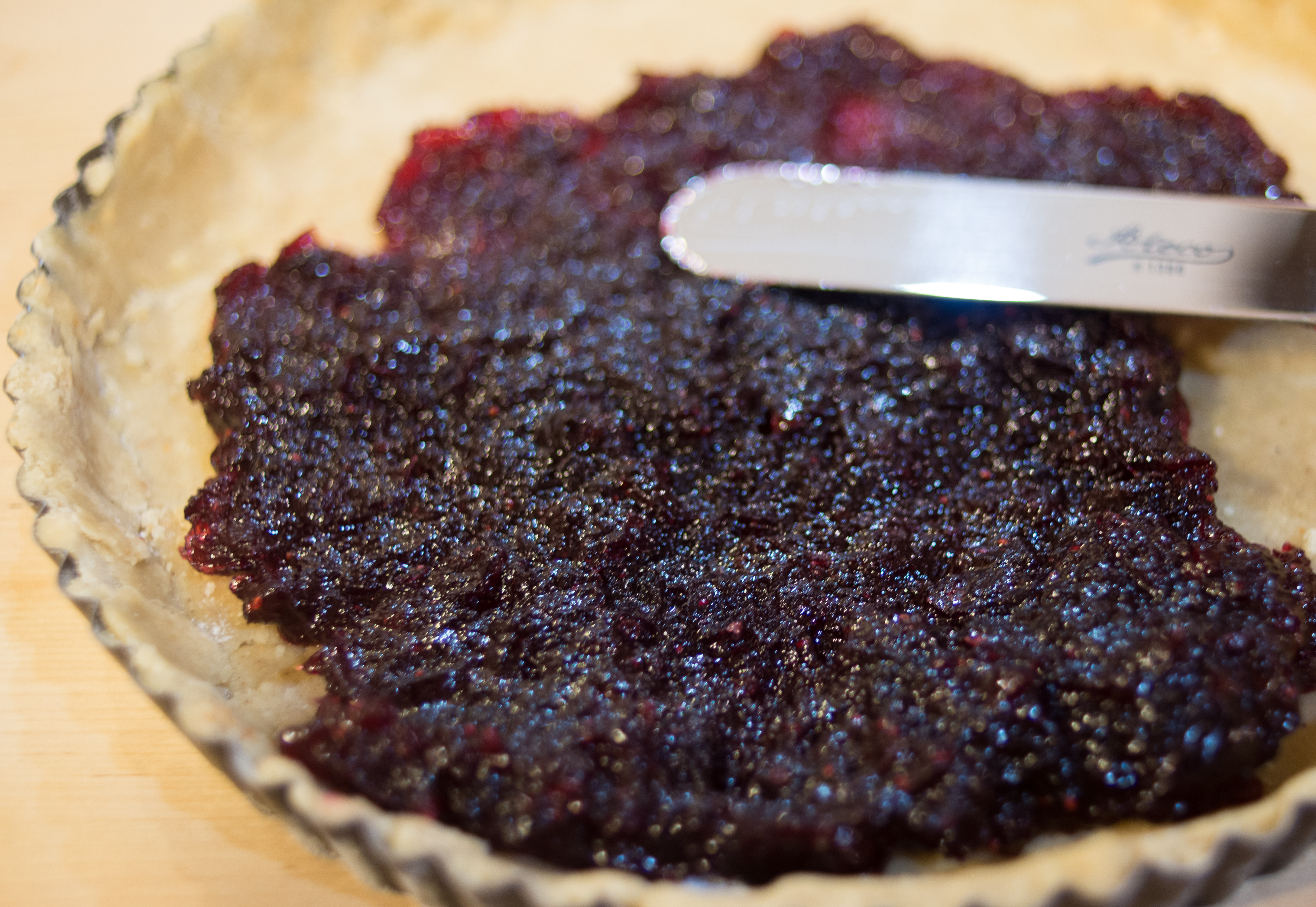
Growing up outside of Pittsburgh, I assumed that all wedding receptions featured those decadent displays known as cookie tables. Weighted down by platters of cream-filled lady locks, lemon bars, nut horns, Mexican wedding cookies, spritz cookies and anise-laced pizzelles, these linen-covered tables attracted guests in droves. Introduced as a low-cost alternative to an expensive wedding cake, the cookie table eventually became a companion to cake. Custom dictated that family members make the cookies but, if you didn’t have gifted bakers at home, you could do as my mother did and enlist the help of a local bakery and family friends. At parties it was the dessert table around which people clustered. Here the cookies were less ostentatious — think chocolate chip, oatmeal raisin, peanut butter blossoms, pecan sandies and butterscotch — but just as plentiful. So too were the brownies, fruit and custard pies, marshmallow-studded ambrosia and heavenly angel food cakes. What didn’t make it to the dessert table? For obvious reasons I never saw ice cream, make-your-own-sundae bars or chocolate fondue pots. Generally, anything …