Author: Kathy Hunt

Smokin'

Some consider it a luxury item, served only on special occasions. Others relegate it to the brunch table, as topping for a bagel. Yet, to me, smoked salmon is far more than fancy finger food. Whether featured in a pasta dish, incorporated into a salad or filling a fajita, it remains a versatile, multi-faceted fish. Although considered a delicacy, smoked salmon has quite humble beginnings. Born out of necessity, smoking was the means by which medieval Europeans ensured that their bountiful salmon catches would remain edible throughout the year. To preserve their fish, the anglers would first clean and fillet their salmon. They then sprinkled salt and sugar onto the flesh, stacked the fillets on top of each other and inserted them into an active smokehouse. There the salmon would remain in roughly 75 to 85 degree Fahrenheit temperature until smoked completely. Unlike the tender, moist products of today, the early European versions had a tough texture reminiscent of jerky. They also possessed a strong, salty tang that differed greatly from the present day’s milder …
Bit of the Bubbly

I spent much of last week in Dallas so the obvious choice would be to write about Tex Mex food. Yet, as I quickly learned, there’s more to Texas cuisine than chilies and guacamole. For instance, there is beer. No, I don’t mean the obvious, South-of-the-Border choices such as Corona or Dos Equis but rather all the other fine brews found on tap there. Want an American craft beer such as Ommegang‘s Three Philosophers or Dogfish Head 60 Minute IPA? How about an Italian Peroni, English Young’s Double Chocolate Stout or a Belgian Maredsous, Leffe Blonde or Chimay? I could enjoy them all and many more at the lively Old Monk and The Ginger Man. Drinking all these heady lagers and ales made me think, unsurprisingly, about food and how infrequently I use beer when cooking. Sure, every now and then I pull together a tasty Guinness- or Victory Lager-based cheese fondue. Still, I’ve not spent enough time tinkering in the kitchen and seeing what other recipes can benefit from a bottle of good beer. …

Wonders of Won Tons

I used to believe that some cuisines were best left to the professionals. Why spend hours scouring specialty markets for hard-to-find ingredients when I could just order take-out from the nearby Thai, Vietnamese, Chinese or Japanese restaurant? Then I spent a day in the kitchen with my husband’s step-father. A native of Vietnam, Luong is the guy to go to if you want to learn about, if not master, the fine art of Asian cooking. On that transformative day we focused on won tons. A staple of Chinese cuisine, these dumplings required no lengthy shopping trips for rare ingredients. Likewise, they involved no special culinary skills. Just chop, stuff and boil. Who knew that cooking Asian food could be so easy? Not me! With our ingredients spread out on the kitchen counter, Luong coached me on how to make the perfect, time-saving won tons. His trick? Store-bought, wheat flour dumpling wrappers. These can be found online as well as in specialty grocery stores and the Asian section of most supermarkets. Remember to moisten the wrappers …

Sardines, The Smart Choice

Over the weekend, while everyone else was off enjoying a few snow-free days, I sat in my office, struggling over an assignment on sardines. Whenever I became convinced that I had captured the delights of these small, iridescent fish, my husband would read a few lines and announce that I still hadn’t sold him, yet. He isn’t alone in his status of sardine sourpuss. Many Americans write off this flavorful, little fellow as being too oily, boney, fishy or just too startling – with its head and tail intact – to use in a dish. For me, though, sardines remain a tasty, smart, and economical alternative to ‘fast fish’ such as canned tuna and larger, carnivorous creatures such as salmon. With a flavor reminiscent of a heartier, earthier tuna sardines can jazz up a variety foods including sandwiches and subs, salads, pasta, pizza and dips. Their rich, meaty flavor also allows them to stand on their own, grilled and served with a side of mixed greens or couscous. Their fatty flesh makes them perfect not …

Go Bananas

When I’m hungry and in a rush, I reach for my curvy, tropical friend, the banana. This potassium- and Vitamin C-rich fruit has filled the bellies of the ravenous since ancient times. No wonder. Whether you pluck it off a tree or buy it from a fruit stand, grocery store or coffee shop, the ubiquitous banana persists in being easy to find, transport and eat. Just pop it into your bag or slip it into a “banana guard” and shove it into your jacket pocket and you’re set to snack healthfully any time, any place. Because I enjoy the gentle sweetness and soft texture of bananas so much, I frequently incorporate them into my cooking. Banana bread, muffins and pancakes have all kicked off my days while banana cream pies, puddings, ice cream sandwiches and splits have brought luscious endings to my nights. On those evenings when I crave a bit of a spectacle with dessert, I whisk together the flamboyant New Orleans classic Bananas Foster. In this dish bananas are sauteed in a mixture …

Stir the Pot

“Stir constantly with a wooden spoon until the cornmeal thickens, about 30 to 45 minutes.” Those instructions have daunted countless would-be polenta makers, including me. Who wants to stand over a steaming pot for 45 minutes, stirring cornmeal non-stop? No doubt anyone who has discovered the tastiness and versatility of this savory comfort food would, that’s who. A staple of Northern Italian cuisine, modern polenta dates back to the mid 17th century. It was during this time that the Venetians introduced American corn to the region. Prior to the 1600s a variation of polenta was reputedly made using chestnut flour while another version may have existed that employed barley. Cooked in an unlined copper kettle, the combination of yellow cornmeal, or ground corn, and water was ceaselessly stirred until a thick mush formed. To test for doneness, the cook would insert her wooden spoon in the center of the mixture. If the spoon stood up on its own, without falling over or shifting its position, the polenta was done. Once finished, the polenta was either …

Simple Ways to Start the Day

This past fall a series of house guests prompted me to re-think what I consume at the start of each and every day. While I may love to greet the morn with a slice of double fiber wheat toast with organic peanut butter and Le Pain Quotidien four-berry preserves slathered over top, I suspected that my friends would expect a little more than a hunk of toast dressed up with PB and J. No doubt about it, I’d have to come up with something more interesting and filling to offer my traveling guests. One of the fastest yet prettiest ways to kick off the day was with a yogurt-fruit-granola parfait. For this I just dug out some margarita glasses and filled the bottoms with homemade granola. I then covered the granola with a few spoonfuls of organic, Greek yogurt followed by fresh berries and more granola. I topped the parfait off with a handful of berries and then — Voila! — breakfast was ready. When pressed for time, I spread delicate, coral slices of smoked …

Mmmm… Meringue

After a long season of munching on buttery cakes, iced cookies, and gooey candy the last thing that I want to bake, or eat, is dessert. I do, however, make an exception for meringues. Take one bite of an ethereally light meringue and you’ll understand why this confection was originally dubbed “sugar puff.” Crafted from egg whites and granulated sugar, this is one of the daintiest and simplest sweets that you’ll ever taste. As a child, I associated meringue with the browned peaks capping off my mom’s coconut cream and lemon meringue pies. Yet, as I later learned, it is so much more than a topping for creamy treats. Where would ile flottante be without its white, fluffy islands or baked Alaska without its elegant, insulating alps? Minus meringue both become pools of cream sloshing about on our plates. Without question meringue remains the backbone of these and many other desserts. Debate over the origins of this airy treat has raged on for decades. Some culinary historians credit the Swiss pastry chef Galasparini in the …

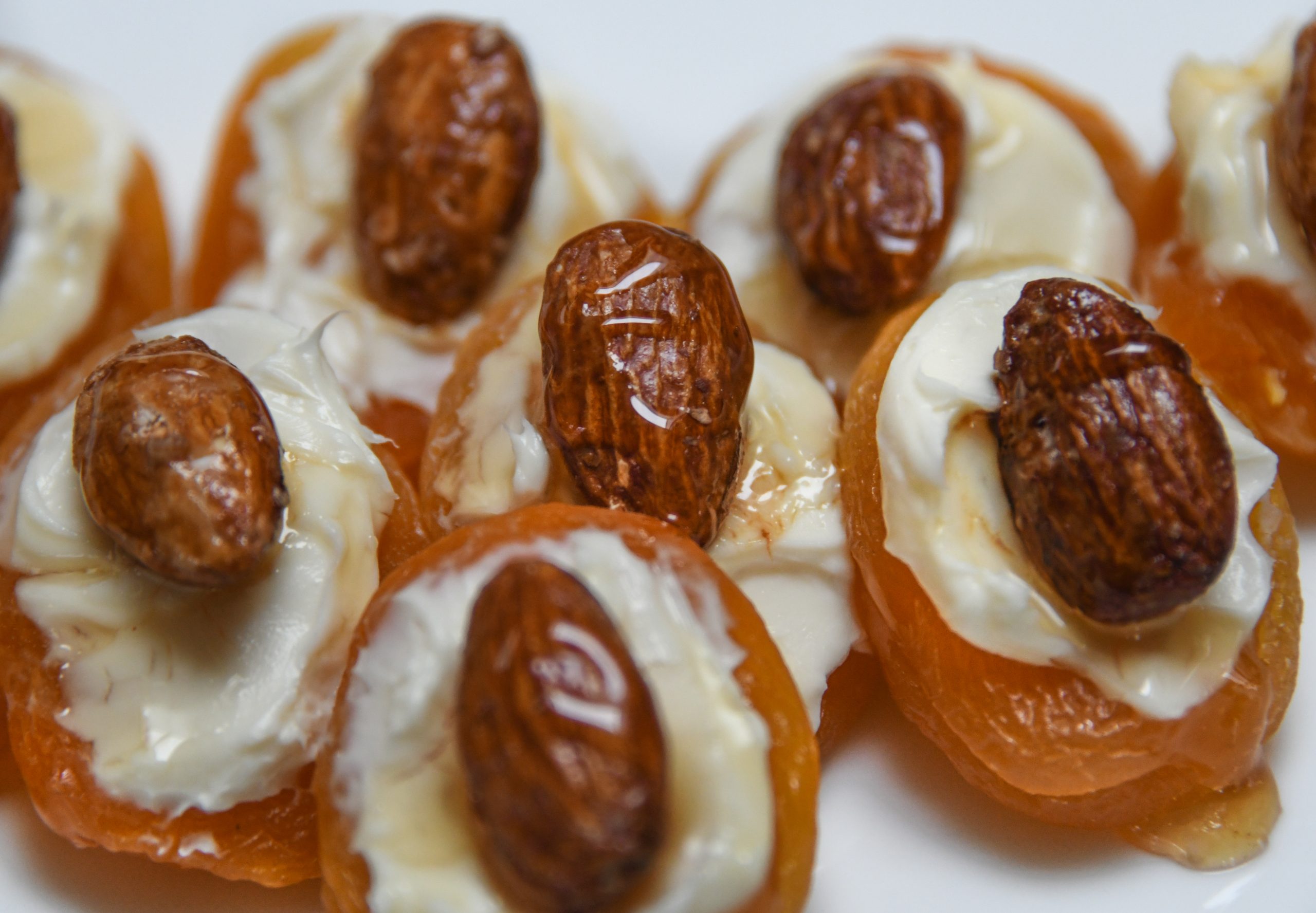
dried apricots, mascarpone, almonds, honey

Easy Holiday Eats – Apricot Medallions

As soon as Thanksgiving breezes by, I start obsessing over Christmas and all the celebrations — and preparations — that the holiday season brings. Each year I vow to make my life easier by hosting smaller parties and concocting simpler menus. Yet, each year I invariably end up sweating over a steaming stockpot of coq au vin for 16 or frantically whisking together 30 individual mocha pot de cremes on Christmas Eve. So much for easy. In 2009 I swear to halve my stress level by following four basic rules: Keep the appetizers easy. Offer only one entree. Don’t turn down offers from guests of appetizers or side dishes. Lastly and perhaps most importantly, don’t go wild with new, complicated dishes. Gone are the days of hot-out-of-the-oven mini red pepper quiches and two dozen other homemade hors d’ouevres. This year friends and family will nosh on quick, uncomplicated appetizers such as apricot medallions, smoked trout paté and spiced nuts. And, if time slips away from me, I will have no qualms about plunking wedges of …

Make a Change with Chutney

Whether sweet, sour, spicy or a tad salty, condiments have added flavor and flare to food for countless centuries. While the most familiar – ketchup, mustard and mayonnaise – still bring pleasure to the palate, something more unusual, such as chutney, can add much needed excitement to your dinner plate. From the East Indian word “chatni” comes chutney, a tangy condiment featuring minced herbs, fruits, vegetables and spices. Freshly prepared for each meal, chutney appears alongside curries, as a spread for bread, as a topping for cheese and as a flavor enhancer for milder dishes such as rice and dals. The ingredients in this sauce vary according to region and personal taste. In Southern India creamy coconut is all the rage while in Western India spicy herb reigns supreme. Whether from ripe or green tomatoes, tomato chutney is a hit across the country as is the silky, piquant tamarind chutney. Of the myriad of chutneys produced and consumed, only one has become an international sensation – the sweetly tart and chunky mango chutney. Made from …