Author: Kathy Hunt

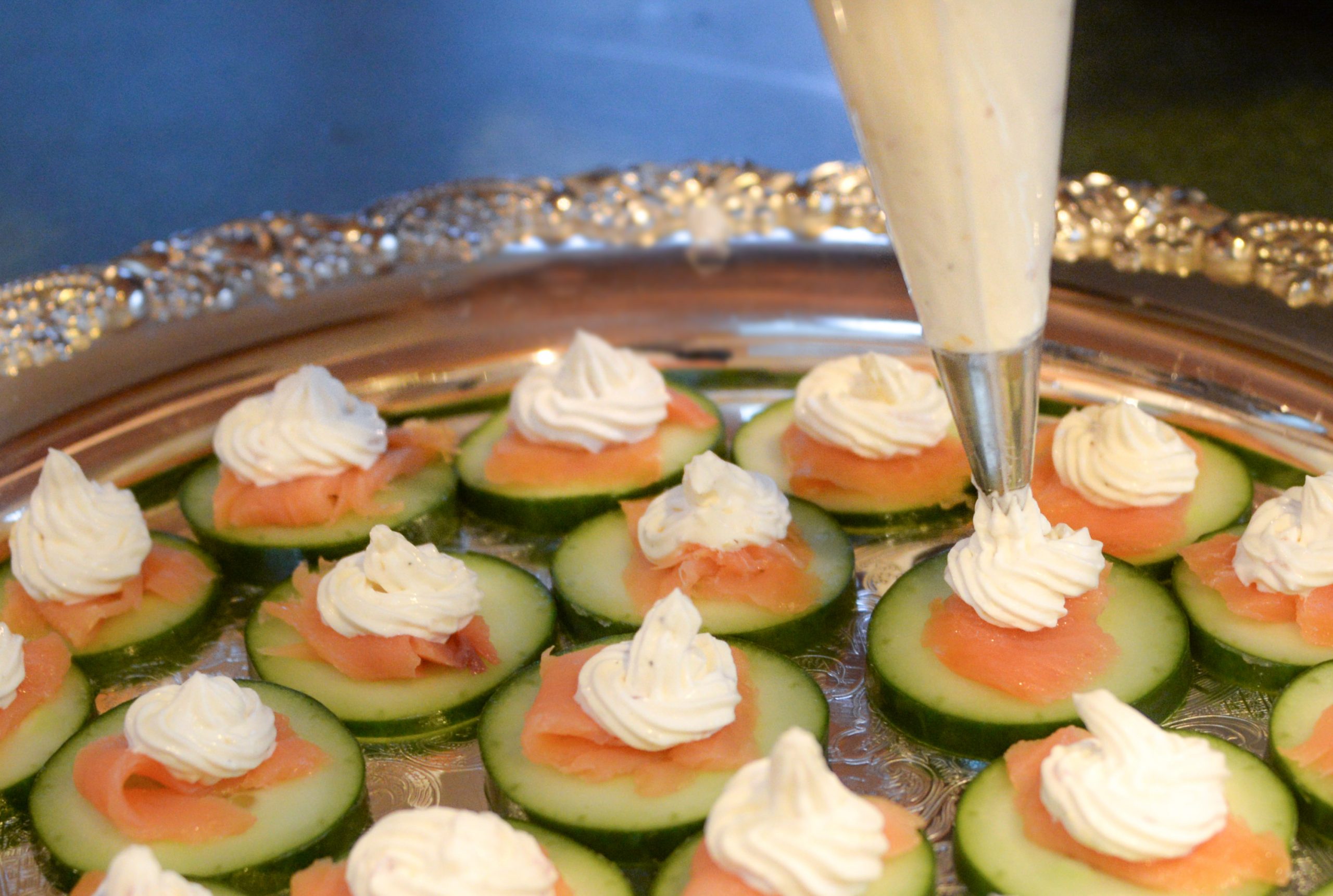
piping mascarpone cheese

Cool as a . . .

Yeah, a cucumber. I’ve never thought of the cucumber as particularly cool. Crisp and juicy? Yes. Cool? Well . . .. Before I start rambling on about the hipness of this vegetable, I should admit that its coolness refers not to trendiness but to temperature — quite simply, a cucumber feels cool to the touch. Yet, this member of the gourd family offers far more than catch phrases and temperature gauges. Available year-round, it’s a staple ingredient in many dishes and a star in its own right. Rumored to have originated in South India, the cucumber has been cultivated for at least 4,000 years. In spite of its longstanding popularity, it didn’t arrive in North America until the late 15th century. Christopher Columbus introduced the first cucumber to Haiti in 1494. From there demand for this crunchy, green vegetable spread. And just what do people do with all these cucumbers? A third of the roughly 100 varieties grown are used for pickling. The rest we eat in salads, from crudite platters, in dips, and as …

Great Gravlax!

This summer it seems as though everyone whom I know has come down with Swedish fever. Maybe you have friends suffering from this affliction, too. They clutch dog-eared copies of Stieg Larsson’s “The Girl Who Played with Fire” and sit on the edge of their Ikea-designed seats, watching the film adaptation of Larsson’s “The Girl with the Dragon Tattoo” over and over again. When not hashing over missing Larsson manuscripts or the Kenneth Branagh series “Wallander,” they pound the pavement in search of gravlax and good, strong aquavit. Believe me, I’m not scoffing at their plight. In fact, I’m battling a similar addiction. From ethereal cloudberry preserves and delicately flavored kanelbullar to hearty root vegetables and tangy fish I’m completely hooked on the wholesome cuisine of Sweden. It all started with gravlax. Often confused with smoked salmon, gravlax is raw salmon cured in a mixture of salt, sugar and dill. Similar to its smoked cousin, this Swedish specialty originated from the need to store fish in a time when refrigeration did not exist. In medieval …

It’s Tomato Time!

Whether you grow your own vegetables, frequent farmers’ markets, or grocery shop, you’ve no doubt noticed an increase in the quantity and quality of tomatoes. Yes, it’s tomato time, the period from July to October where locally grown, vine-ripened tomatoes hit their prime. For those who happily chomp on tomatoes as a snack, salad, side or main dish, it’s a highly anticipated season. For those like me who don’t share this passion, it means confronting the quandary of what to do with all those tomatoes. A well-meaning friend once suggested that I try canning them. After all, doesn’t everyone love home preserving? Apparently not. After one steamy, day-long canning class I learned that, like oil and water, canning and Kathy do not mix. After ruling out canning, I considered other options, including drying tomatoes in a food dehydrator. While pleasant tasting, dried tomatoes lacked the spark of their fresh, juicy brethren. Realizing that, I scratched dehydrating from my list. Ultimately, I’ve opted either to cook them or to serve them raw in an endless parade …

Crisp, Crumble, Cobble and Slump

If you give fresh fruit to me this summer, chances are that I’ll wash and then tumble it into a greased baking dish and bake a fruit crisp. Rhubarb, strawberries, blackberries, blueberries and peaches have all bubbled away beneath a blanket of brown sugar, cinnamon, oatmeal and butter. Sure, with the exception of rhubarb, I could have enjoyed any of these raw. Yet, I can’t seem to stop myself from making and eating these treats. What prompted this obsession I do not know. Maybe it’s a touch of summer laziness for the crisp is one of the fastest and easiest desserts to bake. What I do know is that my crisp often gets confused with other sweets. At countless dinners and parties friends have thanked me for bringing a crumble, cobbler or slump. Who’s right? And just what am I baking? Although I think of “slump” as what my mother told me never to do, the word actually refers to a luscious dessert. Hailing from New England, it consists of fresh fruit topped with dollops …

You Say Aubergine, I Say Roly, Poly Eggplant

As a kid, I loathed eggplant. No wonder. My first taste of it came in the form of a bland and watery eggplant Parmesan. One bite of the floppy, cheese-coated, sauce-logged vegetable and I wrote it off for good. Or so I thought. A decade later eggplant landed on my plate again. This time, though, it looked far more palatable. In fact, it looked downright delicious. Sliced into strips and then seasoned with olive oil, salt and black pepper, it had been grilled until slightly charred around the edges. A tentative taste left me hooked on its mild tang and supple, melting texture. With that my hatred of the purplish-black, teardrop-shaped veg ended and my love affair with eggplant began. Known in Great Britain and France as an aubergine, the eggplant – along with the tomato and potato – is a member of the flower-bearing nightshade family. Reputedly originating in China, it first hit European shores during the 13th century. There it became the backbone of such renowned dishes as French ratatouille, Greek moussaka, Spanish …

Sipping Summer Cocktails

Hosting a summer soiree, I invariably face the dilemma of what thirst-quenching drinks to provide. While iced tea and lemonade remain obvious choices, I know that some will crave a beverage with more of a kick than chilled raspberry lemonade. That’s when I haul out my blender, pitchers, barware and kitschy, paper umbrellas and start whipping up seasonal cocktails. Among my go-to recipes is Sangria Blanco. Typically, when I hear “sangria,” I think of the red wine punch found throughout Spain. In fact, this crimson drink gets its name from the Spanish word for “bleeding.” Yet, in the dead of summer bartenders will replace the signature red wine with a cold white and offer Sangria Blanco to their parched clientele. Although I love both versions, I tend to think of white sangria as my “everything but the kitchen sink” drink. Into my punch bowl go dry white wine, white rum, triple sec, gin, brandy, fresh orange juice, canned pineapple juice and simple syrup. After stirring the ingredients, I cover and then squeeze the bowl into …

More Hot Days, More Cold Soups

Last week I moaned about the prospect of cooking in the oppressive heat. This week it’s the humidity that keeps me from hanging out in the kitchen. Thanks to a sultry summer, I’m still fixated on soothing, cold soups. For lunch today I enjoyed a bowl of the crimson, Andalusian version of gazpacho. Originating in southern Spain, this red soup resulted from the 16th century introduction of tomatoes from the New World. Unlike Spain’s other chilled soup, ajo blanco, gazpacho features a puree of tomatoes, sweet bell peppers, cucumbers, garlic, vinegar and olive oil. Some cooks add diced onions, celery, lemon juice, fresh herbs, tomato juice or hot sauce. Others slip in breadcrumbs to thicken the soup. When serving this dish at home, I occasionally strain the pureed vegetables and ladle out a velvety smooth soup. Other nights I leave in the veggies and dish out a chunky, hearty meal. That’s the beauty of Andalusian gazpacho – one recipe, two different results. Serve it the first night as a thick, vegetable-studded stew. Strain and present …

Beat the Heat with Soup

As East Coast temperatures top 100 degrees and I’m convinced that I really could fry an egg on the sidewalk, I’ve started to reconsider my dinner options. While tired of take-out, I’m far from thrilled by the prospect of standing over a hot stove in my simmering kitchen. As refreshing as that half-gallon of rocky road ice cream in my freezer seems, I doubt that it will tide me over until morning. Around the time that I reach for a box of breakfast cereal, I remember two magical words – cold soup. Sometimes referred to as “liquid salads,” chilled vegetable soups provide the perfect way to cool off on sultry summer nights. From Spain comes icy gazpacho. Introduced by Arab occupiers sometime between the eighth and thirteenth centuries, this familiar crimson soup began as a cream colored, garlic- and bread-based peasant food. To make the original gazpacho, cooks would pound stale bread, garlic, olive oil, and salt together in a mortar. They then added water to reach the desired consistency and splashed in vinegar for …

Top It Off

With Independence Day and a long weekend of picnics and BBQs just around the corner, it seems like the perfect time to talk about condiments. Whether sweet, sour, spicy or a tad salty, these toppings have added flavor and flare to food for centuries. While ketchup, mustard and mayonnaise still reign supreme, there are plenty of unusual dressings to spice up your summer meals. Love some heat with your meat? Spoon on the fiery, North African condiment harissa. This crimson sauce consists of hot chilies, garlic, cumin, caraway seeds and sea salt. As an indicator of just how spicy it can be, commercially produced harissa comes in cans decorated with erupting volcanoes. Usually harissa accompanies couscous. In Tunisia, though, it’s used as a sandwich spread. It also gives an extra kick to vegetables and seafood. Some cooks add a little yogurt to their harissa and offer it as a dip. If harissa sounds too searing, try the milder North African chermoula. It starts with a base of cilantro, parsley, garlic, lemon juice and olive oil …

Tantalizing Tagines

Mention Morocco and visions of sweeping sand dunes, loping camels and bustling marketplaces spring to mind. Mention this exotic North African country to me, and I think of russet colored tagines. For me, Morocco is the land of succulent stews and the shallow, clay containers in which they simmer. Once you spot a tagine in a bustling North African souk or Western cookware shop, you’ll never mistake it for another pot. It consists of two parts: a circular, shallow pan and the large, conical-topped cover that fits inside the base. The cone shape allows condensation to cascade back down to the casserole, creating a rich, reduced sauce. The lid has a small knob on the top, providing cooks with something to grasp when removing the cover to check on the bubbling contents within. Thanks to its unique design, the tagine encourages low, slow simmering of its contents. Simmering allows diverse flavors to meld together and ensures a tender, juicy, aromatic meal. Cooks must be vigilant, though, and add water as needed. Otherwise, they will end …