Author: Kathy Hunt

Taking Sides on Turkey Day

Whether you host or are being hosted for Thanksgiving, you’ve probably begun mulling over your holiday menu. Each year a few brave souls start from scratch, forgoing the last year’s stuffings and mashed potatoes in favor of creative, new fare. I’ve learned that this is not the time to try out your cutting edge chilled cardamom lentils, truffle-dusted parsnip chips, or pumpkin-ginger puree. On a day steeped in tradition folks want and expect customary Thanksgiving foods. Increasingly, hosts have begun turning to their guests for their menus. “I’ll provide the turkey. You bring a side or two.” Closer in action to the original feast, this practice encourages everyone to share the responsibility of cooking. That brings me to today’s topic — what sides to take to a Thanksgiving potluck. Whatever you bring, remember that it has to transport and reheat well. Fortunately, the following side dishes do both. THREE-CRANBERRY CONSERVE Recipe courtesy of the November 2004 Thanksgiving issue of “Food & Wine” Makes about 3 cups I love that you can make this recipe ahead …
Time to Pull the Parsnips

The downside to be married to, or even knowing, a writer is that inevitably you get pulled into one of her stories. Three years ago that very thing happened to my husband. Not only did I mention him in an article about root vegetables but also did an editor make him the star of the headline: At 38 man finally tries parsnips. The good news is that he now likes this pale, oblong vegetable. That is good news, indeed. High in starch and fiber as well as potassium, this relative of the carrot has long provided nourishing, filling meals. Although it took my husband almost four decades to appreciate this frost-hardy plant, much of the Western world has consumed it since ancient times. Growing wild throughout Europe and western Asia, the parsnip was first farmed during Roman times. Because it prospers in cooler climates and sandy or impoverished soils, it is ideal peasant food. Parsnips served a vital role in medieval European cuisine. At a time when sugar was a rare luxury, these honeyed veggies …

Wickedly Wonderful Wassail

Rainy days and crisp, fall nights can only mean one thing — it’s time to break out the wassail!  Derived from the Norse phrase “ves heill” or “be in good health,” wassail can be a toast to good health, the alcoholic drink with which one is toasted, or the festive event where drinking and toasting occurs. In my household it’s all about the hot, mulled drink. Yet, for my English ancestors, it was all about the apples. During medieval times the English believed that if they toasted their animals and crops with drink, prosperity would be theirs in the upcoming year. Eventually this tradition focused specifically on apple production with British farmers dousing the roots of their oldest or most prolific apple tree with cider. Some went so far as to place cider-soaked bread in the tree limbs to ward off bad luck and encourage good crops. Others simply sang songs to the health of their trees. All imbibed in the warm, punch-like drink known as wassail. By the 17th century wassailing had moved beyond …

Pity the Pumpkin

Growing up, I had little respect for the pumpkin. Blame it on lack of exposure. It showed up once a year in my mother’s Thanksgiving pie and then quickly disappeared from our menus and my mind. If I did see it more than once, it was usually at Halloween. At that time it was carved up, stuffed with a candle and dumped unceremoniously on our doorstep only to be forsaken after the holiday. It’s no wonder I now feel a bit sorry for pumpkins. A part of the gourd family, which also claims cucumbers and melons as members, the pumpkin hails from the Americas. Sensitive to cold in spite of its tough skin, it requires temperate weather, regular watering and lots of space to flourish. As evidenced by a predicted pumpkin shortage in the Northeast, it does not fair well in floods or hurricanes. What to do once a hefty, blemish-free pumpkin had been bought from a local farm stand or plucked from my parents’ garden used to baffle me. Cleaning and chopping this unwieldy …

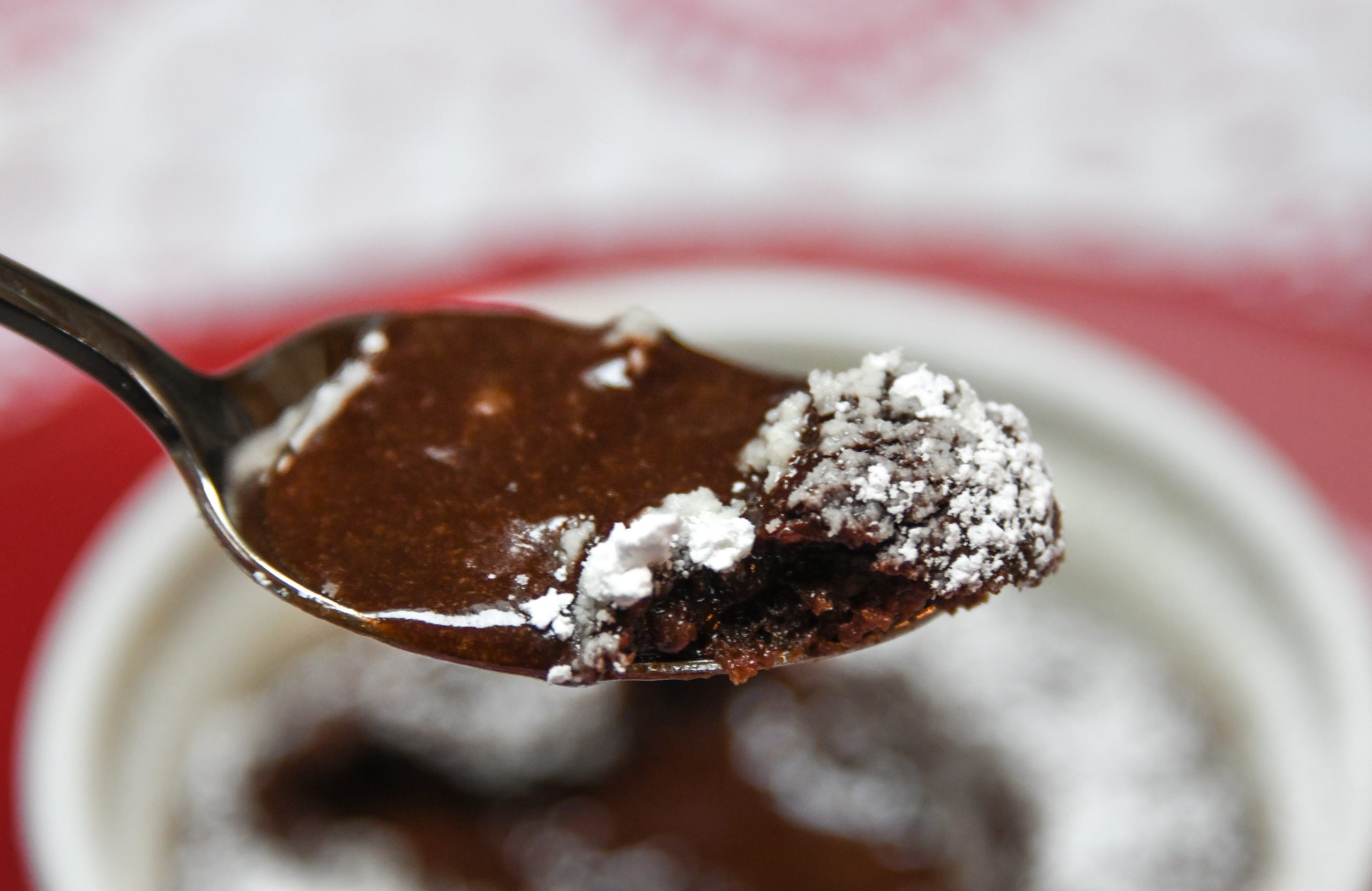
spoonful of baked chocolate pudding

Warm & Gooey Baked Chocolate Puddings

There’s very little that I can say about chocolate that hasn’t been said many, many times before. As you probably know, it comes from the seeds of the cacao tree. This evergreen hails from Latin America, from the area between southern Mexico and the northern Amazon basin. Once collected, the seeds are roasted, fermented and ground to make the heavenly treat known as chocolate. A little history The ancient Mayans were probably the first to enjoy hot chocolate. Archeological evidence shows that they buried their dead with the bowls and jars used to drink it. The Mayans weren’t alone in their love of a good chocolate beverage. The Aztecs drank it cold and sweetened with honey. Both cultures held chocolate in high esteem. They used it as an offering to the gods and served it at ceremonial feasts. It took until the 16th century for Europeans to encounter chocolate. Spanish conquistadors led by Hernán Cortés came across these ‘black almonds,’ as they called cacao seeds, at Tenochtitlan. At first repulsed, they grew to appreciate the …

Look at Those Mussels!

Whenever I see mussels, I think of Belgium, specifically its capital, Brussels. No matter where you go in this medieval city, you invariably come across someone selling these succulent bivalves. Whether served with fries, as in moules frites, or in an herb-white wine broth, as in moules marinière, mussels are a common treat in this land. Belgians aren’t alone in their love of mussels. Archeological evidence indicates that Europe has been consuming these dark blue- to black-shelled mollusks for over 20,000 years. Unlike Europeans, I was a bit of a late comer to this shellfish. Now, though, I’m hooked on its creamy texture and mildly sweet flavor that’s slightly reminiscent of lobster. I also love its eco-friendliness. Take, for instance, the North American blue mussel. It grows in abundance, is low in contaminants and doesn’t adversely affect the environment. Plus, it’s both inexpensive and delicious. Can’t ask for more than that! Although dozens of species exist, I most often see the aforementioned blue mussels. Found on the Mediterranean, Atlantic and Pacific coasts, blue mussels range …

Warmly Exotic Zahtar

For me one of the best parts of travel is experiencing how and what other cultures eat. When I’m away from home, I try not only to eat like the locals but also to pick up the ingredients needed to cook like them. By the end of a trip I’ve invariably weighed down my bag with hastily jotted recipes, odd cooking pots, rare spices and exotic edibles. Out of the countless things that I’ve dragged through U.S. customs, the warm, zesty zahtar (also spelled za’atar or zaatar) remains a particular favorite. Originating in the Middle East, zahtar is an aromatic herb and spice blend. Its name likely comes from the Arabic word for wild thyme, zaatar. In fact, dried thyme is one of the main ingredients. Ground sumac, sesame seeds and sometimes dried marjoram likewise appear in this seasoning. People use zahtar to spice up an array of foods. Some cooks sprinkle it over labneh, a strained yogurt from the Middle East. Others mix zahtar with olive oil and slather this over breads. Then there …

Egghead

When I was in my twenties, I became a wishy-washy vegetarian. You know the type — won’t eat meat but still wolfs down cheese; won’t touch roast chicken but has no problem with soup made from chicken stock. Unsurprisingly, my mother was outraged. What infuriated her most was my refusal to eat bacon. ‘How can you eat eggs/pancakes/French toast/waffles without bacon? It’s unheard of.’ In retrospect she should have been pleased that I’d kept eggs in my diet. As one of my main sources of protein, they sustained me far better than a few strips of bacon ever would have. And, yes, even back then I knew that they were high in cholesterol; one large egg contained as much as 213 milligrams. However, the amount of protein, percentage of Vitamins B, D and E, and versatility that they provided far outweighed their downside. Plus, when I withheld the yolks, I still ended up with a darned nice omelet. Regarding eggs, the late author and food historian Alan Davidson said it best: They are ‘. . …

Say Cheese!

This week I’ve been working on non-Kitchen Kat cookbook reviews, one of which explores cheese. I can think of no better person to critique a cheese book for I am an absolute fromage fanatic. Whenever I’m on vacation or craving comfort food, I skip the ice cream, cookies and candy. Instead I buy a wedge of Manchego, Emmental or drunken goat and a loaf of good bread and I eat cheese. The writer Clifton Fadiman once described cheese as “milk’s leap toward immortality.” How true. It all begins with milk. Allow natural bacteria or starter culture work its magic on goat’s, sheep’s, cow’s or buffalo’s milk. Eventually the milk thickens and then separates into curds and whey. Drain off the liquid whey and you’re left with curds. From here it’s all about shaping and ripening or aging those milk solids. The end result? Cheese. Rather than muddling through how a gallon of whole cow’s milk becomes a pound of provolone, I’ll stick with what I know — cooking with and eating cheese. However, if you’re …

Taking a Stab at Kebabs

In a rare move for this night owl I was up early this morning, testing recipes. While I can’t say much for marinating swordfish at dawn, the act did get me thinking about the origins of my subject, kebabs. This meal of skewered, grilled meat is attributed to medieval Turkish soldiers who used their swords to cook over campfires. As the Ottoman Empire grew, the popularity of this technique spread across the Mediterranean and Middle East. Eventually it caught on around the world. Almost every country seems to have its own kebab. In India folks eat tikka, chunks of chicken soaked in yogurt, coriander, garam masala and other spices and then cooked on rods. The French dine on brochettes while diners in Russia and Armenia consume shashlik. In Greece kebabs come in the form of souvlaki, large lamb or chicken cubes marinated in oil, lemon juice and oregano before being lanced alongside onions or green peppers and grilled. Across Southeast Asia satay, small pieces of chicken, pork, goat, beef or fish macerated in fish and …